

Imagine standing at a place that has not only guarded the southern gateway to Kyoto for over 1,200 years but has also been a pivotal stage for Japan’s most dramatic historical turning points. You’re planning a trip, moving to a new home, or simply seeking a moment of peace away from the city’s main tourist trails. Jonangu Shrine, a place deeply connected to the imperial family and the ancient practice of “directional protection,” offers more than just a glimpse into the past; it provides a tangible sense of security and tranquility. This guide will walk you through the rich history, spiritual significance, and practical details of visiting this powerful yet often overlooked shrine, ensuring you understand why it remains a vital spiritual anchor for people across Japan.
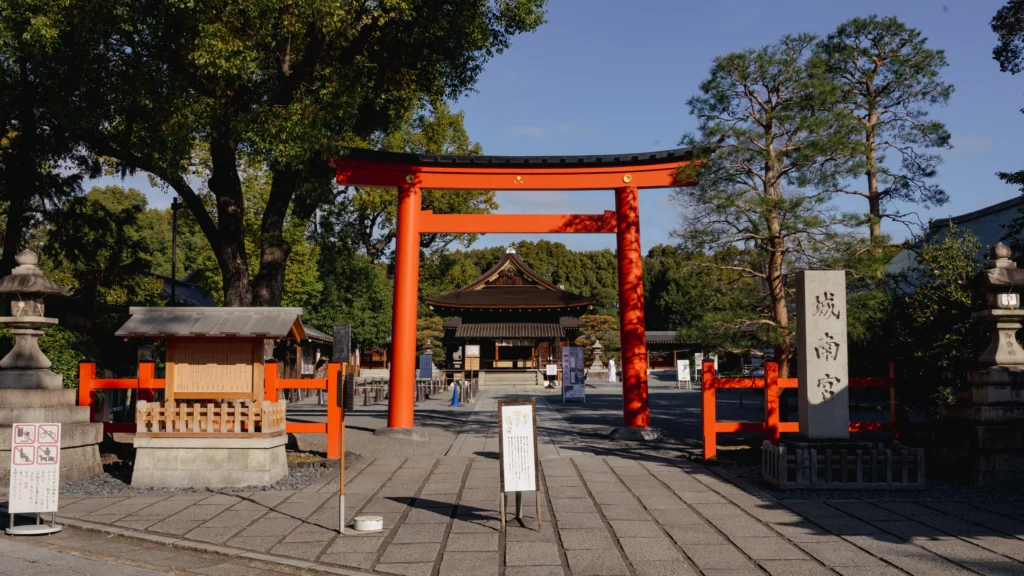
Table of Contents
Quick Facts
| Item | Details |
| Official Name | Jonangu Shrine (城南宮) |
| Primary Purpose | Hoyoke (方除): Directional protection for travel, moving, and construction |
| Enshrined Deities | Kuninotokotachi-no-Mikoto, Yachihoko-no-Kami, Empress Jingu |
| Address | 7 Nakajima Toba Rikyucho, Fushimi-ku, Kyoto 612-8459 |
| Shrine Office Hours | 9:00 AM – 4:45 PM (Amulets/Goshuin), 9:00 AM – 4:00 PM (Prayers) |
| Admission | Free (Main Precincts). Rakusuien Garden requires separate ticket. |
| Nearest Station | Takeda Station (Kintetsu/Karasuma Subway), 15 min walk |
| Parking | Free, large lot available |
| Phone | 075-623-0846 |
| Official Website | jonangu.com |
Overview: A Shrine at the Crossroads of History
Jonangu Shrine is not merely a place of worship; it is a historical and spiritual cornerstone of Kyoto. Established in 794 to protect the southern flank of the newly founded capital, Heian-kyo, its name literally means “the shrine south of the castle.” As the founder of hiddenjapan-gems.com, I find that Jonangu offers a profound connection to the imperial court’s traditions that few other shrines can match. For centuries, emperors and aristocrats made pilgrimages here before long journeys, seeking purification and praying for safety. This deep-rooted belief in the shrine’s power to guard against misfortune from unlucky directions, known as Hoyoke (方除), remains its most important function today.
The shrine’s historical significance extends far beyond spiritual matters. In 1086, retired Emperor Shirakawa built his grand Jonan Imperial Villa (Toba Rikyu), a sprawling 2-square-kilometer complex that encompassed the shrine. From here, he initiated the system of Insei (cloistered rule), effectively governing Japan from behind the scenes. Centuries later, in January 1868, the grounds became the stage for the pivotal Battle of Toba-Fushimi, where Satsuma clan forces positioned cannons along the shrine’s approach road, firing the opening shots of the Boshin War that ended the Tokugawa shogunate. Visiting Jonangu is to walk through layers of Japan’s most consequential history.
The Power of Hoyoke: Guardian of Directions
The primary reason millions visit Jonangu Shrine is for Hoyoke (方除), the spiritual protection against calamities associated with unlucky directions. This belief is deeply rooted in the ancient practice of Onmyodo (the Way of Yin and Yang), which heavily influenced the lives of Heian-kyo’s aristocracy.
In the late Heian Period, the Imperial families and the aristocracy had the custom of not travelling directly to their destination if it was in an inauspicious direction. Instead, they travelled in an auspicious direction to a transit point and stayed overnight. From there, they could depart the next morning in an auspicious direction for their desired destination. This practice, called katatagae (or changing directions) was thought to prevent calamity from certain directions, and many chose the Jonan Rikyu villa for their overnight stay. — Jonangu Shrine Official Website
Because the Jonan Imperial Villa was a favored location for emperors to perform katatagae, the shrine naturally became the central place for this belief. The villa also served as the departure point for the Kumano Pilgrimage, a grueling 300-kilometer journey to three sacred shrines in southern Kii Peninsula. Emperors and empresses would purify themselves at Jonangu before setting out on this spiritual trek, a tradition that continued for over 900 years.
Today, people from all over Japan visit Jonangu to pray for safety and purification before moving to a new house, starting construction or renovation, traveling abroad or domestically, and purchasing a new car. The shrine’s traffic safety prayer hall is particularly popular, with drivers bringing their vehicles to be blessed on the shrine grounds. This makes the shrine a living repository of a tradition that has safeguarded travelers and households for over a millennium.
What to See: Exploring the Sacred Precincts
While the famous Rakusuien Garden requires a separate ticket, the main shrine precincts are free to enter and contain numerous culturally significant structures.
The Grand Torii and the Sanko-no-Mon Crest
The main vermilion torii gate is adorned with the shrine’s unique crest, the Sanko-no-Mon (三光の紋), or “Crest of the Three Lights.” This emblem, representing the sun, moon, and stars, symbolizes the divine protection of the gods reaching every corner of the universe, day and night. According to shrine tradition, the crest originates from the war banner of Empress Jingu. It is an exceptionally rare crest, said to be used by only three shrines among approximately 80,000 throughout Japan.
Main Sanctuary (Honden)
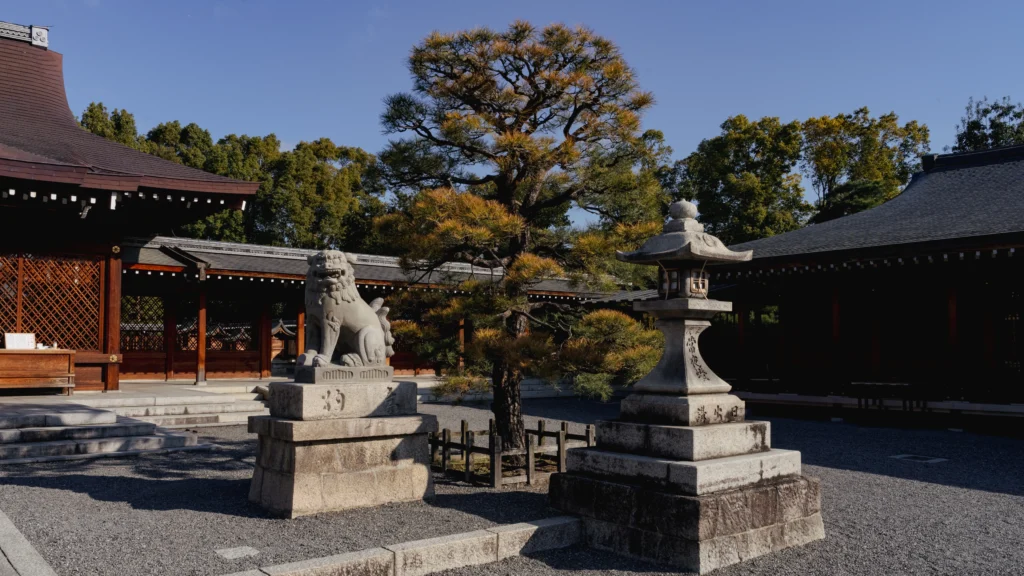
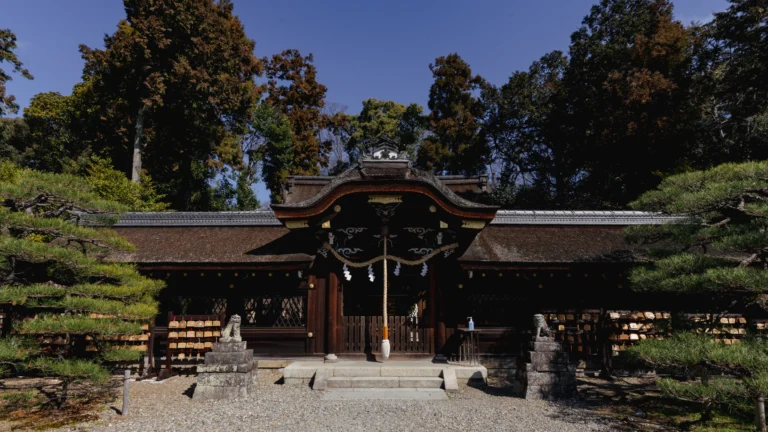
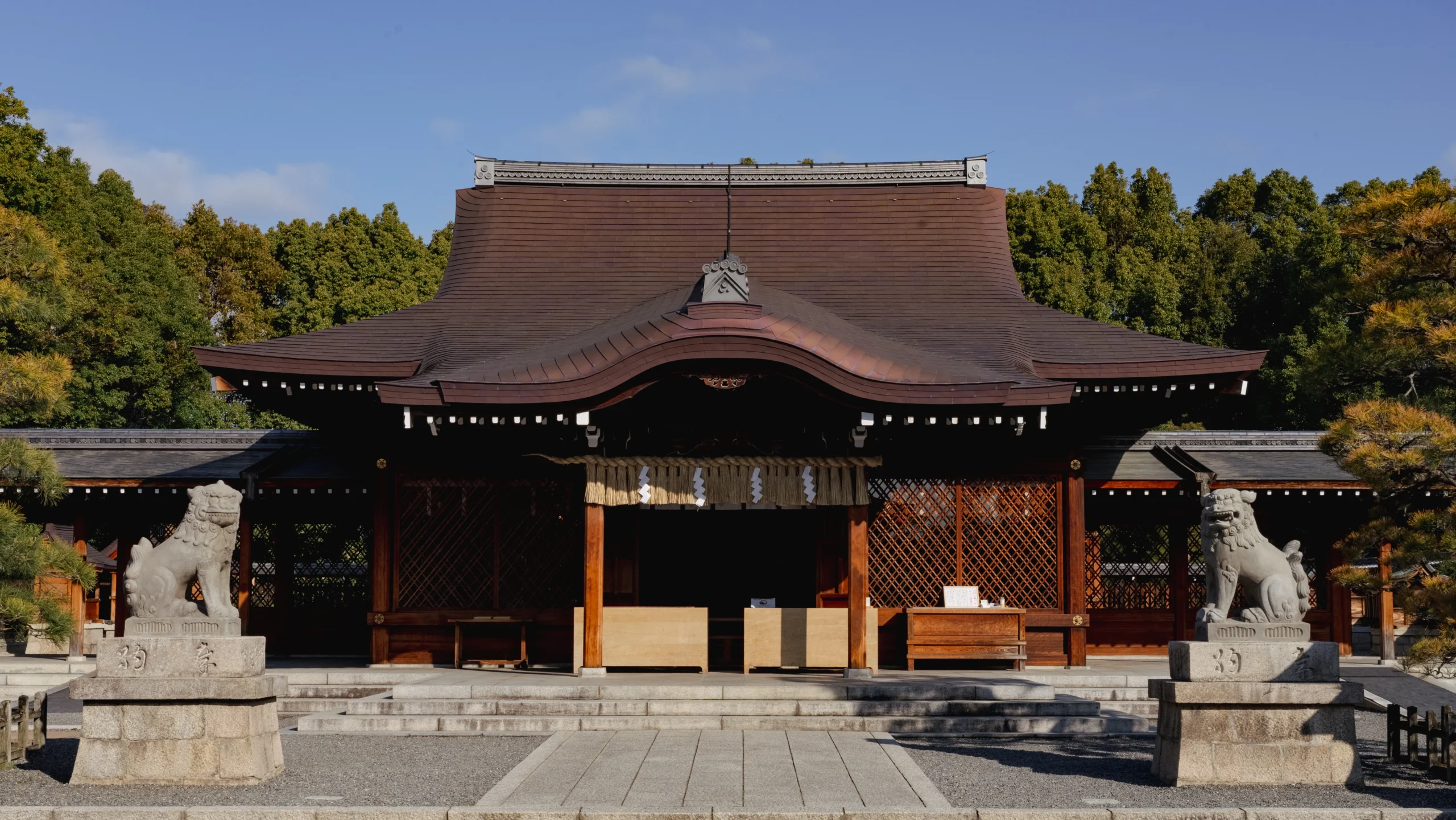
Rebuilt in the classic Heian style with unpainted cypress wood, the Main Sanctuary is one of the largest wooden shrine structures in Kyoto. It enshrines three main deities: Kuninotokotachi-no-Mikoto (guardian of the land), Yachihoko-no-Kami (god of martial valor, also known as Okuninushi), and Empress Jingu (patron of safe childbirth and child-rearing). Behind the main altar stand two zuijin (guardian figures) holding bows and arrows, carved in the refined Heian style.
Haiden (Hall of Worship) and Butaiden (Stage Hall)
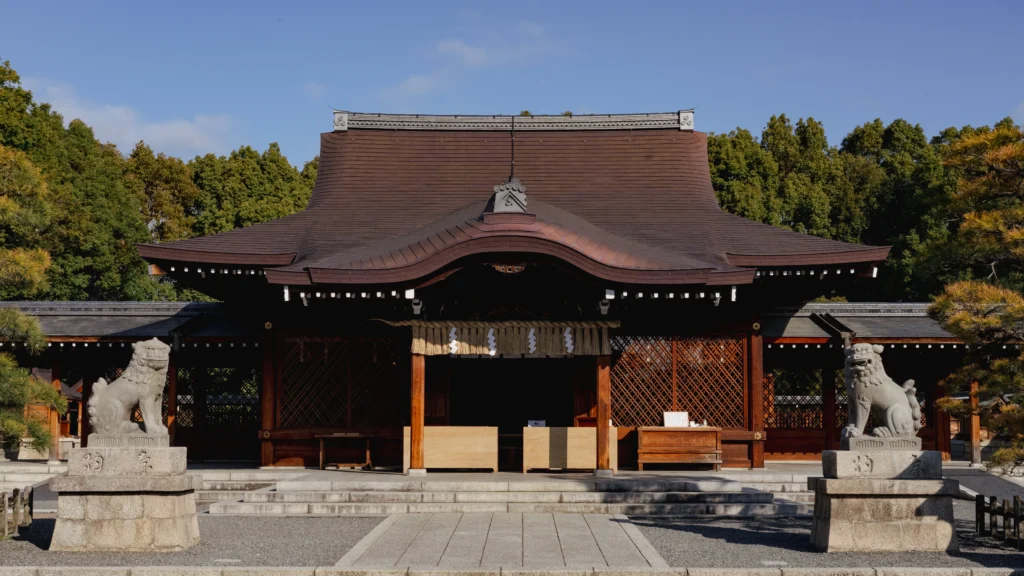
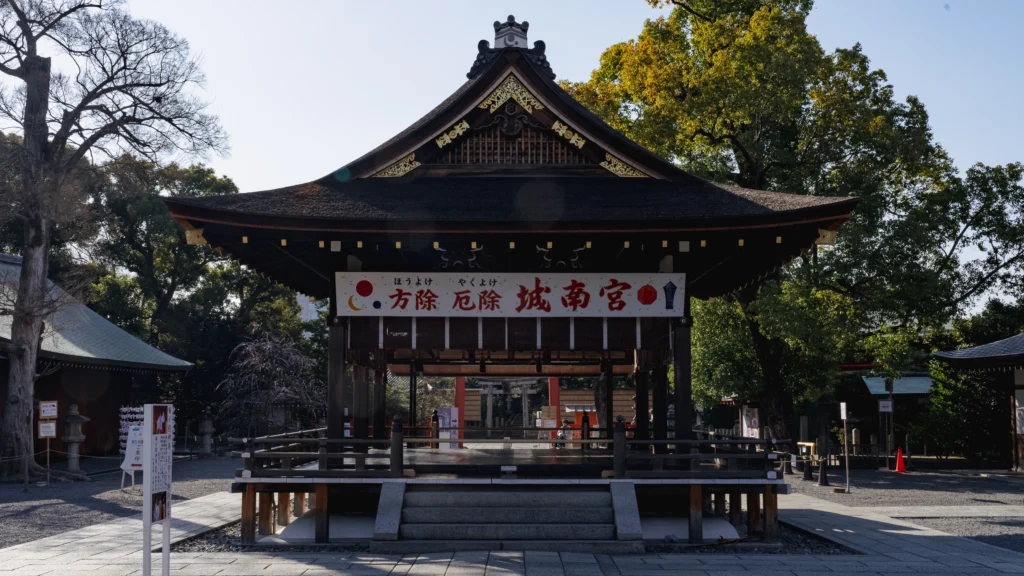
The Haiden is where visitors offer their prayers, marked by a grand shimenawa (sacred rope) and flanked by stone komainu (guardian lion-dogs). Adjacent to it stands the Butaiden, a ceremonial stage prominently displaying the characters “方除 厄除 城南宮” (Directional Protection, Misfortune Warding, Jonangu), making it an unmistakable symbol of the shrine’s identity.
Kaguraden (Hall of Sacred Dance)
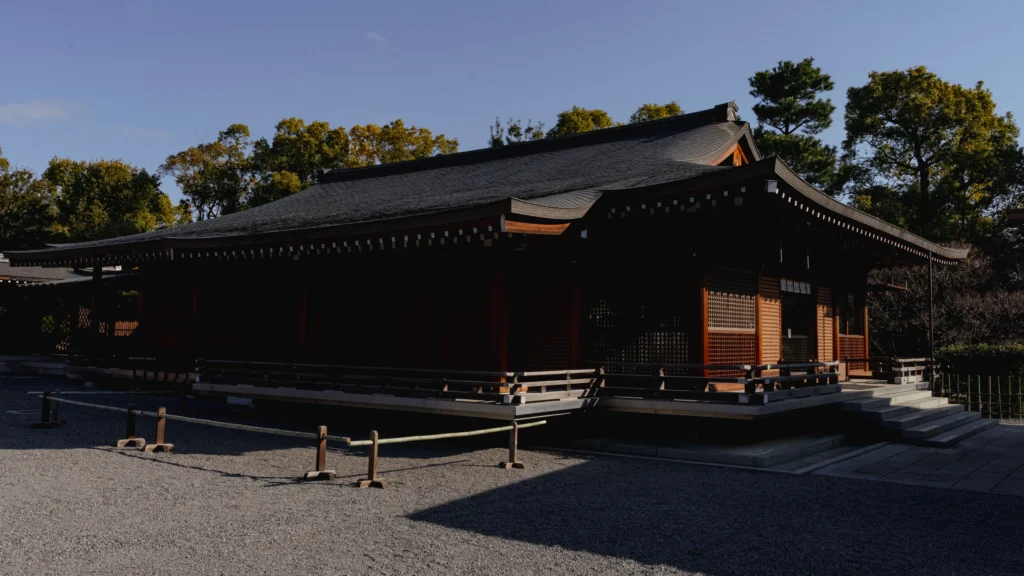
To the right of the main hall stands the elegant Kaguraden, modeled after the residences of Heian aristocrats. Here, shrine maidens (miko) perform sacred kagura dances daily to appease the deities and pray for worshippers’ well-being. The sound of their bells resonates throughout the precincts, creating an atmosphere of profound serenity. On specific festival days, these beautiful and ancient dances are performed for the public free of charge.
Kikusui-Wakamizu (Chrysanthemum Water)
Don’t miss the temizuya (hand-washing pavilion), where the water, known as Kikusui-Wakamizu, flows. This spring has been famous since the Edo period for its healing properties and is considered one of Kyoto’s celebrated waters. Many locals still come daily to collect this sacred water. A sign near the pavilion directs visitors to a separate area on the back side for filling water containers.
Best Time to Visit
Jonangu Shrine is a place of spiritual importance year-round, but certain events draw significant crowds and offer unique cultural experiences.
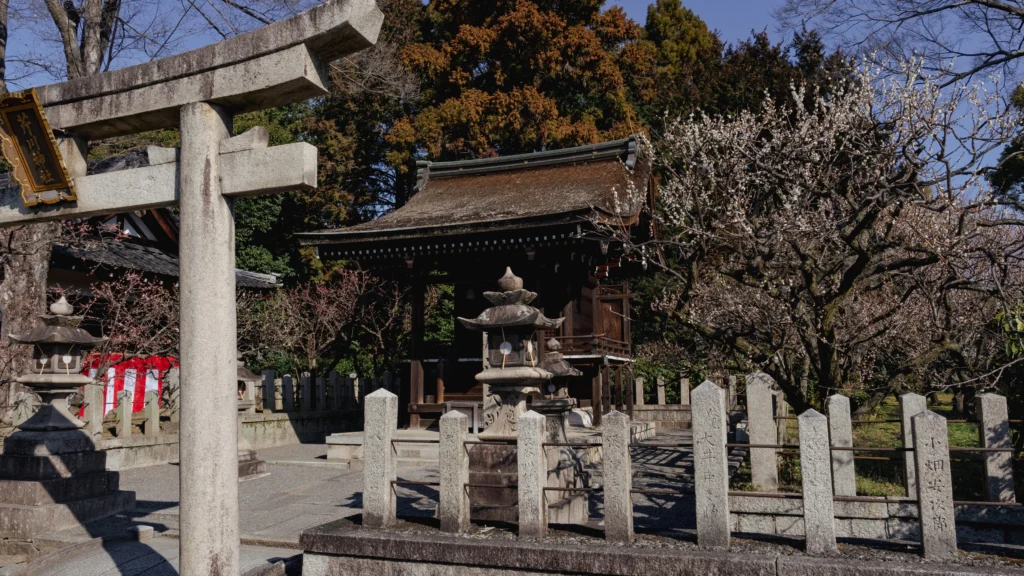
The shrine’s most famous event is the Kyokusui-no-Utage (April 29 and November 3), a recreation of a Heian-period poetry-writing party held in the garden. Seven poets in elaborate court attire compose poems by a meandering stream as vermilion sake cups float past on ornamental mandarin duck boats. A shirabyoshi dancer and koto musicians accompany the event, which lasts approximately one hour starting at 3:00 PM. Note that this takes place within the paid garden area.
The Jonan-sai (October, 3rd Sunday) is a powerful festival featuring three massive, 1.5-ton mikoshi (portable shrines) carried by approximately 100 men each. The procession re-enacts an imperial parade from the Heian period, and the evening return of the mikoshi, illuminated by lanterns and torches, is a spectacular sight.
For those interested in the seasonal shrine maiden dances, the schedule varies throughout the year. The Plum Branch Kagura is performed during the Weeping Plum Festival (mid-February to late March), the Wisteria Kagura in early May, and the Chrysanthemum Kagura in September. All public performances are free of charge.
To avoid crowds, visiting on a weekday morning is generally best. The atmosphere is serene and allows for quiet contemplation.
How to Get There
Jonangu is located in southern Kyoto, making it slightly off the main tourist path but easily accessible.
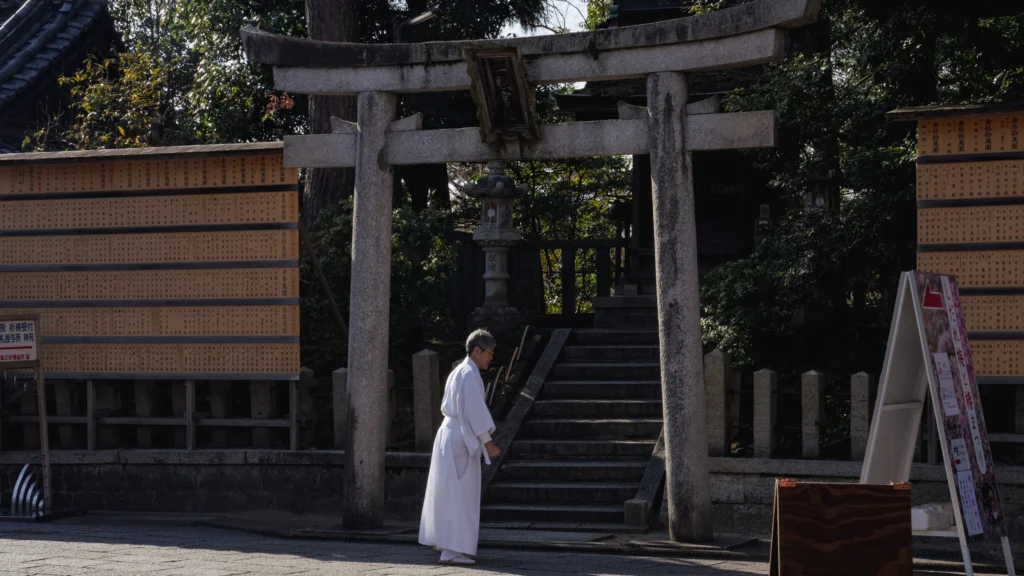
From Kyoto Station by Train (Recommended):
1.Take the Kintetsu Kyoto Line or the Karasuma Subway Line to Takeda Station (approximately 10 minutes, 4 stops).
2.From Takeda Station, it is a pleasant 15-minute walk south to the shrine. Alternatively, take a taxi for about 3 minutes.
From Kyoto Station by Direct Bus:
1.From the Shinkansen Hachijo Exit, take the R’EX Bus directly to Jonangu Shrine (approximately 15 minutes, departing every 20 minutes, 310 yen for adults, 100 yen for children).
By Car:
The shrine has a large, free parking lot, making it very convenient for those driving. It is located just off the Meishin Expressway (Kyoto Minami IC), and is a popular stop for people to get their new cars blessed for traffic safety.
Practical Tips for Visitors
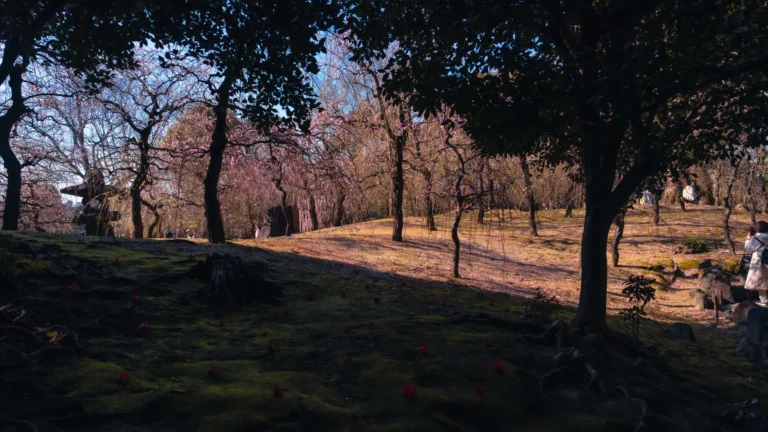
Combine with the Garden: While this article focuses on the shrine, the adjacent Rakusuien Garden (also called “The Garden of the Tale of Genji Flowers” ) is spectacular and worth the separate admission fee, especially during the weeping plum blossom season (late February to early March). A detailed guide to the garden is available in our companion article.
Amulets (Omamori): The shrine office offers a wide variety of amulets, with a special focus on those for travel safety, moving, and directional protection. Prices range from 800 to 1,000 yen. Consider getting one if you are about to embark on a journey or move.
Goshuin (Shrine Stamp): You can receive the shrine’s official stamp at the amulet office. It features the unique Sanko-no-Mon crest, making it a distinctive addition to your goshuincho.
Accessibility: The main shrine grounds are largely flat and paved, making them accessible for wheelchairs and strollers. However, some of the smaller paths and gravel areas may be more challenging.
Payment: Cash is required for amulets, prayers, and garden admission.
Pet Policy: Service dogs and guide dogs are welcome, but other pets (including those in carriers or being held) are not permitted beyond the hand-washing pavilion into the sacred precincts.
Suggested Mini-Itinerary: A Morning of Southern Kyoto Charm
| Time | Activity | Details |
| 9:00 AM | Arrive at Jonangu Shrine | Explore the main precincts, admire the Honden, and purify your hands at the Kikusui-Wakamizu spring. |
| 9:45 AM | Visit the Amulet Office | Purchase a Hoyoke charm for safe travels or get your goshuincho stamped with the Sanko-no-Mon crest. |
| 10:15 AM | Fushimi Sake District | A short bus or taxi ride away. Explore traditional breweries and enjoy a tasting at the Gekkeikan Okura Sake Museum. |
| 12:00 PM | Lunch in Fushimi | Enjoy local cuisine paired with fresh Fushimi sake at one of the district’s many excellent restaurants. |
| 1:30 PM | Toji Temple (Optional) | Take the Kintetsu Line from Takeda to Toji Station (5 min). Visit the UNESCO World Heritage pagoda. |
Strategic FAQ Section
Q: What is Jonangu Shrine most famous for?
A: Jonangu Shrine is most famous for “Hoyoke,” the spiritual protection against bad luck associated with unlucky directions. People visit to pray for safety before traveling, moving to a new home, or starting construction. This tradition dates back over 900 years to when emperors used the shrine as a purification stop before pilgrimages.
Q: Is Jonangu Shrine worth visiting if I’m not interested in directional protection?
A: Absolutely. The shrine is a significant historical site with deep connections to Japan’s imperial family. Its beautiful Heian-style architecture, the rare Sanko-no-Mon crest (used by only 3 shrines in Japan), and the serene atmosphere make it a worthwhile visit for anyone interested in Japanese history and culture, away from the more crowded city center sites.
Q: How is Jonangu different from Fushimi Inari Shrine?
A: While both are major shrines in southern Kyoto, their focus is entirely different. Fushimi Inari is dedicated to the god of rice and business, famous for its thousands of red torii gates. Jonangu is dedicated to directional protection and has strong ties to the imperial court’s history and rituals, including the Battle of Toba-Fushimi that ended the shogunate.
Q: Can I see the famous poetry party, Kyokusui-no-Utage?
A: Yes, the Kyokusui-no-Utage is held twice a year on April 29th and November 3rd, starting at 3:00 PM. However, it takes place inside the Rakusuien Garden, which requires a separate admission fee. It’s a very popular event, so arrive early to secure a good viewing spot.
Q: Is it easy to get to from Kyoto Station?
A: Yes, it’s very easy. The most straightforward way is to take the Kintetsu Kyoto Line or the Karasuma Subway Line to Takeda Station (about 10 minutes), and then walk for 15 minutes. Alternatively, the R’EX Bus runs directly from the Shinkansen Hachijo Exit every 20 minutes, taking about 15 minutes.
Q: Are the shrine and the garden the same thing?
A: No, they are separate. The main shrine precincts are free to enter at any time. The Rakusuien Garden, famous for its five distinct themed areas and seasonal flowers (especially the weeping plum blossoms in late February), is located next to the shrine and requires a paid ticket for entry.
Q: Can I get my car blessed at Jonangu?
A: Yes, Jonangu has a dedicated Traffic Safety Prayer Hall where you can drive your car onto the shrine grounds for a blessing. This is especially popular with people who have just purchased a new vehicle. The prayer reception is open from 9:00 AM to 4:00 PM.
Q: What is the Sanko-no-Mon crest?
A: The Sanko-no-Mon (Crest of the Three Lights) is Jonangu’s unique emblem representing the sun, moon, and stars. It symbolizes the gods’ protection reaching every corner of the universe, day and night. It is one of the rarest shrine crests in Japan, used by only three shrines among approximately 80,000 nationwide.
Conclusion
Jonangu Shrine offers a unique and authentic spiritual experience rooted in over a thousand years of imperial tradition. It is more than just a beautiful landmark; it is a living center of faith for those seeking safety and peace in their life’s journeys. Whether you come to pray for protection before a move, to witness a piece of Heian court history in the seasonal kagura dances, or simply to find a moment of quiet reflection away from the tourist crowds, a visit to Kyoto’s southern guardian provides a depth of understanding that enriches any trip to the ancient capital.
Article Metadata
Last updated: March 24, 2026
Sources checked
1.Jonangu Shrine Official Website – jonangu.com
2.Jonangu Shrine English Pages – jonangu.com/english.html

- Umenomiya Taisha: Kyoto’s Hidden Gem for Sake, Cats, and Blessings
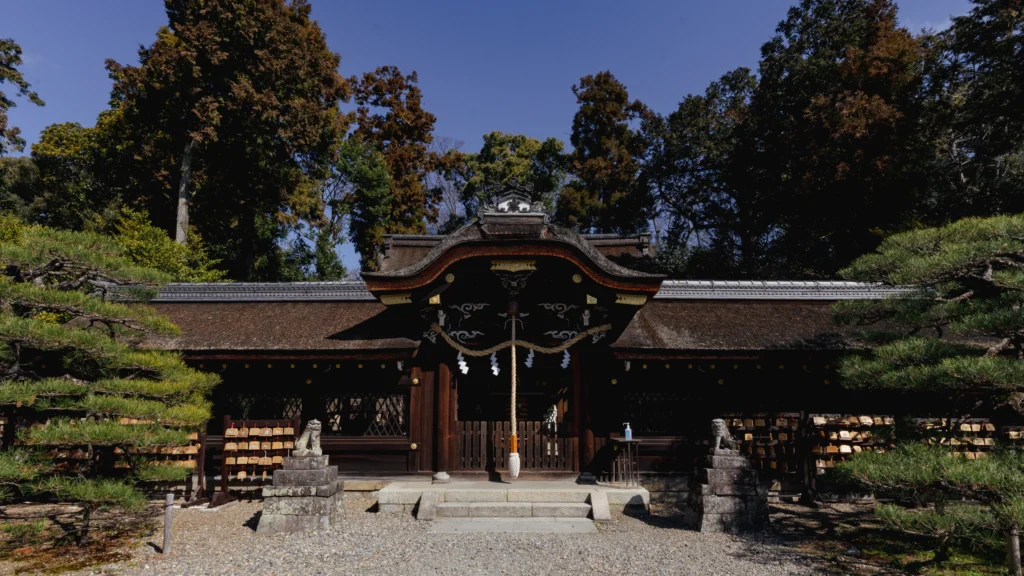 Imagine stepping off a quiet residential street in western Kyoto and finding yourself in a serene sanctuary, where the air is fragrant with plum blossoms and friendly cats lounge in… Read more: Umenomiya Taisha: Kyoto’s Hidden Gem for Sake, Cats, and Blessings
 - Jonangu Shrine: Kyoto’s Guardian of Directions and Imperial HistoryImagine standing at a place that has not only guarded the southern gateway to Kyoto for over 1,200 years but has also been a pivotal stage for Japan’s most dramatic… Read more: Jonangu Shrine: Kyoto’s Guardian of Directions and Imperial History
- Jonangu Shrine’s Weeping Plums: A Guide to Perfect Timing
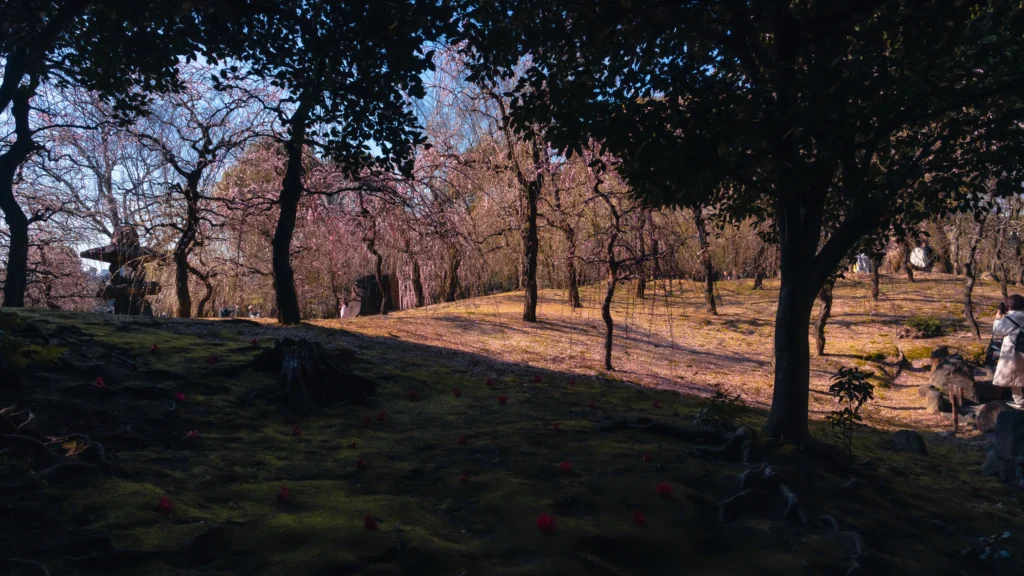 You’ve seen the photos on social media: a breathtaking canopy of pink weeping plum blossoms, so dense it looks like a floral sky. This is the magic of Jonangu Shrine… Read more: Jonangu Shrine’s Weeping Plums: A Guide to Perfect Timing
 - Sasaki Pan: A Taste of Showa-Era Japan at Kyoto’s Legendary Retro Bakery
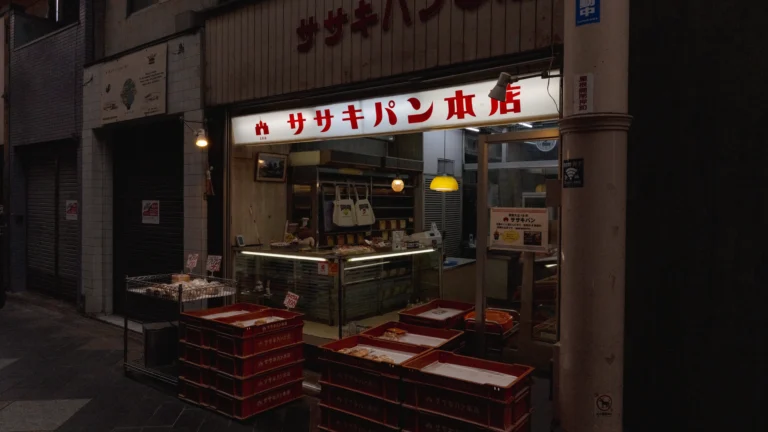
 Step into the Nayamachi Shopping Arcade in Kyoto’s Fushimi district, and you might feel like you’ve traveled back in time. Amidst the modern shops, a warm glow emanates from a… Read more: Sasaki Pan: A Taste of Showa-Era Japan at Kyoto’s Legendary Retro Bakery
 - Gokonomiya Shrine: A Spiritual Oasis in Kyoto’s Fushimi Sake District
 Nestled in the heart of Kyoto‘s famed Fushimi sake district, Gokonomiya Shrine (御香宮神社) offers more than just a tranquil escape. It’s a place steeped in history, legendary water, and vibrant… Read more: Gokonomiya Shrine: A Spiritual Oasis in Kyoto’s Fushimi Sake District
cherry blossom cherry blossoms day trip from tokyo edo period flower festival fuji five lakes fujiyoshida Fukuoka fushimi hanami japan japanese culture japanese food japan travel kamakura kawaguchiko Kumamoto kyoto local food Mount Fuji mt fuji Nagano nature new year holiday Nikko Oku-Nikko Onsen Ramen ryokan Saga sakura Shizuoka shrine sightseeing snow spring in japan spring travel Tochigi Tokyo travel travel guide travel planning winter winter travel Yamanashi