
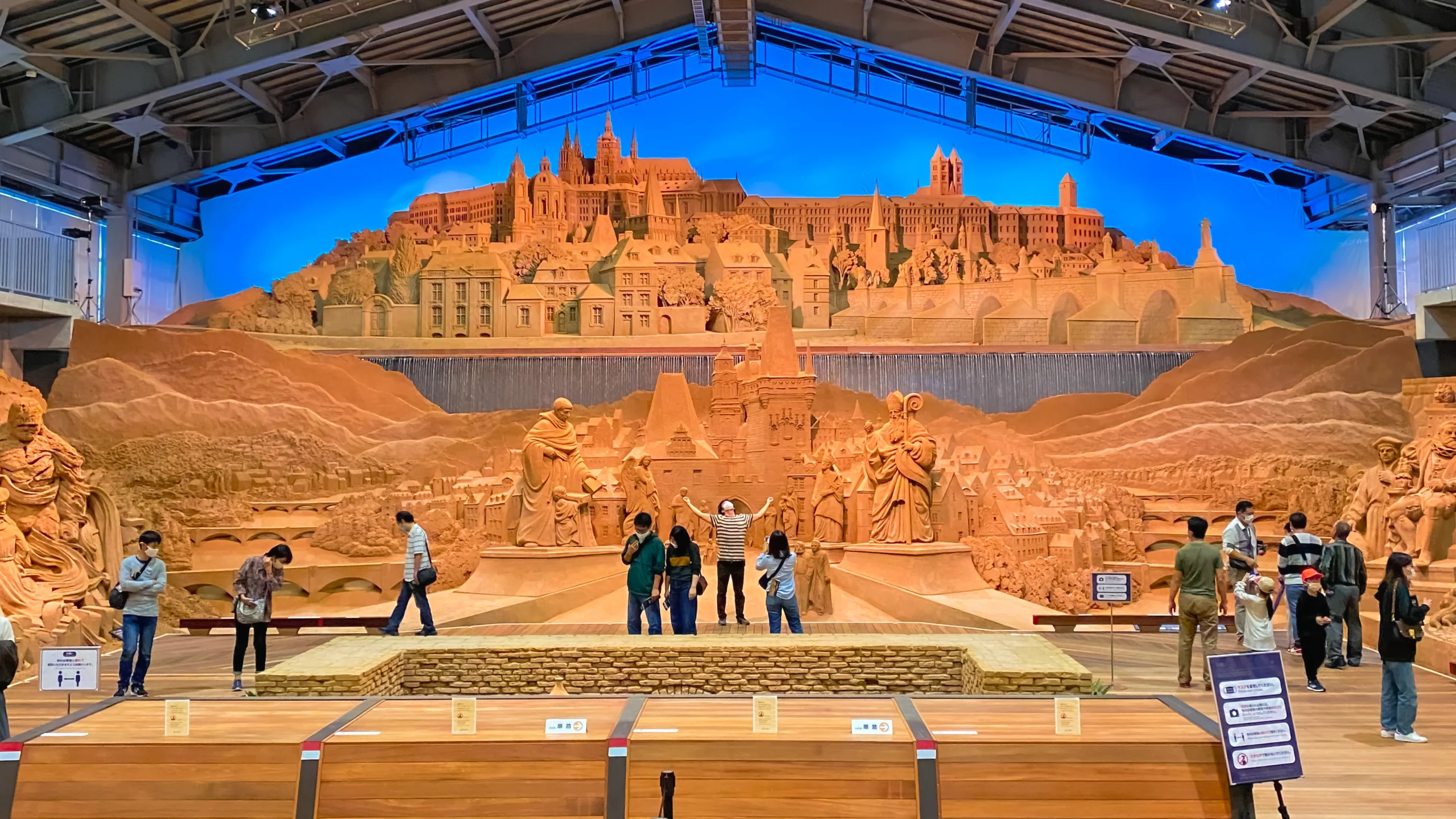

Every January, the entire exhibition is demolished. Months of meticulous work by 20 international sculptors are unceremoniously crushed and returned to plain sand. Why would anyone destroy such monumental art? That is exactly the point—the beauty of the Tottori Sand Museum lies entirely in its impermanence.
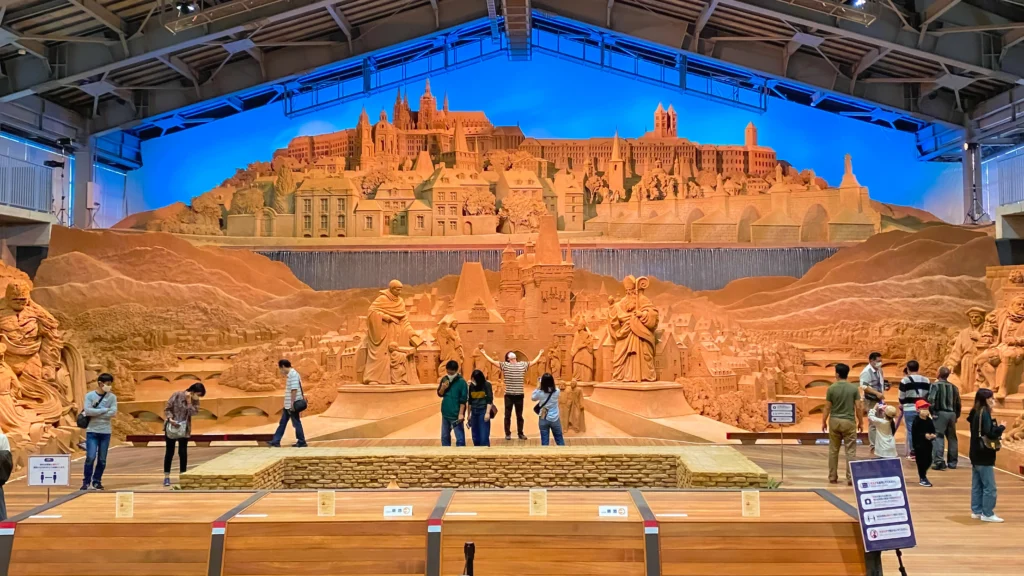
As the world’s only permanent indoor museum dedicated exclusively to sand sculpture, this facility offers an experience unlike any other in Japan. Located just a five-minute walk from the famous Tottori Sand Dunes, the museum operates on a simple but profound concept: “Traveling the World in Sand.”
For its 17th exhibition opening in 2026, the museum celebrates Spain. Timed to coincide with the 100th anniversary of Antoni Gaudí’s death and the completion of the Sagrada Familia’s main tower, the exhibition promises to recreate Spain’s passionate culture and Golden Age history entirely out of sand and water.
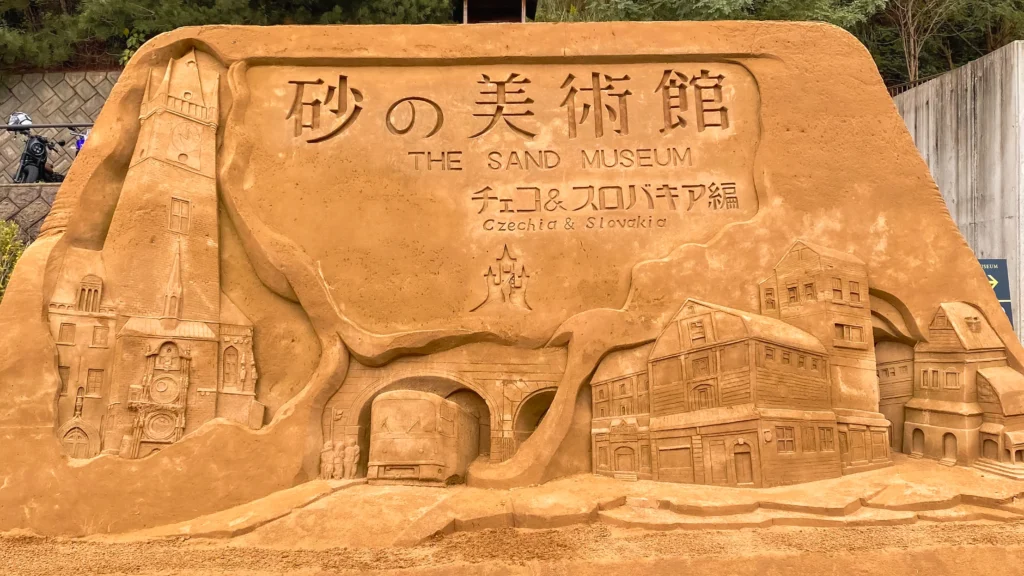
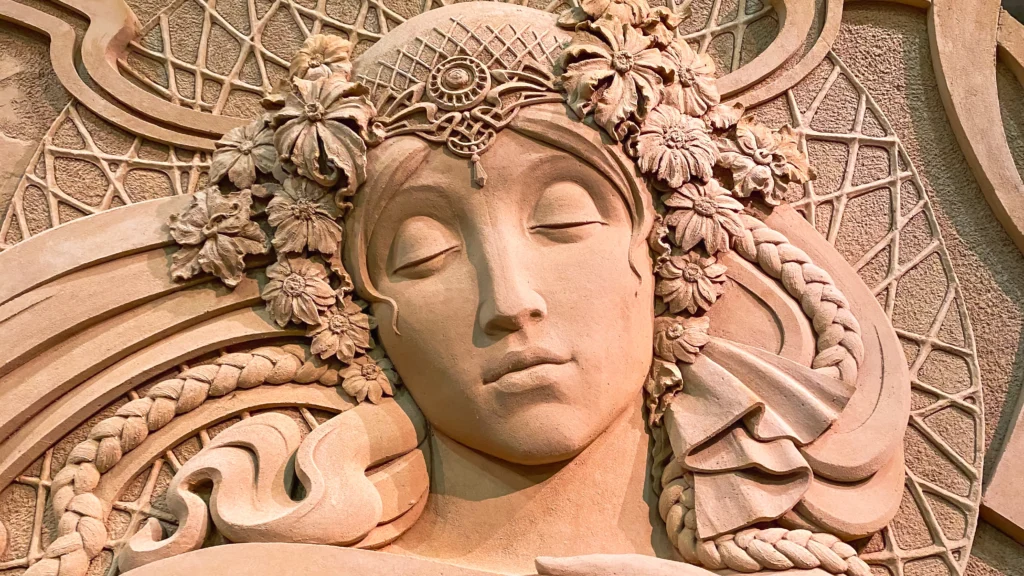
Note: The photos in this article show the incredible craftsmanship from a previous exhibition (Czech & Slovakia). The current 2026 exhibition features Spain.
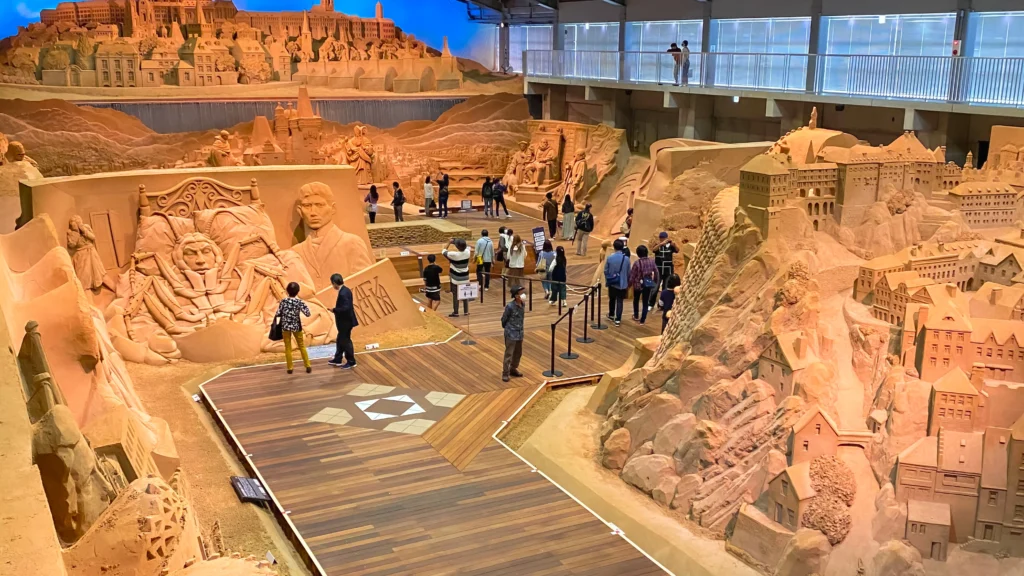
Table of Contents
Quick Facts
| Feature | Details |
| 2026 Theme | Spain (Featuring Gaudí’s Sagrada Familia) |
| Exhibition Period | April 24, 2026 – January 3, 2027 |
| Location | Adjacent to the Tottori Sand Dunes |
| Admission | Adults ¥800 (Advance ¥600), Students ¥400 |
| Materials Used | Only sand and water (no glue or adhesives) |
The 2026 Spain Exhibition: Gaudí in Sand
The 2026 exhibition celebrates Spain and the 100th anniversary of Gaudí’s death. Expect the Sagrada Familia carved entirely from sand and water—no glue, no adhesive, just gravity and craftsmanship. Endorsed by the Embassy of Spain in Japan, the exhibition will feature monumental works depicting Spain’s World Heritage sites, royal art culture, and the history of “the empire on which the sun never sets.”
If you plan to visit before April 24, 2026, please note that the museum is closed to the public. During this time, the previous year’s sculptures are demolished, and international artists are hard at work carving the new Spanish masterpieces.
How Are the Sand Sculptures Made?
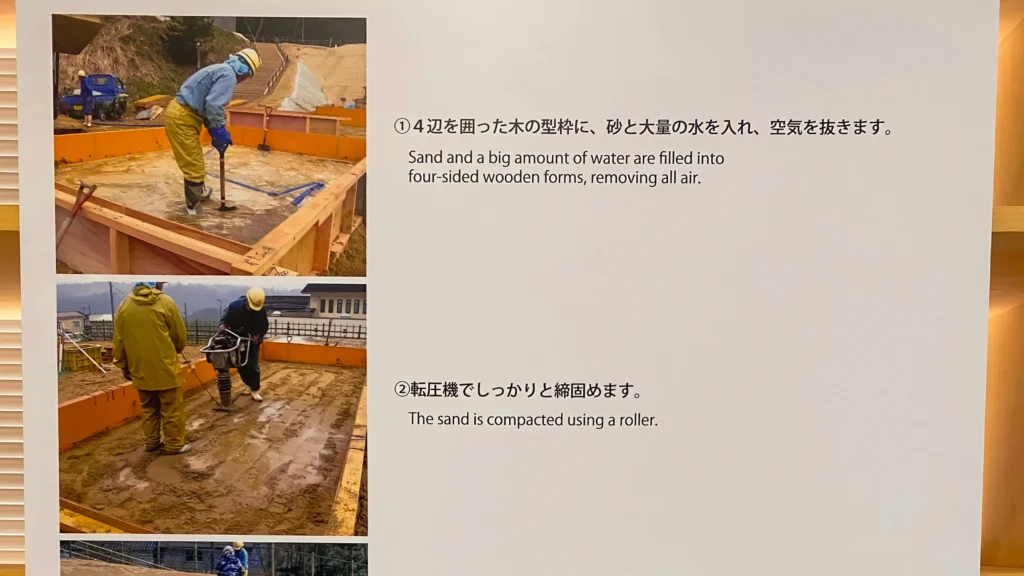
When you stand before a 10-meter-tall sculpture, it is hard to believe it is held together only by water. The process begins by mixing sand with water and packing it tightly into pyramid-shaped wooden forms. After compacting the sand with heavy rollers, the wooden frames are removed.
From there, the invited international artists carve from the top down. Using trowels, spoons, palette knives, and even straws for fine details, they spend two to three months transforming solid blocks of packed sand into intricate, breathtaking art.
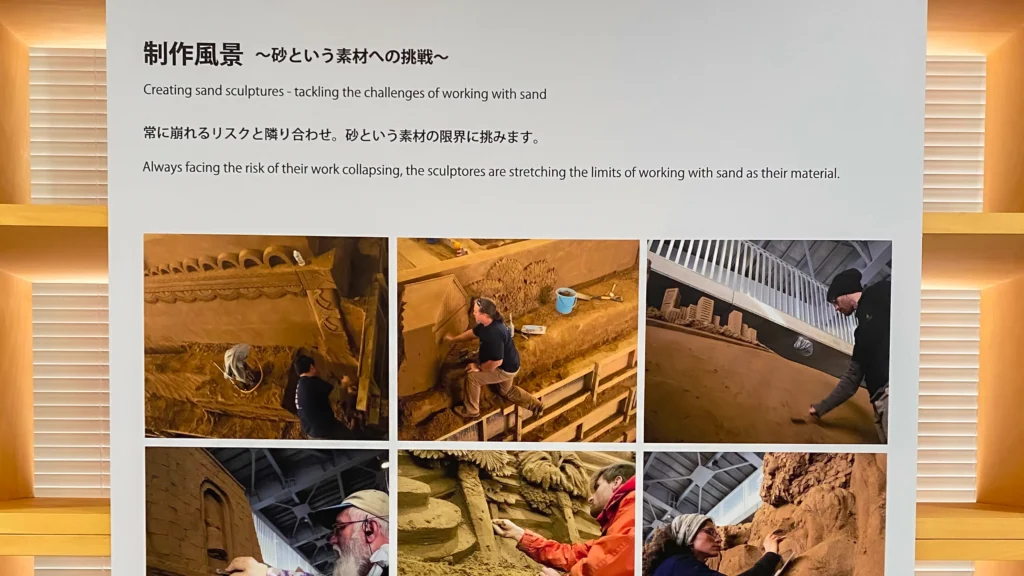
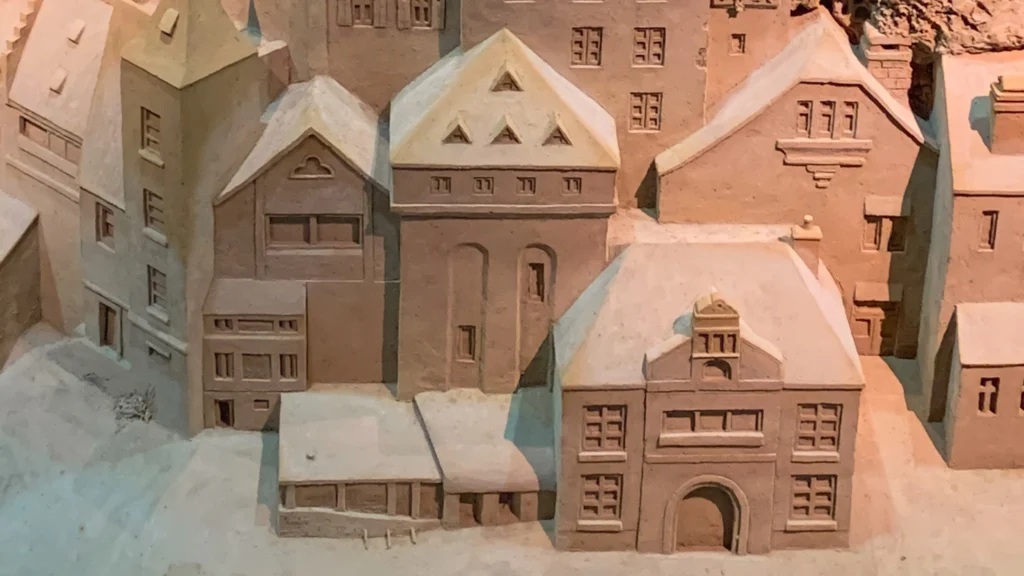
The level of detail is staggering. You can see individual bricks on castle walls, the delicate folds of clothing, and expressive facial features—all of which will eventually be turned back into a pile of sand.

Combining the Museum with the Tottori Sand Dunes
The Sand Museum is a 5-minute walk from the Tottori Sand Dunes. Visit the dunes first for the natural wonder, then step inside for the human one.
We highly recommend starting your day early at the dunes before the sand gets too hot and the crowds arrive. Afterward, the indoor, climate-controlled museum offers a comfortable and awe-inspiring break. The museum’s Sub-Gate connects directly to the Sakyu Center observation deck area, making the transition seamless. Allow about 3 to 4 hours to comfortably experience both locations.
Practical Tips for Your Visit
•Photography is encouraged:
You are welcome to take photos and videos for personal use and social media. However, commercial photography and live streaming are not allowed.
•Dress appropriately:
The temperature inside the massive exhibition hall is kept close to the outside air to preserve the sand. If you visit in late autumn or winter, bring a warm jacket.
•Accessibility:
The museum is barrier-free, featuring elevators, accessible restrooms, and wheelchair or stroller rentals (limited availability).
•Advance Tickets:
If you know your travel dates, purchase advance tickets before April 23, 2026, to save ¥200 on adult admission.
How to Get There
Reaching the Tottori Sand Museum is straightforward from Tottori Station.
•By Bus: Go to Platform 0 at Tottori Station and take the “Sakyu-sen” (Sand Dunes Line) bus. Ride for about 21 minutes and get off at the “Suna no Bijutsukan-mae” stop. The fare is approximately ¥380. Alternatively, take the “Iwami/Iwai Line” to the “Sakyu-Higashiguchi” stop, which is a 3-minute walk away.
•By Car: If you are driving, there is free parking available. The museum front lot holds 34 cars, and the nearby observation deck lot holds 184 cars, with overflow lots available during peak times.
For travelers exploring the wider San’in region or coming from major cities, be sure to check our guides on Getting Around Japan, how to buy JR train tickets, and using IC Cards like Suica and ICOCA to make your journey smooth. If you are flying in, our Japan Airport Guide covers domestic connections to Tottori Airport.
Where to Stay
To make the most of your visit to the dunes and the museum, consider staying in Tottori City.
(Note: This article contains affiliate links. We may earn a commission if you make a purchase.)
Frequently Asked Questions
What is the Tottori Sand Museum?
It is the world’s only permanent indoor museum dedicated exclusively to sand sculpture. International artists create massive, highly detailed works using only sand and water. The entire exhibition is destroyed and rebuilt with a new theme every year.
What is the current exhibition at the Sand Museum in 2026?
The 2026 theme is “Spain.” Opening on April 24, 2026, it celebrates the 100th anniversary of Antoni Gaudí’s death and features monumental sand sculptures of the Sagrada Familia and other aspects of Spanish history and culture.
How are the sand sculptures at Tottori made?
They are made using only sand and water. The sand is packed tightly into wooden forms and compacted. Once the forms are removed, artists carve the solid blocks from the top down using various tools. No glue or binding agents are used.
Can I visit the Sand Museum and sand dunes together?
Yes, absolutely. The museum is located just a 5-to-10-minute walk from the Tottori Sand Dunes. It is highly recommended to visit the dunes first, then walk over to the museum.
Is the Tottori Sand Museum worth visiting?
Yes. The sheer scale and intricate detail of the sculptures are breathtaking, especially knowing they are temporary. It is a perfect cultural addition to a trip to the dunes and offers a great indoor activity regardless of the weather.
Sources
[1] Tottori Sand Museum Official Website. “17th Exhibition: Spain.”
[2] Tottori Sand Museum Official Website. “About the Museum.”
[3] Tottori Sand Museum Official Website. “Access.”

- Tottori Sand Museum 2026: Spain Exhibition, Gaudí in Sand & How to VisitEvery January, the entire exhibition is demolished. Months of meticulous work by 20 international sculptors are unceremoniously crushed and returned to plain sand. Why would anyone destroy such monumental art?… Read more: Tottori Sand Museum 2026: Spain Exhibition, Gaudí in Sand & How to Visit
- Tottori Sand Dunes 2026: 8 Activities, Free Entry & How to Get There
 2026 Update: The Sakyu Center Chairlift now accepts IC cards (Suica, ICOCA) as of March 21, 2026. The Sand Museum reopens April 24, 2026, with a new Spain theme. Most… Read more: Tottori Sand Dunes 2026: 8 Activities, Free Entry & How to Get There
 - Kawagoe Kumano Shrine 2026: 6 Interactive Rituals You Can Actually Try
 2026 Update: Kawagoe Kumano Shrine now offers QR-code multilingual guides at 16 locations throughout the grounds, available in English, Chinese, and Korean. The shrine also accepts cashless payments (PayPay) for… Read more: Kawagoe Kumano Shrine 2026: 6 Interactive Rituals You Can Actually Try
 - Kitain Temple Kawagoe 2026: Edo Castle Rooms & 538 Rakan [With Map]
![Kitain Temple Kawagoe 2026: Edo Castle Rooms & 538 Rakan [With Map]](https://hiddenjapan-gems.com/wp-content/uploads/2026/04/DSC4602-1024x576.webp) Most visitors to Kawagoe head straight to the warehouse district. Start at Kitain instead — it’s quieter in the morning, and you’ll walk the same route the Tokugawa shoguns once… Read more: Kitain Temple Kawagoe 2026: Edo Castle Rooms & 538 Rakan [With Map]
Most visitors to Kawagoe head straight to the warehouse district. Start at Kitain instead — it’s quieter in the morning, and you’ll walk the same route the Tokugawa shoguns once… Read more: Kitain Temple Kawagoe 2026: Edo Castle Rooms & 538 Rakan [With Map] - Kuonji’s 5 AM Bell: A Traveler’s Guide to Morning Prayers at Minobusan
 2026 Update: As of October 2024, the morning prayer time has been standardized to 5:30 AM year-round. Previously, the schedule changed with the seasons, and many third-party websites still show… Read more: Kuonji’s 5 AM Bell: A Traveler’s Guide to Morning Prayers at Minobusan
cherry blossom cherry blossoms day trip from tokyo flower festival fuji five lakes fujiyoshida Fukuoka fushimi hanami hiking japan japanese culture japanese food japanese garden japan travel kamakura kawagoe kawaguchiko Kumamoto kyoto local food Mount Fuji mt fuji Nagano nature Nikko Oku-Nikko Onsen Ramen Saga saitama sakura Shizuoka shrine sightseeing snow spring in japan Tochigi Tokyo travel travel guide travel planning winter winter travel Yamanashi

![Kitain Temple Kawagoe 2026: Edo Castle Rooms & 538 Rakan [With Map]](https://hiddenjapan-gems.com/wp-content/uploads/2026/04/DSC4602-768x432.webp)