

While Nikko’s Toshogu Shrine is famously known as the grand mausoleum of Tokugawa Ieyasu, a quieter but equally significant shrine lies hidden in the historic city of Kawagoe. The Senba Toshogu Shrine, counted as one of Japan’s three great Toshogu shrines alongside those in Nikko and Kunozan, offers a direct connection to the legacy of the first Tokugawa shogun. Located just south of the renowned Kitain Temple, this tranquil spot provides a fascinating glimpse into the power and artistry of the Edo Period.
This guide will introduce you to the history, architecture, and practical details needed to visit the Senba Toshogu in Kawagoe. For travelers exploring the deeper historical layers of “Little Edo,” a visit to this important cultural property is a rewarding experience, revealing a site of immense historical importance that is often overlooked by the main tourist crowds.
Table of Contents
Quick Facts
| Feature | Details |
| Best Time to Visit | Autumn for fall foliage. Open only on Sundays and public holidays. |
| Time Needed | 30-45 minutes |
| Nearest Station | Hon-Kawagoe Station (Seibu Line), about a 12-15 minute walk. |
| Address | 1-21-1 Kosenbamachi, Kawagoe City, Saitama |
| Opening Hours | 10:00 AM – 3:00 PM (Sundays & public holidays only) |
| Admission | Free |
| Payment | Cash for any offerings or purchases. Credit cards not accepted. |
| Accessibility | Involves stone steps. Not fully accessible. |
| Photography | Generally permitted on the grounds, but be respectful. |
The History of Senba Toshogu: A Stop on a Shogun’s Final Journey
The story of Senba Toshogu is directly linked to the death of Tokugawa Ieyasu in 1616. After he passed away at Sunpu Castle (in modern-day Shizuoka), his body was first interred at Kunozan. A year later, in 1617, his remains were moved to their final resting place in Nikko. During this procession, the high priest Tenkai, a trusted advisor to Ieyasu, conducted a four-day memorial service at Kitain Temple in Kawagoe.
To commemorate this significant event, a shrine dedicated to Ieyasu was established on the grounds. The current magnificent structures were built in 1640 under the order of the third shogun, Tokugawa Iemitsu, after the original shrine was lost in the Great Fire of Kawagoe in 1638. This reconstruction highlights the deep connection between the Tokugawa shogunate and the city of Kawagoe.
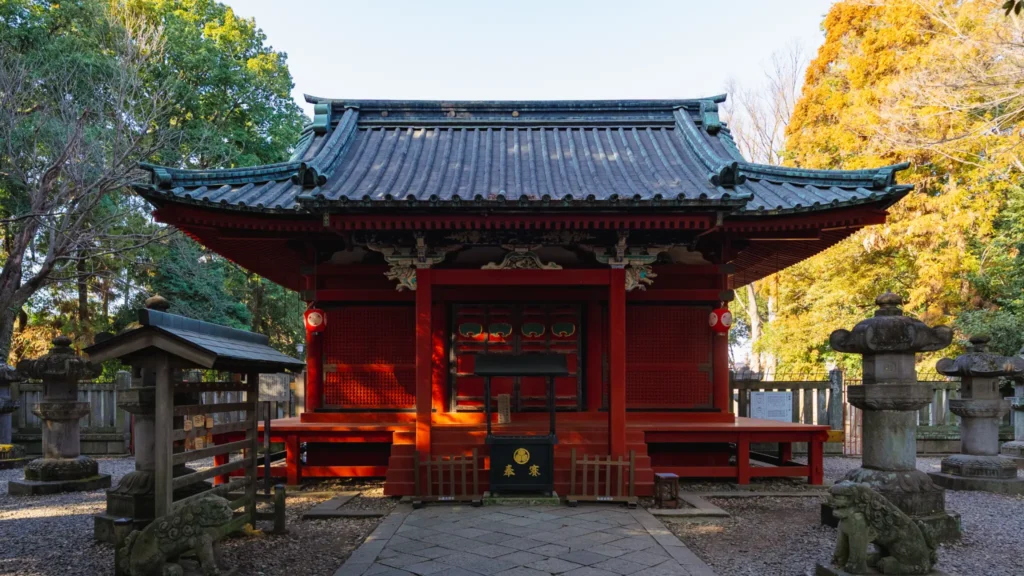
Architecture and Important Cultural Properties
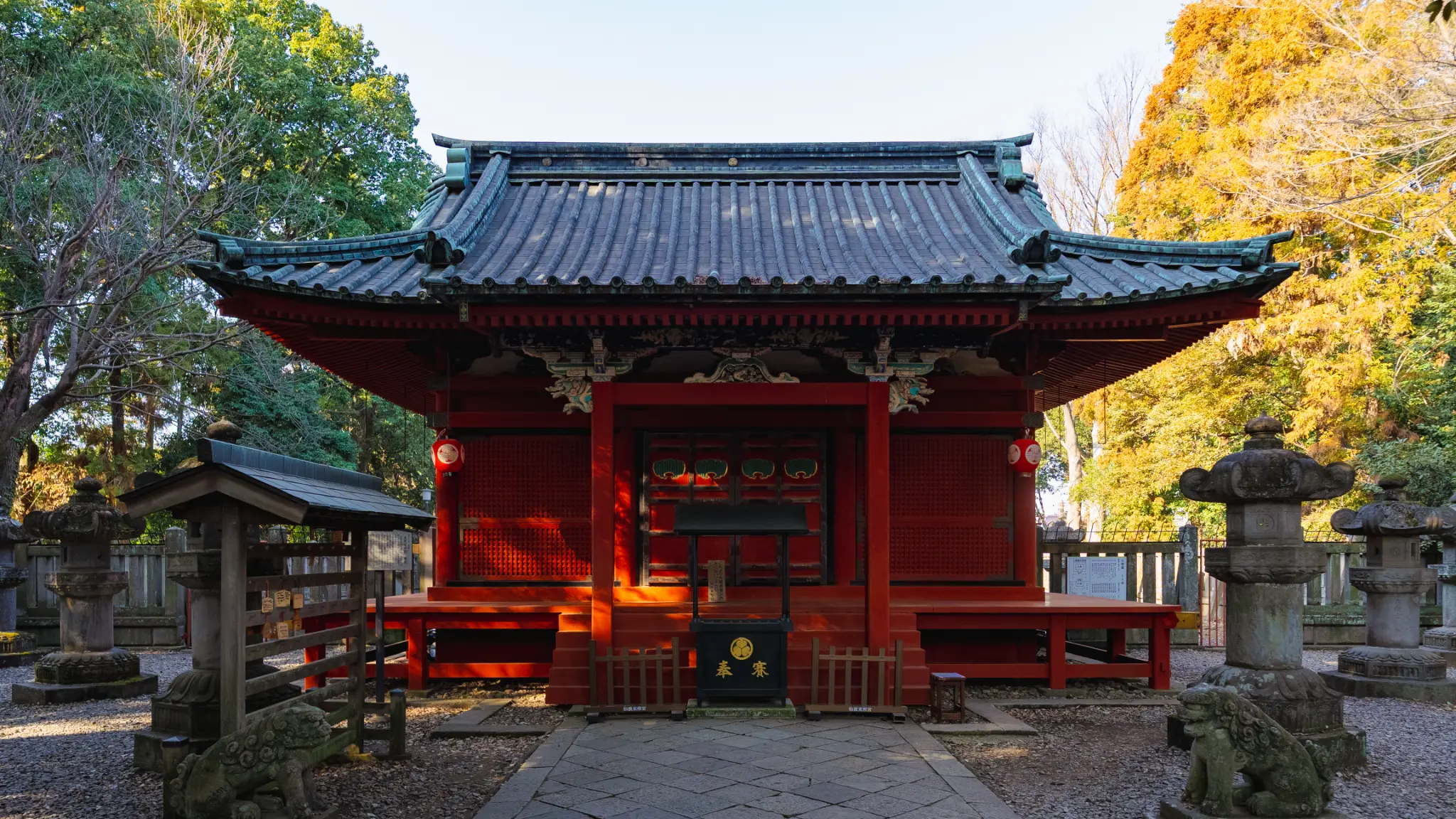
Nearly every structure at Senba Toshogu is designated as a National Important Cultural Property. The shrine is a masterpiece of early Edo-period craftsmanship, featuring brilliant vermilion lacquer and intricate carvings that have been carefully preserved.
The key structures include:
•Honden (Main Hall): Where the spirit of Tokugawa Ieyasu is enshrined.
•Haiden (Worship Hall): The hall for prayers, connected to the Honden via the Heiden (offering hall).
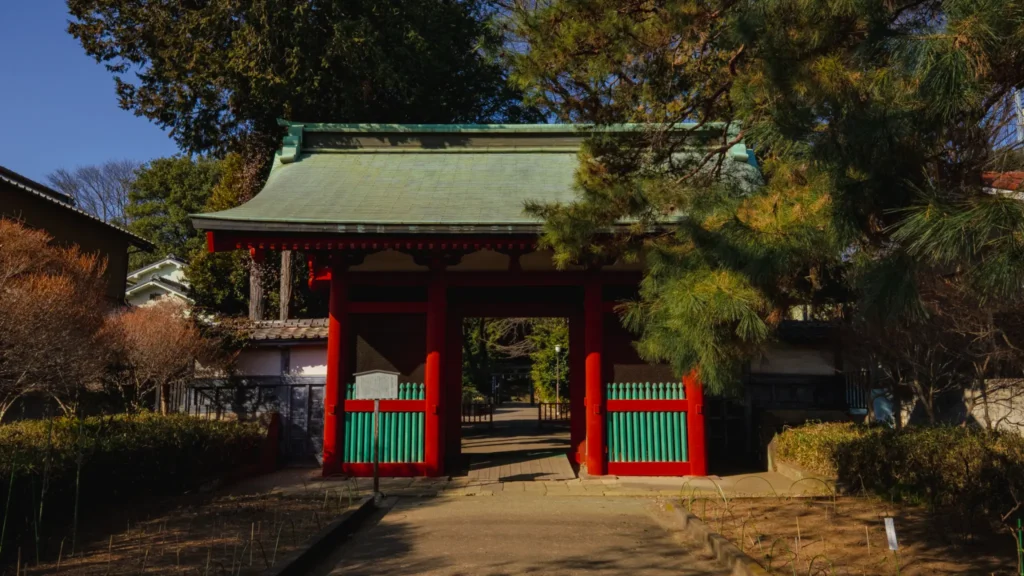
•Karamon (Chinese Gate): An ornate gate that leads to the main shrine complex.
•Zuishinmon (Gate): A larger gate that marks the entrance to the shrine grounds from the Kitain Temple side.
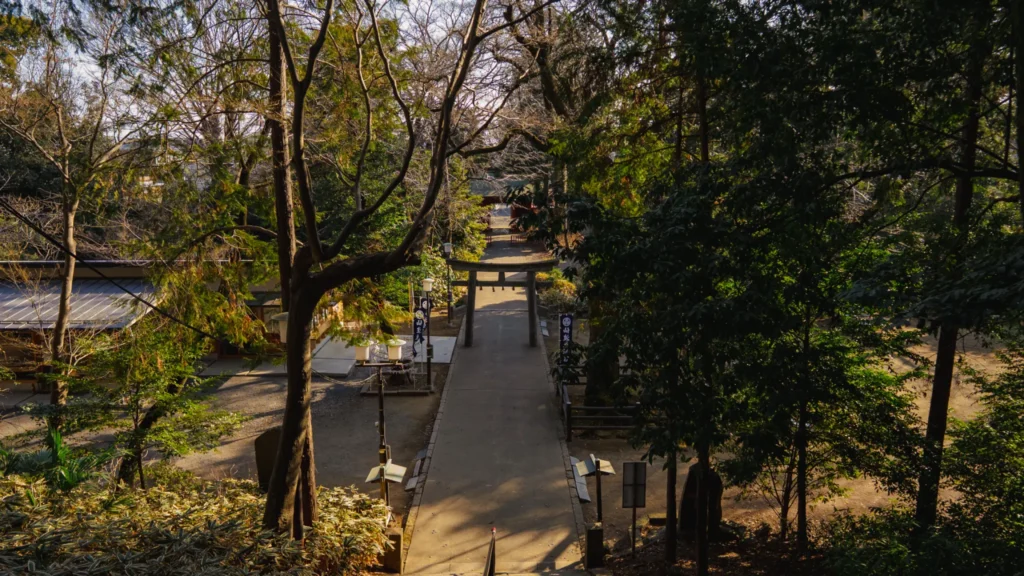
•Stone Torii: The formal entrance gate to the shrine.
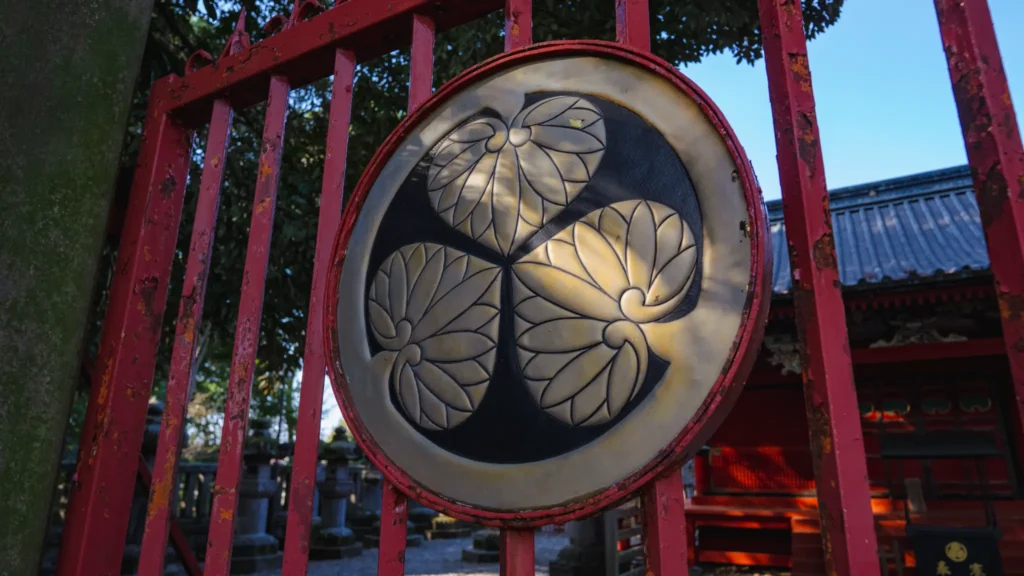
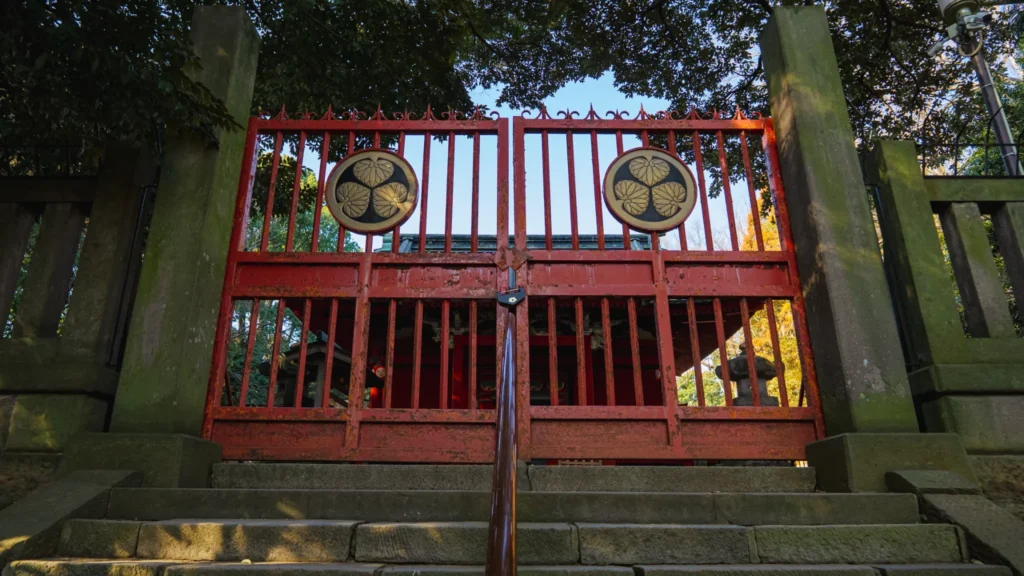
One of the most striking features is the prominent Tokugawa family crest (Mitsuba Aoi), which can be seen on the gates and throughout the shrine, symbolizing the shogunate’s authority.
How to Get There
Senba Toshogu is located adjacent to Kitain Temple, making it easy to visit both sites together.
•By Train: The closest station is Hon-Kawagoe Station on the Seibu Shinjuku Line, approximately a 12-15 minute walk away. From Kawagoe Station (JR and Tobu Tojo Lines), it is about a 20-minute walk.
•By Car: Parking is not available at the shrine itself. Visitors are advised to use the paid parking at the nearby Kitain Temple.
What to See at Senba Toshogu
Despite its compact size, the shrine is rich with historical details.
1. The Vivid Shrine Buildings
Take your time to admire the detailed carvings and vibrant colors of the worship hall and gates. The craftsmanship is a testament to the high level of artistry during the Edo Period. The buildings are particularly beautiful when framed by the surrounding evergreen trees and autumn foliage.
2. The Stone Lanterns
Lining the approach to the shrine are 26 stone lanterns. These were donated by successive lords of the Kawagoe Domain, many of whom were important figures in the Tokugawa government. Each lantern tells a piece of the city’s history.
3. The Locked Gate and Its Meaning
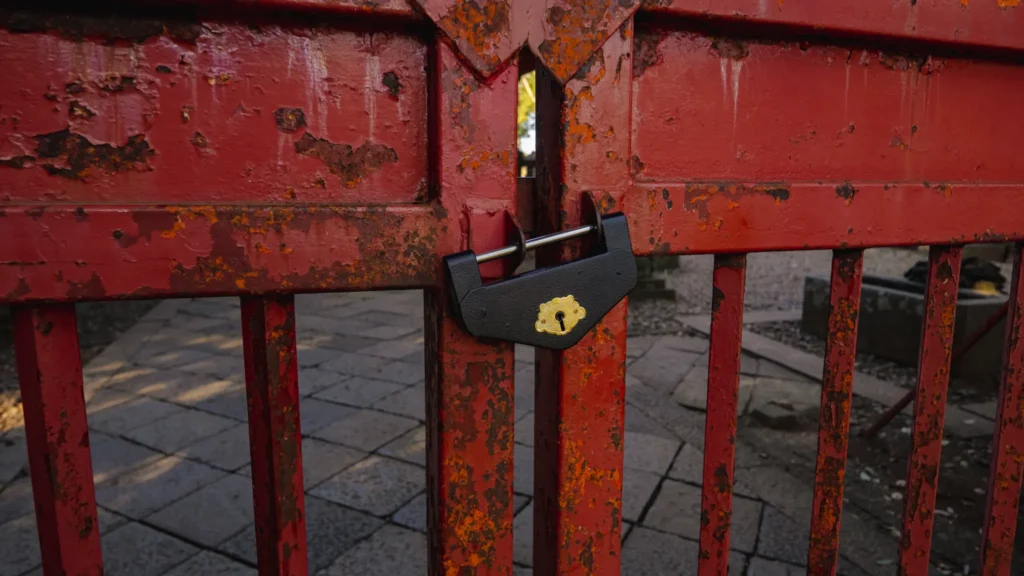
As you approach the main hall, you will find a striking red iron gate, often locked. The shrine is only open to the public on Sundays and holidays. This limited access has helped preserve the shrine in its original state. The locked gate itself, with its weathered paint and heavy padlock, speaks to the shrine’s quiet, protected status.
Practical Tips for Your Visit
•Check the Calendar:
Remember, the shrine is only open on Sundays and public holidays. Plan your visit accordingly.
•Combine with Kitain Temple:
Senba Toshogu is right next to Kitain Temple, home of the 500 Rakan statues. It is highly recommended to visit both on the same trip.
•No Goshuin on Site:
While some sources mention a goshuin (shrine stamp) is available at a nearby cafe, the official FAQ on GLTJP states they are not offered. Please confirm on the day of your visit if this is important to you.
•Respectful Photography:
Photography is allowed, but be mindful that this is a sacred site.
Where to Stay Nearby
Since Senba Toshogu is easily accessible, staying near the main train stations in Kawagoe is a convenient option. This allows you to explore the rest of what Little Edo has to offer.
Find Hotels Near Hon-Kawagoe Station
FAQs
Q: Is Senba Toshogu worth visiting?
A: Yes, especially for those interested in Japanese history, the Tokugawa shogunate, or who want to see a beautifully preserved example of early Edo-period shrine architecture away from the crowds.
Q: Why is it called one of the three great Toshogu shrines?
A: It is counted among the three most important Toshogu shrines, along with Nikko (the final resting place) and Kunozan (the original burial site), because of the significant memorial service held here for Tokugawa Ieyasu during his final journey.
Q: Can I go inside the buildings?
A: Access to the interior of the buildings is generally not permitted. The shrine is appreciated from the outside, where a guide is present on open days to provide explanations.
Q: Is it different from Nikko Toshogu?
A: Yes. While both are dedicated to Tokugawa Ieyasu, Senba Toshogu is much smaller and more tranquil. It offers a more intimate and less crowded experience, while Nikko is known for its grand scale and elaborate, sprawling complex.
Sources
[1] Koedo Kawagoe Tourist Association. (n.d.). Senba Toshogu. Retrieved from
[2] Kitain Temple Official Website. (n.d. ). Senba Toshogu. Retrieved from
[3] Kawagoe City Official Website. (n.d. ). Senba Toshogu. Retrieved from
[4] GOOD LUCK TRIP. (2025, October 4 ). Senba Toshogu. Retrieved from
[5] Kawagoe City Location Library. (n.d. ). Senba Toshogu. Retrieved from
Located just a short walk from the main attractions of Kawagoe, Senba Toshogu offers a peaceful and profound connection to Japan’s feudal history. It stands as a quiet guardian of the city’s deep ties to the Tokugawa legacy.

- Starbucks in a Kimono: A Guide to Kawagoe’s Most Beautiful Coffee Shop
 In the heart of Kawagoe, a town affectionately known as “Little Edo,” lies a Starbucks unlike any other. Steps away from the iconic Toki no Kane (Bell of Time) tower,… Read more: Starbucks in a Kimono: A Guide to Kawagoe’s Most Beautiful Coffee Shop
 - Senba Toshogu: A Guide to Kawagoe’s Hidden Tokugawa ShrineWhile Nikko’s Toshogu Shrine is famously known as the grand mausoleum of Tokugawa Ieyasu, a quieter but equally significant shrine lies hidden in the historic city of Kawagoe. The Senba… Read more: Senba Toshogu: A Guide to Kawagoe’s Hidden Tokugawa Shrine
- Kawagoe Castle Honmaru Goten: A Glimpse into Samurai Lord Life in Little Edo
 Step back in time in Kawagoe, a city affectionately known as “Little Edo,” and discover one of its most precious historical treasures: the Kawagoe Castle Honmaru Goten. As the only… Read more: Kawagoe Castle Honmaru Goten: A Glimpse into Samurai Lord Life in Little Edo
 - Kawagoe Sightseeing Guide: A Perfect Day Trip to Little Edo
 Just 30 minutes from the bustle of central Tokyo, the city of Kawagoe in Saitama Prefecture offers a journey back in time. Known affectionately as “Little Edo” (Koedo), its streets… Read more: Kawagoe Sightseeing Guide: A Perfect Day Trip to Little Edo
2026 cafe cherry blossom cherry blossoms day trip from tokyo edo period enoden flower festival fuji five lakes fujiyoshida Fukuoka hanami hiking japan japanese culture japanese food japan travel kamakura kawagoe kawaguchiko kawazu sakura Kumamoto kyoto local food Mount Fuji mt fuji Nagano new year holiday nightlife noodles oita Onsen Ramen Saga sakura Shizuoka shrine spring in japan spring travel Tokyo travel travel guide travel planning winter travel Yamanashi