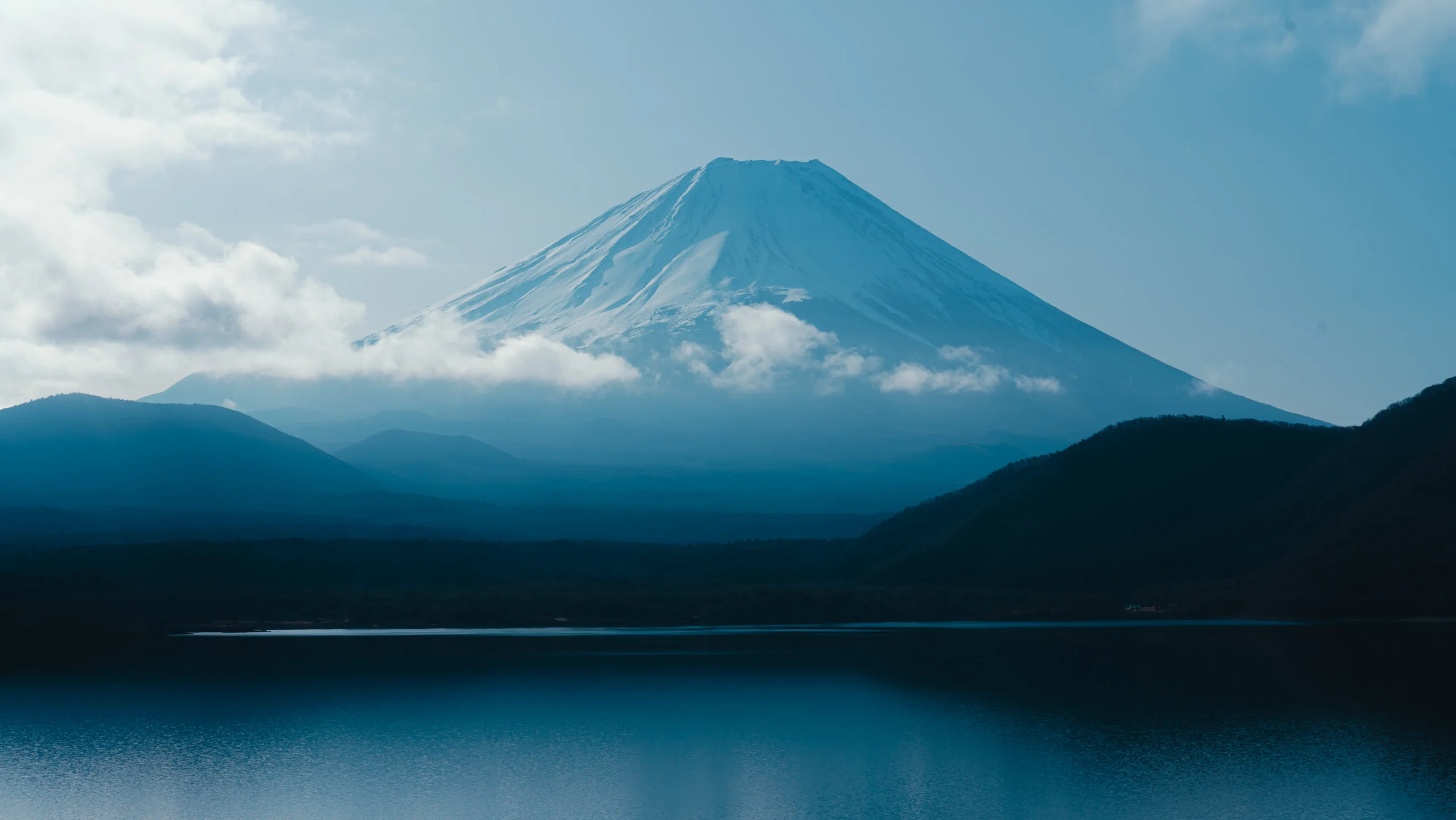

Have you ever pulled a 1,000 yen bill from your wallet, looked at the majestic image of Mount Fuji reflected on a lake, and wondered, “Is this place real?” I can tell you it is, and standing there is a moment that connects you deeply to the heart of Japan. That place is Lake Motosu (本栖湖), and the view is even more breathtaking in person.
As a travel writer for hiddenjapan-gems.com, I’ve chased many iconic views, but the crisp air and profound silence at Lake Motosu offer a unique kind of magic. This guide will walk you through everything you need to know to experience that same awe—from finding the exact spot pictured on the banknote to discovering the lake’s other hidden charms.
Table of Contents
Quick Facts About Lake Motosu
| Feature | Details |
| Location | Motosu, Fujikawaguchiko-machi, Minamitsuru-gun, Yamanashi Prefecture |
| Access | Approx. 50 min by bus from Kawaguchiko Station, get off at Motosuko bus stop. Approx. 30 min by car from Kawaguchiko IC. |
| Parking | Free parking available along the lakeshore. |
| Best Known For | The view of Mount Fuji featured on the Japanese 1,000 yen bill. |
| Key Activities | Photography, hiking, camping, kayaking, windsurfing, fishing. |
| Best Time to Visit | All year round, with distinct seasonal beauty (cherry blossoms in spring, vibrant colors in summer, foliage in autumn, and crisp, clear views with Diamond Fuji in winter). |
| Facilities | Public toilets available. |
Overview: A Lake of Unparalleled Clarity and Calm
As the founder of hiddenjapan-gems.com, I find that Lake Motosu offers a unique sense of tranquility that sets it apart from its four siblings in the Fuji Five Lakes region. It is the westernmost, the deepest (at 121.6 meters), and boasts the most pristine water, so clear that its deep blue hue is often called “Motosu Blue.” [1]
What truly defines the experience here is the raw, unfiltered connection with nature. Unlike more developed lakeside areas, Motosu retains a wilder, more serene character. The absence of powered boats, a measure taken to preserve its exceptional water quality, means the only sounds you’ll often hear are the wind rustling through the trees and the gentle lapping of water against the shore. It’s a place that invites quiet contemplation, whether you’re an avid photographer waiting for the perfect light on Fuji-san or simply someone seeking refuge from the bustle of city life.
Best Time to Visit Lake Motosu
Honestly, there is no bad time to visit Lake Motosu, as each season paints the landscape in a different light.
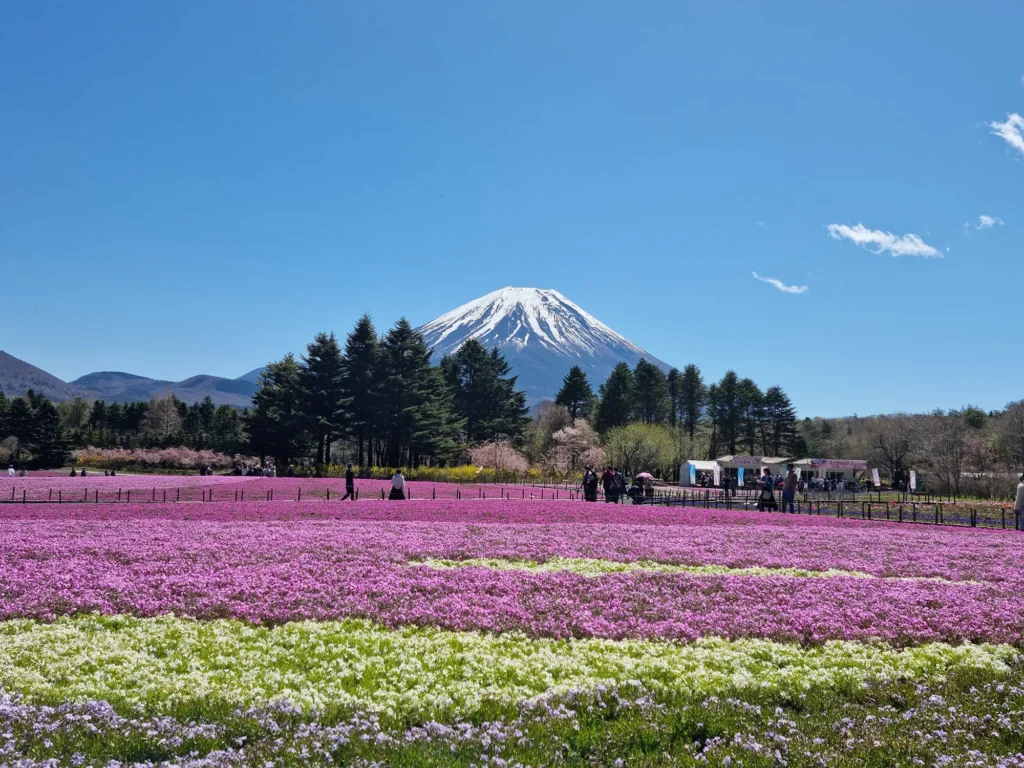
•Spring (Mid-April to May): The area comes alive with color. The famous Fuji Shibazakura (Moss Phlox) Festival takes place nearby, carpeting the fields in brilliant shades of pink. Cherry blossoms also frame the lake in mid-to-late April, creating a classic Japanese scene.
•Summer (June to August): The deep green of the surrounding forests contrasts beautifully with the lake’s blue waters. This is the peak season for water activities like kayaking, canoeing, and windsurfing. The annual Shinko-sai festival on August 3rd lights up the night sky with a spectacular fireworks display over the lake. [2]
•Autumn (October to November): The shoreline erupts in fiery reds and golds. The crisp autumn air provides some of the clearest views of Mount Fuji, and the reflection of the autumn leaves on the water is simply stunning. This is also the prime season for Himemasu (landlocked salmon) fishing.
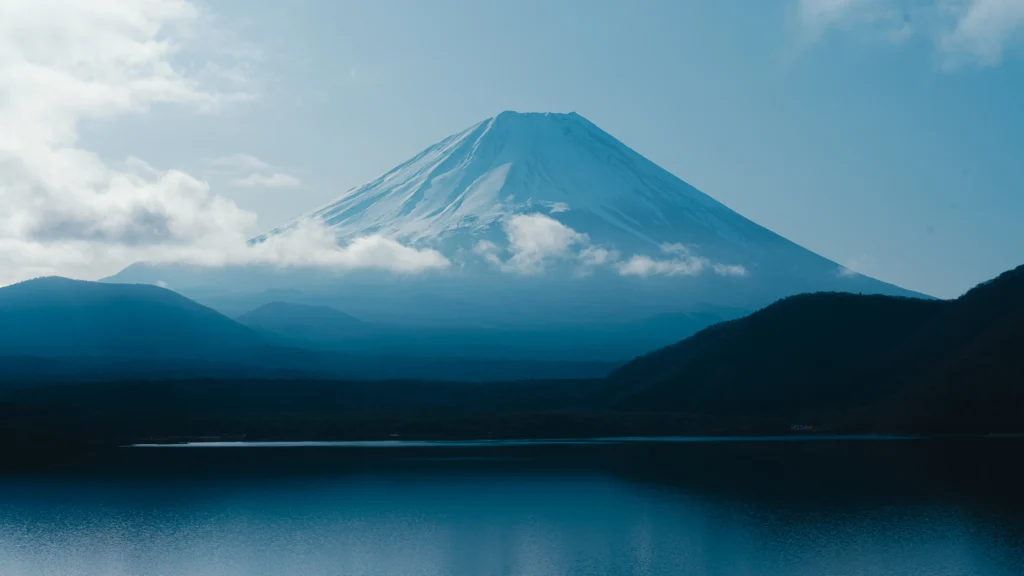
•Winter (December to February): The air is cold and sharp, resulting in exceptionally clear, unobstructed views of a snow-dusted Mount Fuji. From late December to early January, photographers flock to nearby Ryugatake Mountain to capture the “Diamond Fuji,” a phenomenon where the rising sun aligns perfectly with the mountain’s peak, causing it to sparkle like a jewel. [2]
How to Get to the Famous 1,000 Yen View
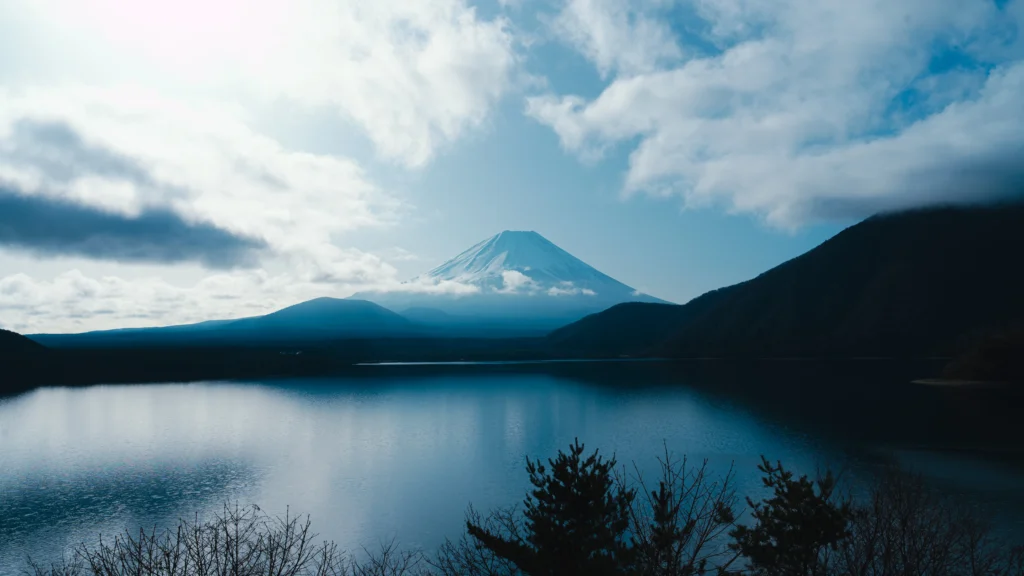
The iconic viewpoint is not immediately obvious from the main road, but it’s well worth the short journey. The photograph by Koyo Okada that graces the 1,000 yen bill was taken from the Nakanokura Pass Observation Deck (中ノ倉峠展望台).
1.Drive or Take a Bus: Head towards the western shore of Lake Motosu. There is a free public parking lot near the Koan Campsite (浩庵キャンプ場).
2.Find the Trailhead: From the parking area, look for the trailhead leading up the mountain. It’s a well-trodden path but can be steep in places.
3.Hike for 20-30 Minutes: The hike itself is a rewarding experience, winding through the forest. It’s manageable for most fitness levels, but be sure to wear sturdy shoes like sneakers or hiking boots.
4.Arrive at the Deck: You’ll reach a wooden observation deck. From here, the view unfolds before you—the vast expanse of Lake Motosu, the gentle slopes of the surrounding mountains, and the perfect, symmetrical cone of Mount Fuji. It’s a moment of pure magic when you realize you’re standing in the exact spot of that famous image.
For those unable to make the hike, you can still get magnificent (though slightly different) views of Mount Fuji from various points along the northern shore of the lake.
What to Do at Lake Motosu
Beyond chasing the famous photograph, Lake Motosu is a hub for outdoor enthusiasts.
1.Capture the “Reversed Fuji” (Sakasa Fuji):
On a calm, windless day, the lake’s surface becomes a perfect mirror, creating a stunning reflection of Mount Fuji. This is the famous Sakasa Fuji. The northern shore is the best place to witness this.
2.Enjoy Water Sports:
The crystal-clear water is irresistible. Rent a kayak or a stand-up paddleboard to explore the serene surface of the lake. Lake Motosu is also known as a mecca for windsurfing in Japan, thanks to the consistent winds that blow across its expanse. [2]
3.Go Fishing:
The lake is stocked with various fish, including rainbow trout and the delicious Himemasu salmon. The fishing season for Himemasu in spring and autumn attracts anglers from all over the country. Note that a fishing permit is required.
4.Explore the ‘Yuru Camp’ Locations:
For fans of the popular anime series Laid-Back Camp (Yuru Camp△), Lake Motosu is a pilgrimage site. Many scenes from the show were set here, and you can visit the real-life locations that inspired the anime, including the Koan Campsite.
Practical Tips for Your Visit
•Payment:
Most small shops and rental places around the lake are cash-only. While larger hotels or facilities may accept cards, it’s wise to bring sufficient yen.
•Food:
There are several restaurants and eateries along the main road (Route 300). Be sure to try Yamanashi’s local specialty, Hoto, a hearty flat noodle soup with vegetables. Some restaurants also serve dishes made with local deer meat (shika) or wild boar (inoshishi).
•Parking:
Free parking is available at several points along the northern and eastern shores, but they can fill up quickly on weekends and holidays, especially during the Shibazakura festival.
•Dress in Layers:
The temperature by the lake can be significantly cooler than in nearby towns, even in summer. A windproof jacket is always a good idea.
Suggested Mini-Itinerary: A Perfect Half-Day at the Lake
•Morning (2-3 hours): Start your day by hiking up to the Nakanokura Pass Observation Deck to see the 1,000 yen bill view. Take your time to soak it all in.
•Late Morning (1-2 hours): Descend and enjoy a leisurely stroll along the northern shore. Find a quiet spot to sit, skip stones, and watch the light change on Mount Fuji’s face.
•Lunch (1 hour): Head to a local restaurant for a warm bowl of Hoto noodles to refuel after your morning adventure.
Strategic FAQ Section
Q: Where can I see the exact view of Mt. Fuji from the 1,000 yen bill?
A: You can see this iconic view from the Nakanokura Pass Observation Deck on the western side of Lake Motosu. It requires a 20-30 minute uphill hike from the lakeside parking area.
Q: Is it possible to swim in Lake Motosu?
A: While the water is incredibly clean, it is also very cold year-round as it’s fed by springs from Mt. Fuji. While some people take a quick dip in summer, it’s generally better suited for water sports like kayaking and paddleboarding.
Q: What is the best way to get to Lake Motosu without a car?
A: The most common way is to take a bus from Kawaguchiko Station. The bus ride takes about 50 minutes and offers scenic views along the way. Get off at the “Motosuko” bus stop.
Q: Are there restaurants and cafes right by the lake?
A: Yes, there are several restaurants and small eateries, particularly along Route 300 on the eastern and northern shores. They offer local specialties and provide great views while you dine.
Q: When can I see “Diamond Fuji” at Lake Motosu?
A: The Diamond Fuji phenomenon, where the sun aligns with the peak of Mt. Fuji, can be seen from the summit of nearby Ryugatake Mountain from late December to early January. It’s a popular New Year’s spectacle.
Q: Is Lake Motosu crowded?
A: Compared to Lake Kawaguchiko, Lake Motosu is much quieter and less developed, which is a large part of its charm. It can get busy during peak holiday weeks and the Shibazakura festival, but it generally offers a more peaceful experience.
Conclusion: More Than Just a Picture
Lake Motosu is far more than just a photo opportunity. It’s a destination that quiets the mind and stirs the soul. The journey to find that famous view becomes part of the memory, and the lake’s profound stillness stays with you long after you leave. Whether you come to capture the perfect reflection of Fuji-san or simply to breathe in the pristine mountain air, Lake Motosu delivers an authentic and unforgettable piece of Japan.
Article Metadata
•Last updated: March 27, 2026
Sources checked
•[1] Yamanashi Tourism Organization Official Website
•[2] Fuji,CanGo (Fuji Tourism Development) Report

- Kuonji’s 5 AM Bell: A Traveler’s Guide to Morning Prayers at Minobusan
 2026 Update: As of October 2024, the morning prayer time has been standardized to 5:30 AM year-round. Previously, the schedule changed with the seasons, and many third-party websites still show… Read more: Kuonji’s 5 AM Bell: A Traveler’s Guide to Morning Prayers at Minobusan
 - Minobusan Kuonji 2026: A 750-Year-Old Temple with Japan’s Best Weeping Cherry Trees
 2026 Update: Morning prayer is now held at a fixed time of 5:30 AM year-round (previously varied by season). The five-story pagoda, reconstructed in 2009, remains one of the most… Read more: Minobusan Kuonji 2026: A 750-Year-Old Temple with Japan’s Best Weeping Cherry Trees
 - Lake Motosu: Chasing the Fuji on the 1,000 Yen BillHave you ever pulled a 1,000 yen bill from your wallet, looked at the majestic image of Mount Fuji reflected on a lake, and wondered, “Is this place real?” I… Read more: Lake Motosu: Chasing the Fuji on the 1,000 Yen Bill
- Fuji Shibazakura Festival: A Sea of Pink at the Foot of Mt. Fuji
 At Fuji Motosuko Resort (Minamitsuru District, Yamanashi), the Fuji Shibazakura Festival—one of the largest in the Kanto region—will start on Saturday, April 11, 2026, featuring around 500,000 moss phlox plants… Read more: Fuji Shibazakura Festival: A Sea of Pink at the Foot of Mt. Fuji
 - Kawaguchiko Ohashi: The Bridge with a Million-Dollar Mt. Fuji View
 Imagine standing in the crisp mountain air, the vast expanse of Lake Kawaguchiko shimmering before you, and the iconic, snow-capped peak of Mt. Fuji commanding the horizon. For many travelers… Read more: Kawaguchiko Ohashi: The Bridge with a Million-Dollar Mt. Fuji View
cherry blossom cherry blossoms day trip from tokyo flower festival fuji five lakes fujiyoshida Fukuoka fushimi hanami hiking japan japanese culture japanese food japanese garden japan travel kamakura kawagoe kawaguchiko Kumamoto kyoto local food Mount Fuji mt fuji Nagano nature Nikko Oku-Nikko Onsen Ramen Saga saitama sakura Shizuoka shrine sightseeing snow spring in japan Tochigi Tokyo travel travel guide travel planning winter winter travel Yamanashi
![Kitain Temple Kawagoe 2026: Edo Castle Rooms & 538 Rakan [With Map]](https://hiddenjapan-gems.com/wp-content/uploads/2026/04/DSC4602-768x432.webp)