
2026 Update: Kawagoe Kumano Shrine now offers QR-code multilingual guides at 16 locations throughout the grounds, available in English, Chinese, and Korean. The shrine also accepts cashless payments (PayPay) for omamori and goshuin purchases.
Most visitors to Kawagoe head straight for the famous warehouse district and the Toki no Kane bell tower. But walk just five minutes north from Hon-Kawagoe Station, and the very first major site you encounter is Kawagoe Kumano Shrine (川越熊野神社). Unlike solemn, quiet temples where you simply pray and leave, Kumano Shrine packs more interactive experiences into a compact space than most shrines ten times its size — it feels less like a solemn temple visit and more like an amusement park of blessings.
As the founder of hiddenjapan-gems.com, I have visited dozens of shrines across Japan, and few match the sheer density of hands-on activities here. From a genuinely painful foot reflexology path to a talking three-legged crow statue, this 16th-century shrine offers 30 minutes of cultural experiences you can actually participate in. It is the perfect starting point for your Kawagoe sightseeing route.
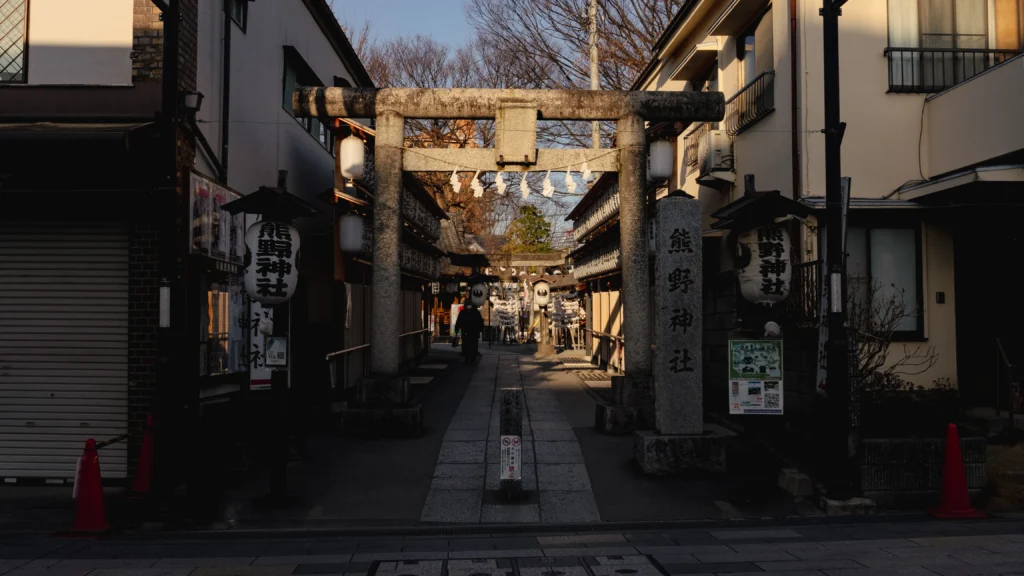
Table of Contents
Quick Facts: Visiting Kawagoe Kumano Shrine
| Essential Info | Details |
| Full Name | 川越熊野神社 (Kawagoe Kumano Jinja) |
| Local Nickname | Okumansama (おくまんさま) |
| Founded | 1590 AD by Zennyo Bun’o Sojo |
| Lineage | Branch shrine of Kumano Hongu Taisha (Wakayama) |
| Deities | Izanagi, Izanami, Kotosakanoo, Hayatama |
| Main Blessings | Matchmaking (縁結び), Good Fortune (開運), Warding off Evil (厄除け) |
| Symbol | Yatagarasu (八咫烏) — three-legged crow |
| Admission | FREE |
| Hours | Grounds: 24/7. Office: 9:30–17:00 (Weekdays), 9:00–17:00 (Weekends) |
| Time Needed | 30–45 minutes |
| Goshuin | ¥400–¥1,800 (5 types available) |
| Access | 5 min walk from Hon-Kawagoe Stn (East Exit) |
| Address | 17-1 Renjakucho, Kawagoe, Saitama 350-0066 |
| Phone | 049-225-4975 |
| Multilingual | QR guides at 16 spots (EN/CN/KR) + English omikuji |
What Are the 6 Interactive Experiences at Kumano Shrine?
What makes Kumano Shrine unique is how much you can do here. Most Japanese shrines follow a simple pattern: purify your hands, toss a coin, bow, clap, pray, leave. At Kumano, that routine is just the beginning. Here are the six main hands-on experiences that set this shrine apart.
1. The Painful (But Fun) Foot Reflexology Path
The moment you pass through the first torii gate, you will notice people taking off their shoes and walking gingerly along the sides of the approach path. This is the Ashifumi Kenko Road (足踏み健康ロード), a foot reflexology path installed in 2004 that runs approximately 10 meters along both sides of the main walkway.
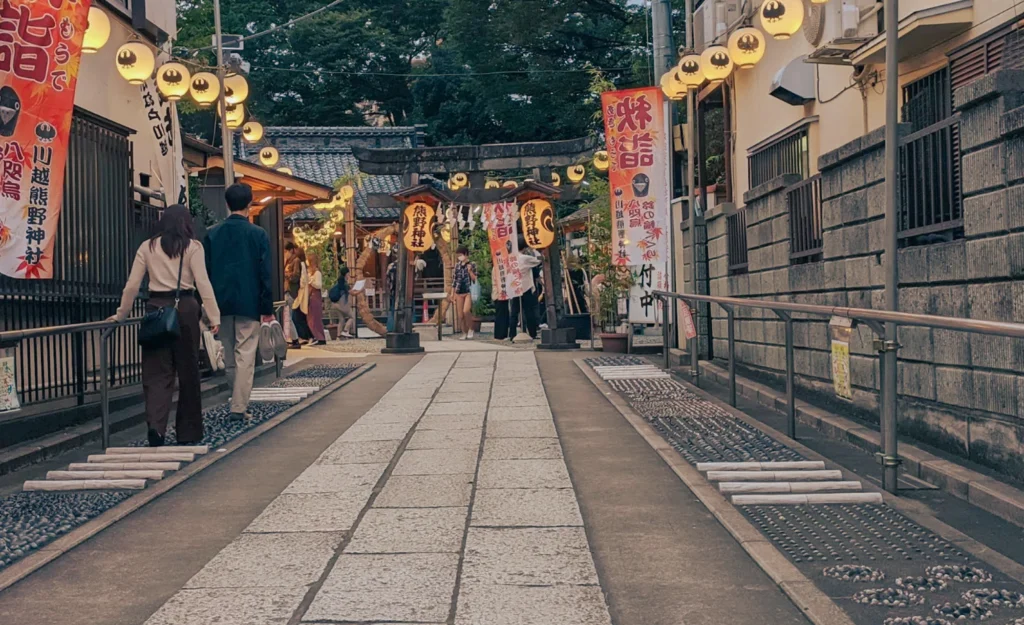
The path is embedded with various stones designed to stimulate acupressure points on the soles of your feet. The foot reflexology path is genuinely painful — but the Japanese visitors wincing and laughing their way across it make it one of Kawagoe’s most entertaining stops. According to reflexology principles, the level of pain correlates with health issues in corresponding body areas. You will hear cries of “Itai!” (痛い! — “It hurts!”) from visitors of all ages, followed immediately by laughter. It is completely free to try, and you will likely leave with a smile and a newfound respect for your feet.
2. Wash Your Money for Wealth at Zeniarai Benten
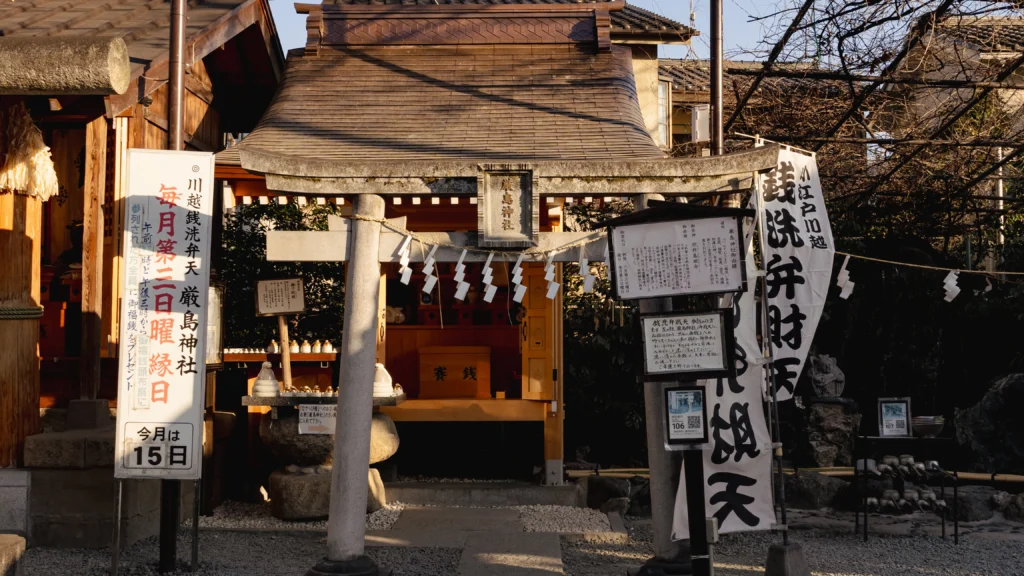
Inside the compound sits the Itsukushima Shrine (厳島神社), a smaller shrine dedicated to Benzaiten, the goddess of wealth. At the “Treasure Pond” (宝池), you can place your coins or bills in a small basket and rinse them with the sacred water.
Purified money is believed to multiply and attract more wealth when you spend it. If you visit on the 3rd Sunday of any month, the shrine holds a special Ennichi ritual at 11:00 AM and 3:00 PM where participants receive free blessed coins (御福銭) — a local secret that few tourists know about.
3. Test Your Luck at the Fortune Ring Toss
At the Kayu Inari Shrine (加祐稲荷神社) section, you can try the Untameshi Wanage (運試し輪投げ), a fortune ring toss. After making a small offering (at least ¥10), you receive three cloth-cord rings. You toss these at five target poles, each representing a different fortune: health (健康), wealth (金運), career (仕事), love (恋愛), and general fortune (全体運). If even one ring lands on a target, it signifies that your luck is rising. It is a simple game, but the mix of anticipation and laughter makes it surprisingly addictive.
4. Get an Audio Message from the Talking Yatagarasu
The Yatagarasu (八咫烏) is a mythical three-legged crow that serves as the divine messenger for all Kumano shrines. Its three legs represent Heaven, Earth, and Humanity (天・地・人). At the Musuhi no Niwa (むすひの庭 / Connection Garden), you will find a Yatagarasu statue surrounded by three crystal spheres inscribed with: “gratitude for divine blessings” (神恩感謝), “romantic connections” (縁結び), and “good fortune” (開運).
When you place both hands on your chosen sphere, it triggers an audio message from the Yatagarasu itself. There are different procedures depending on whether you are visiting solo, as a couple, or as a family — one message per person.
5. Stroke the White Snake for Blessings
Look for the Nade Hebi-sama (撫で蛇様), a white snake statue. In Shinto, white snakes are auspicious messengers of the gods. By touching different parts of the snake, you pray for different blessings:
| Part of the Snake | Blessing |
| Head | Academic success |
| Coils | Artistic talent |
| Body | Health |
| Eggs | Prosperity and safe childbirth |
6. Admire the Seasonal Flower Water Basin
Like many shrines in the area, Kumano Shrine participates in Kawagoe’s Hanachouzu Meguri (花手水めぐり), a flower water route connecting multiple shrines and temples across the city. The temizuya (hand-washing pavilion) is regularly decorated with floating seasonal flowers — hydrangeas in June, chrysanthemums in autumn, and New Year arrangements in January. The designs change frequently, providing a photogenic moment that rewards repeat visits.
The Main Hall and Why This Shrine Is Famous for Matchmaking
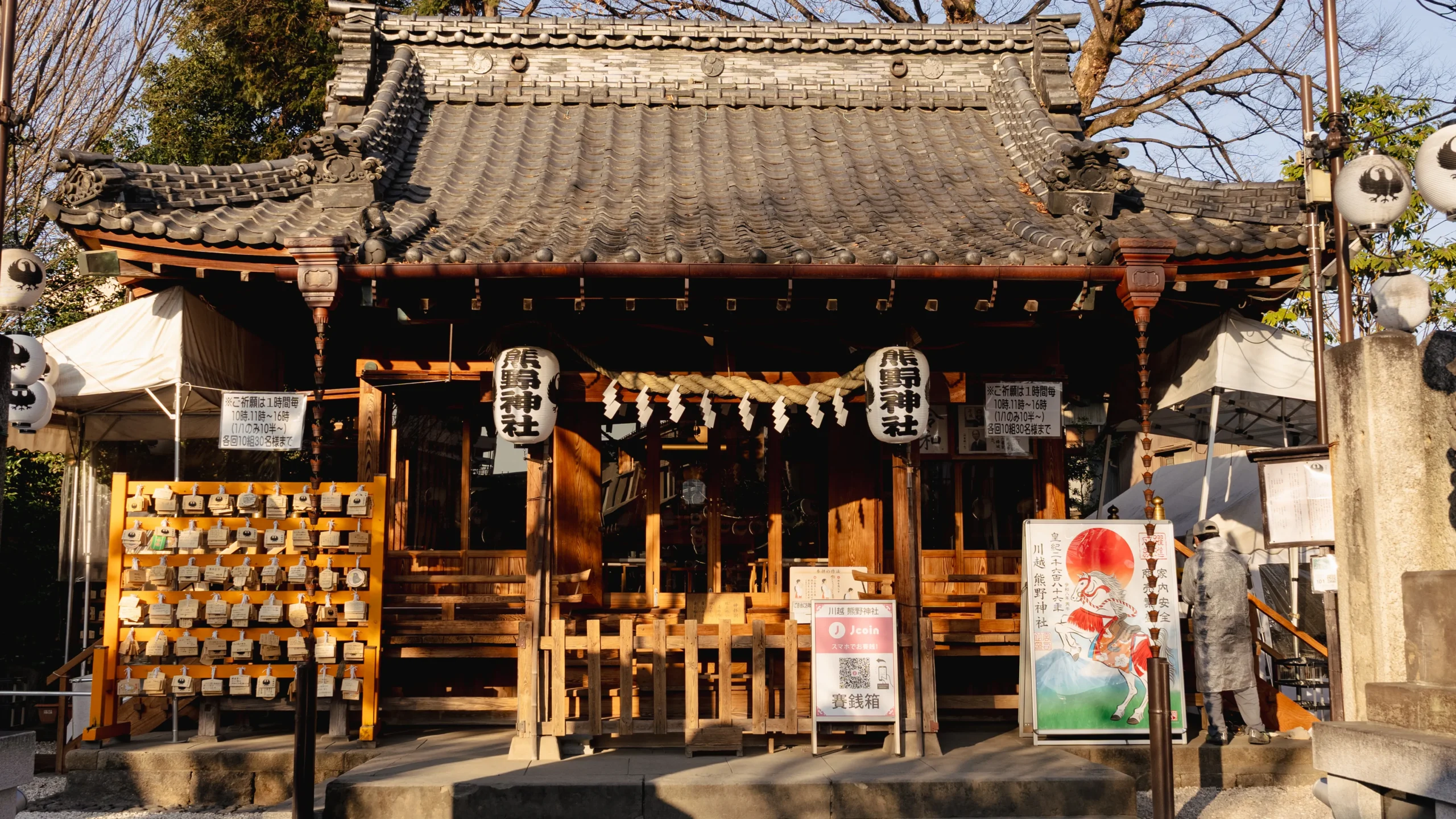
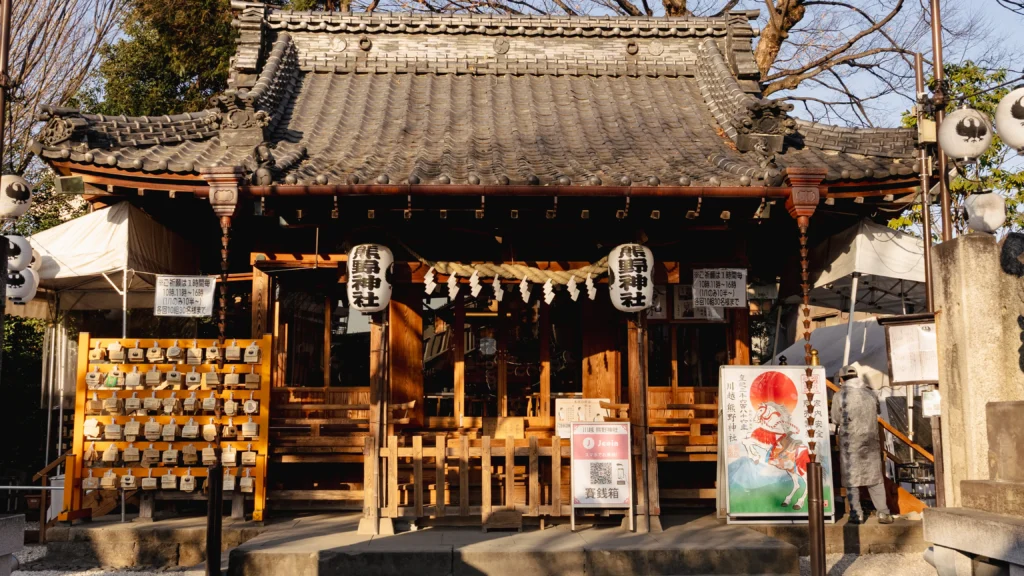
Beyond the interactive activities, Kawagoe Kumano Shrine is a serious place of worship with deep roots. The main hall (拝殿) enshrines four deities, most importantly Izanagi-no-Mikoto and Izanami-no-Mikoto — the male and female creator deities who were the first married couple in Japanese mythology. Together, they created the Japanese islands. Because of this origin story, the shrine is highly revered for matchmaking (縁結び) and romantic connections.
The shrine was founded in 1590 by Zennyo Bun’o Sojo, the second head priest of nearby Renkeiji Temple, as a branch of the great Kumano Hongu Taisha in Wakayama Prefecture. The current stone torii gate at the entrance dates to 1713, erected by the 16th head priest.
Omamori, Goshuin, and the Soccer Connection
The JFA Victory Amulet
If you follow Japanese soccer, the Yatagarasu symbol will look familiar. The Yatagarasu three-legged crow is the same symbol on every Japan national soccer jersey — and here you can buy an official JFA Victory Amulet (勝守) blessed at its origin shrine. It is incredibly popular during World Cup seasons and makes a unique souvenir for any football fan.
Over 20 Types of Omikuji (Including English)
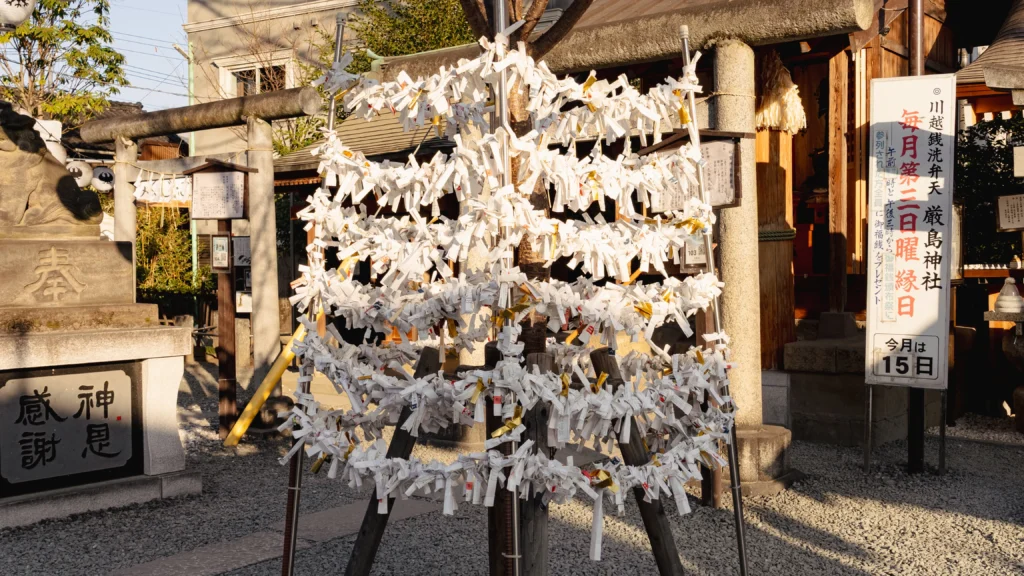
The shrine offers over 20 different types of omikuji (paper fortunes), including standard, love-specific, flower-themed, blood-type specific fortunes, and English versions for international visitors. If you draw a bad luck fortune, the shrine gives you a special crow amulet to help turn your luck around — a thoughtful touch.
Goshuin (Shrine Stamps)
Collectors will appreciate the variety of goshuin available here:
| Type | Price | Notes |
| Standard / Seasonal | ¥500 | Changes with 4 seasonal prayer periods |
| Itsukushima Shrine | ¥500 | Separate stamp for the Benzaiten shrine |
| Kirie (Cut-Paper) | ¥1,800 | Zodiac-themed; collect all 12 for a special book |
| Mini Goshuin | ¥400 | Sticker format |
| Goshuin-cho (Book) | ¥2,000 | Chirimen fabric cover |
Complete all four seasonal prayer periods (Spring, Summer, Autumn, Winter) and you earn a commemorative Yatagarasu ema (絵馬).
Annual Events and Festivals at Kumano Shrine
The shrine hosts events throughout the year. If your visit coincides with any of these, it adds another layer to the experience.
| Period | Event | Details |
| Jan 1–31 | Hatsumode (初詣) | New Year prayers; one of Kawagoe’s busiest hatsumode spots |
| Mid-Feb | Kawagoe de Oise-mairi | Walking pilgrimage route from Kumano to Hikawa Shrine |
| Mar 16 – May 6 | Haru-mode (春詣) | Spring prayer period |
| Jun – Aug | Natsu-mode (夏詣) | Summer prayer + Chinowa-kuguri grass ring purification |
| Sep – Nov | Aki-mode (秋詣) | Autumn prayer + special Yatagarasu bell ringing |
| Dec 3 | Kawagoe Tori no Ichi (酉の市) | Lucky bamboo rakes (熊手), Kagura dance performances, tens of thousands of visitors |
| Dec 5–30 | Fuyu-mode (冬詣) | Winter prayer period |
| Monthly 3rd Sun | Itsukushima Ennichi | Benzaiten ritual with free blessed coins at 11:00 AM and 3:00 PM |
Anime Connection
Kawagoe Kumano Shrine has appeared in the anime series “Tsuki ga Kirei” (月がきれい) and “Kamisama Hajimemashita” (神様はじめました). Fans of these shows will recognize the shrine’s distinctive approach path and torii gate.
How to Get to Kawagoe Kumano Shrine
Kumano Shrine is located directly on Chuo-dori, the main north-south road in Kawagoe’s Renjakucho district. It is the natural first stop when walking from the station toward the warehouse district.
From Hon-Kawagoe Station (Seibu Shinjuku Line):
Exit via the East Exit (蔵のまち口). Walk north along Chuo-dori for about 5 minutes. The stone torii gate will appear on your right side.
From Kawagoe Station (Tobu Tojo Line / JR Kawagoe Line):
Walk north for 15–20 minutes along Chuo-dori, or take the Tobu Bus to the “Renjakucho” (連雀町) stop — the shrine is a 1-minute walk from there.
From Tokyo:
The fastest route is from Seibu-Shinjuku Station to Hon-Kawagoe Station on the Seibu Shinjuku Line (about 45 minutes, ¥510). Alternatively, take the Tobu Tojo Line from Ikebukuro to Kawagoe Station (about 30 minutes, ¥480). You will need an IC card (Suica, Pasmo, or ICOCA) for the trains. For a broader overview of getting around Japan by train, see our transport guide.
Parking: No dedicated parking lot. Several coin parking lots are available within a 3-minute walk (approximately ¥200–400/hour).
For Southeast Asian Travelers
Kawagoe is inland and can be noticeably colder than Tokyo’s city center, especially in winter mornings. If you are visiting from Singapore (average 27°C) or Bangkok (average 28°C), expect Kawagoe winter mornings to be around 0–5°C — dress in warm layers with a proper winter jacket. In summer, temperatures can reach 38°C with high humidity, similar to Southeast Asian cities but with less shade.
Budget-friendly LCC options from Southeast Asia include Scoot and Jetstar Asia (Singapore–Narita), AirAsia (Kuala Lumpur–Narita), and Cebu Pacific (Manila–Narita). From Narita Airport, take the Narita Express to Ikebukuro, then transfer to the Tobu Tojo Line for Kawagoe.
Practical Tips for Visiting
Cash vs. Card:
The shrine office accepts PayPay for omamori and goshuin purchases, but bring cash (coins) for offerings at the various sub-shrines and the ring toss. Nearby shops and restaurants on Chuo-dori generally accept credit cards and IC cards.
Restrooms:
Public restrooms are available near the shrine grounds. The nearest well-maintained restrooms are at the Renjakucho intersection public toilet, about a 2-minute walk south.
Accessibility:
The main approach path and worship hall are flat and wheelchair accessible. The foot reflexology path is optional and on the sides of the main walkway. The Musuhi no Niwa garden area has some uneven ground.
Best Time to Visit:
Early morning (before 10:00 AM) for quiet photos. Weekday afternoons are the least crowded. Avoid January 1–3 (hatsumode crowds) and December 3 (Tori no Ichi) unless you specifically want to experience those events.
Suggested 30-Minute Mini-Itinerary
Start your Kawagoe day trip here. In just 30 minutes, you can experience everything the shrine has to offer before continuing north to the warehouse district.
| Time | Activity |
| 0 min | Enter through the 1713 stone torii gate |
| 3 min | Try the foot reflexology path (expect it to hurt!) |
| 8 min | Pray at the main hall |
| 12 min | Wash coins at Zeniarai Benten for wealth luck |
| 17 min | Toss rings at the fortune ring toss (¥10 offering) |
| 20 min | Touch the crystal sphere for an audio message from Yatagarasu |
| 25 min | Stroke the white snake statue |
| 28 min | Draw an omikuji (English available) |
| 30 min | Buy a JFA Victory Amulet, then head north |
After Kumano Shrine, continue north along the recommended Kawagoe walking route: Taisho Roman Dream Street (5 min) → Kurazukuri Warehouse District (3 min) → Toki no Kane Bell Tower (2 min) → Kashiya Yokocho Candy Alley (5 min) → Kawagoe Hikawa Shrine (10 min) → Kawagoe Castle Honmaru Goten (5 min). You can grab a coffee at the Starbucks Kawagoe Kanetsuki-dori along the way, or visit Senba Toshogu and Kitain Temple later in the day.
Strategic FAQ Section
Q: What is Kumano Shrine in Kawagoe?
Kawagoe Kumano Shrine is a Shinto shrine founded in 1590, known locally as “Okumansama.” It enshrines four deities including Izanagi and Izanami (the first married couple in Japanese mythology) and features the Yatagarasu three-legged crow as its symbol. It is a branch shrine of the great Kumano Hongu Taisha in Wakayama and is famous for matchmaking, good fortune, and its unusually interactive rituals.
Q: What is the foot reflexology path at Kawagoe Kumano Shrine?
The Ashifumi Kenko Road is a free, 10-meter path embedded with stones designed to stimulate acupressure points on the soles of your feet. Installed in 2004, it runs along both sides of the main approach path. Visitors walk it barefoot. It is known to be quite painful — you will hear cries of “Itai!” from visitors of all ages — but is said to promote health and relieve fatigue.
Q: What can you do at Kawagoe Kumano Shrine?
You can actively participate in 6 main rituals: walking the painful foot reflexology path, washing money for wealth at Zeniarai Benten, playing a fortune ring toss (¥10), triggering an audio message from a Yatagarasu statue, stroking a white snake statue for specific blessings, and admiring the seasonal flower water basin. The shrine also offers over 20 types of omikuji including English versions.
Q: Where is Kumano Shrine in relation to Kawagoe’s main street?
The shrine is located directly on Chuo-dori (the main north-south street), about a 5-minute walk north of Hon-Kawagoe Station. It sits at the southern end of the sightseeing axis, making it the natural first stop before you reach the Kurazukuri warehouse district and the Toki no Kane bell tower heading north.
Q: Is Kumano Shrine in Kawagoe worth visiting?
Yes. Because it takes only 30 minutes and is packed with interactive, fun activities like the foot path and money washing, it is one of the most entertaining and memorable stops in Kawagoe. It is especially good for families with children and couples. The shrine is free to enter, and the interactive elements make it far more engaging than a typical “pray and leave” shrine visit.
Q: Does Kawagoe Kumano Shrine have English fortunes?
Yes. The shrine offers over 20 different types of omikuji (paper fortunes), including English-language versions, making it very accessible for international tourists. The shrine also has QR-code multilingual guides at 16 locations throughout the grounds in English, Chinese, and Korean.
Sources checked
Kawagoe Kumano Shrine Official Website (kawagoekumano.jp), Koedo Kawagoe Tourism Association (koedo.or.jp), Kawagoe Magazine (kawagoe.fun), GOOD LUCK TRIP (gltjp.com)

- Kawagoe Kumano Shrine 2026: 6 Interactive Rituals You Can Actually Try2026 Update: Kawagoe Kumano Shrine now offers QR-code multilingual guides at 16 locations throughout the grounds, available in English, Chinese, and Korean. The shrine also accepts cashless payments (PayPay) for… Read more: Kawagoe Kumano Shrine 2026: 6 Interactive Rituals You Can Actually Try
- Kitain Temple Kawagoe 2026: Edo Castle Rooms & 538 Rakan [With Map]
![Kitain Temple Kawagoe 2026: Edo Castle Rooms & 538 Rakan [With Map]](https://hiddenjapan-gems.com/wp-content/uploads/2026/04/DSC4602-1024x576.webp) Most visitors to Kawagoe head straight to the warehouse district. Start at Kitain instead — it’s quieter in the morning, and you’ll walk the same route the Tokugawa shoguns once… Read more: Kitain Temple Kawagoe 2026: Edo Castle Rooms & 538 Rakan [With Map]
Most visitors to Kawagoe head straight to the warehouse district. Start at Kitain instead — it’s quieter in the morning, and you’ll walk the same route the Tokugawa shoguns once… Read more: Kitain Temple Kawagoe 2026: Edo Castle Rooms & 538 Rakan [With Map] - Starbucks in a Kimono: A Guide to Kawagoe’s Most Beautiful Coffee Shop
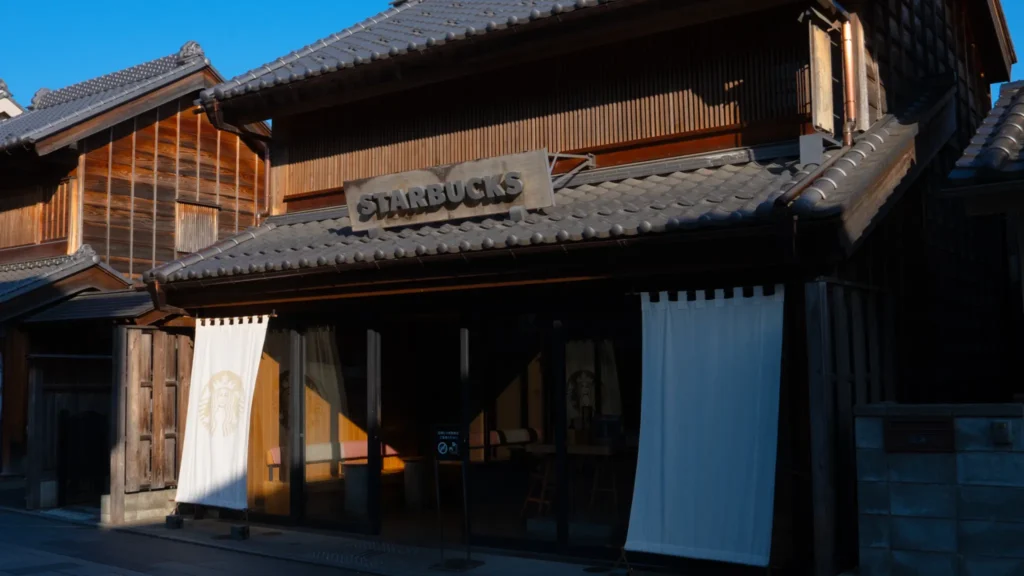 In the heart of Kawagoe, a town affectionately known as “Little Edo,” lies a Starbucks unlike any other. Steps away from the iconic Toki no Kane (Bell of Time) tower,… Read more: Starbucks in a Kimono: A Guide to Kawagoe’s Most Beautiful Coffee Shop
 - Senba Toshogu: A Guide to Kawagoe’s Hidden Tokugawa Shrine
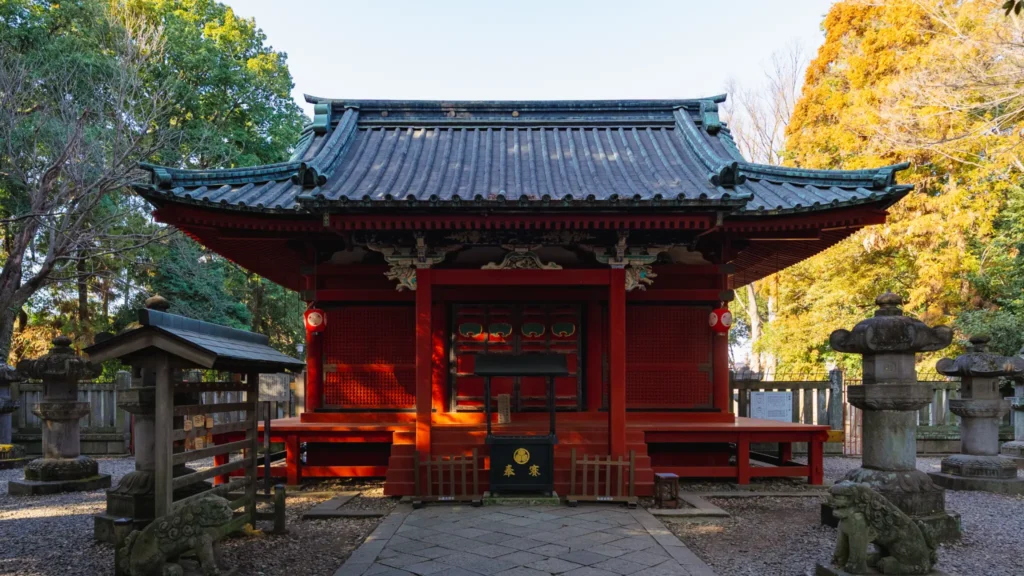 While Nikko’s Toshogu Shrine is famously known as the grand mausoleum of Tokugawa Ieyasu, a quieter but equally significant shrine lies hidden in the historic city of Kawagoe. The Senba… Read more: Senba Toshogu: A Guide to Kawagoe’s Hidden Tokugawa Shrine
 - Kawagoe Castle Honmaru Goten: A Glimpse into Samurai Lord Life in Little Edo
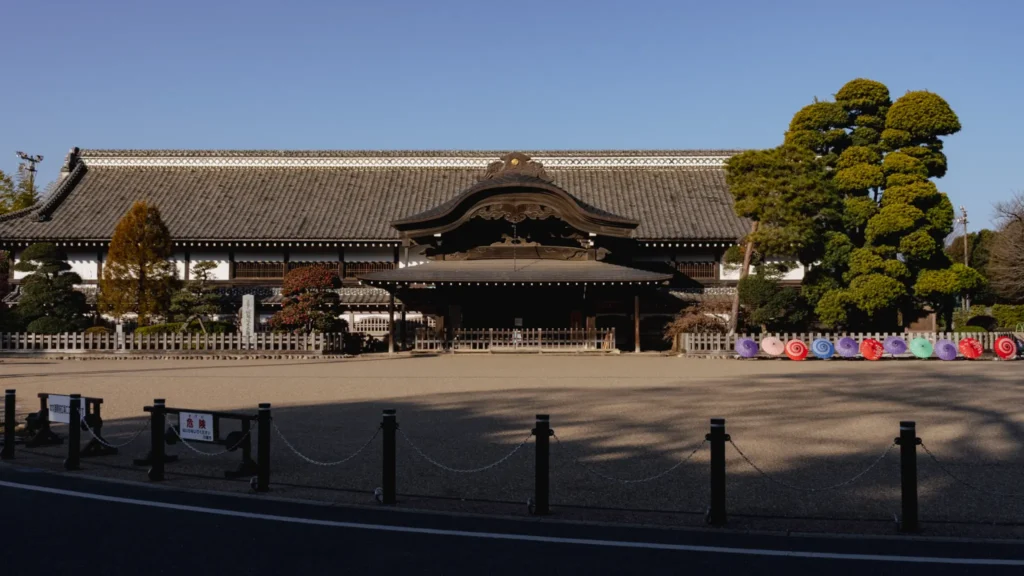 Step back in time in Kawagoe, a city affectionately known as “Little Edo,” and discover one of its most precious historical treasures: the Kawagoe Castle Honmaru Goten. As the only… Read more: Kawagoe Castle Honmaru Goten: A Glimpse into Samurai Lord Life in Little Edo
cherry blossom cherry blossoms day trip from tokyo flower festival fuji five lakes fujiyoshida Fukuoka fushimi hanami hiking japan japanese culture japanese food japanese garden japan travel kamakura kawagoe kawaguchiko Kumamoto kyoto local food Mount Fuji mt fuji Nagano nature Nikko Oku-Nikko Onsen Ramen Saga saitama sakura Shizuoka shrine sightseeing snow spring in japan Tochigi Tokyo travel travel guide travel planning winter winter travel Yamanashi
![Kitain Temple Kawagoe 2026: Edo Castle Rooms & 538 Rakan [With Map]](https://hiddenjapan-gems.com/wp-content/uploads/2026/04/DSC4602-768x432.webp)