

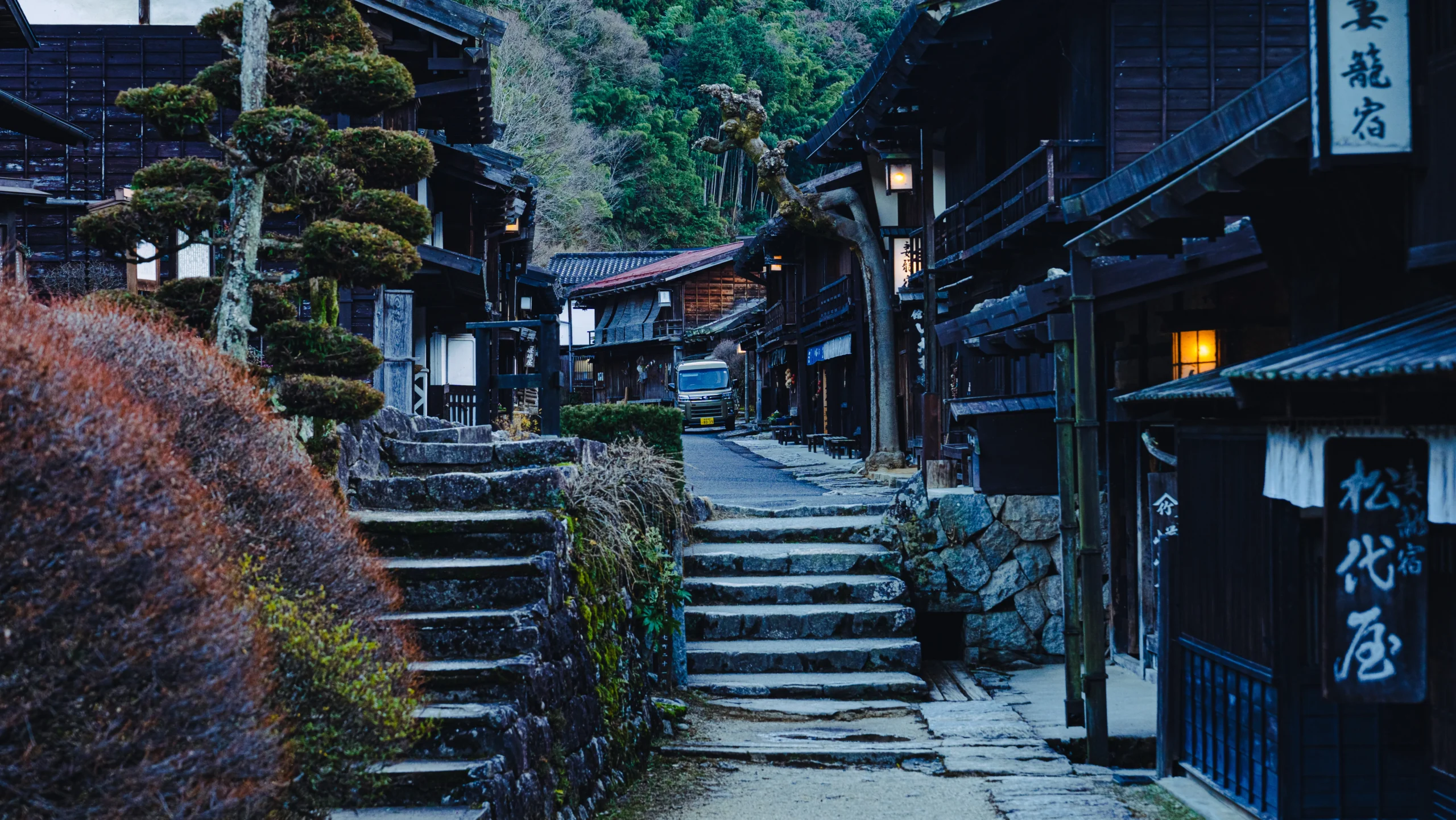

Step into a living museum in the heart of the Kiso Valley. Tsumago-juku, a remarkably preserved post town on the historic Nakasendo trail, offers a rare glimpse into the life of travelers during Japan’s Edo Period.
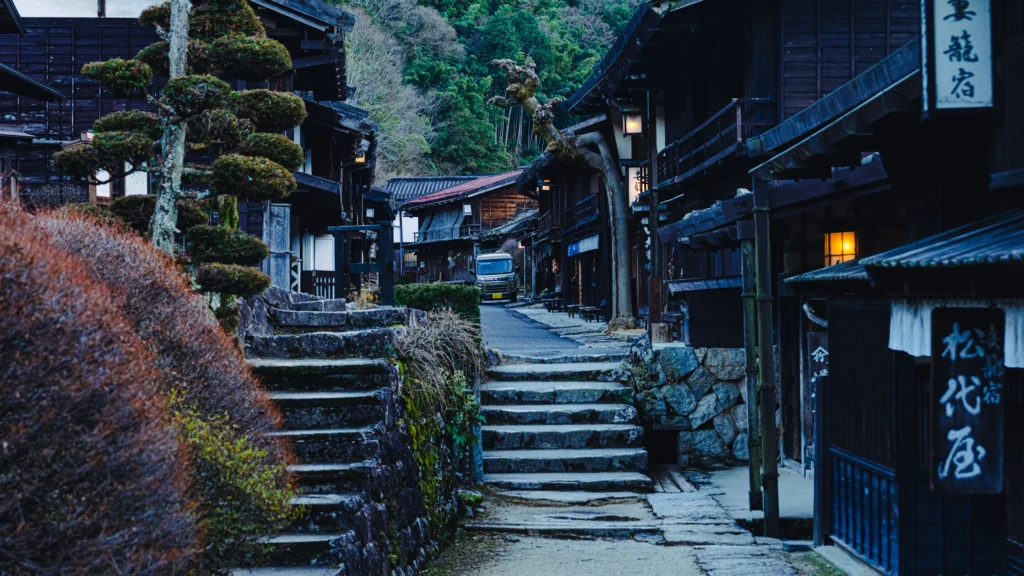
This guide is for those seeking an authentic cultural experience, from history buffs to avid hikers, detailing how to explore this atmospheric town, what to see, and how to make the most of your visit to a place where time seems to stand still.
Contents
- Quick Facts
- Overview: A Town Preserved by its People
- Best Time to Visit
- How to Get to Tsumago-juku
- What to Do in Tsumago-juku
- Practical Tips for Your Visit
- Where to Stay Nearby
- Where to Eat Nearby
- Suggested Mini-Itinerary
- Frequently Asked Questions
- Sources
Quick Facts
| Feature | Details |
| Best Time to Visit | Autumn (October-November) for fall colors; Winter for the magical “Shako” light rays. |
| Time Needed | 2-3 hours for the town; a full day for hiking. |
| Nearest Station | JR Nagiso Station |
| Price Range | Free to walk around; admission for museums. |
| Payment Methods | Cash is recommended, especially at smaller shops. |
| Crowd Level | Moderate; can be busy during peak seasons. |
| Accessibility | The main street is mostly flat, but some historic buildings have steps. Central parking is best for wheelchair access. |
Overview: A Town Preserved by its People
Tsumago-juku was the 42nd of the 69 post towns lining the Nakasendo, a vital highway connecting Edo (modern-day Tokyo) and Kyoto during the Edo Period (1603-1868). As railways and modern highways were built in the Meiji Period, Tsumago, like many other post towns, fell into decline. However, in the 1960s, a passionate conservation movement began, driven by the local residents themselves. They established three core principles: do not sell, do not rent, and do not demolish their historic properties.
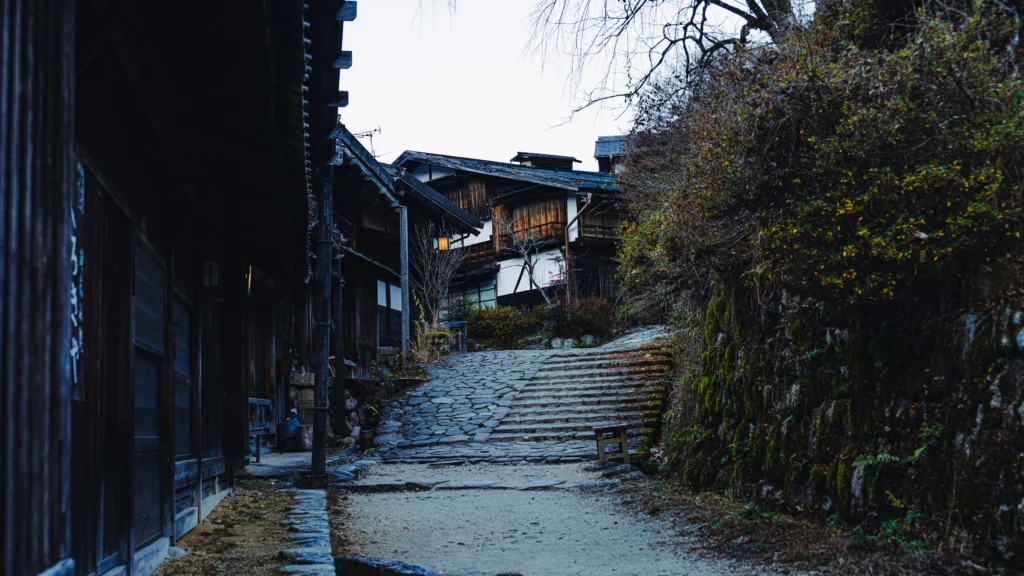
This dedication resulted in Tsumago-juku becoming Japan’s first Nationally Designated Important Preservation District for Groups of Traditional Buildings in 1976. Today, the town’s main street, stretching for about one kilometer, is lined with beautifully maintained wooden inns, shops, and houses, free of modern distractions like power lines, which have been cleverly concealed to maintain the authentic atmosphere.
Best Time to Visit
While Tsumago-juku is a captivating destination year-round, certain seasons offer unique experiences. Autumn brings stunning fall foliage to the Kiso Valley, painting the mountains in vibrant reds and yellows.
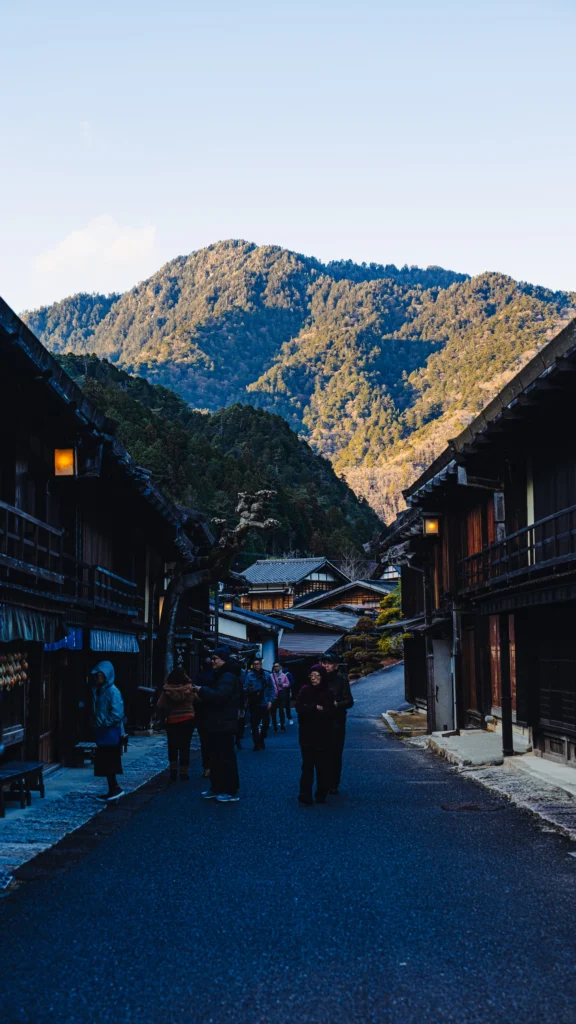
Winter, though cold, offers a particularly magical sight at the Waki-Honjin Okutani, where low winter sun streams through the wooden lattices, creating dramatic shafts of light known as shako (斜光). Spring sees the town decorated with cherry blossoms, while summer offers lush green landscapes, though it can be hot and humid.
How to Get to Tsumago-juku
The town is located in Nagiso, Nagano Prefecture. Access is primarily via JR Nagiso Station.
By Public Transport:
1.From Tokyo: Take the JR Tokaido Shinkansen (Nozomi) to Nagoya (approx. 1h 40m), then transfer to the JR Shinano Limited Express train to Nagiso Station (approx. 1h). The total journey is about 2 hours and 40 minutes.
2.From Osaka: Take the JR Tokaido Shinkansen (Nozomi) to Nagoya (approx. 50m), then transfer to the JR Shinano Limited Express to Nagiso Station (approx. 1h). The total journey is about 1 hour and 55 minutes.
From JR Nagiso Station, Tsumago-juku is a 10-minute bus or taxi ride away. Alternatively, it’s a pleasant 40-minute walk along the old Nakasendo trail.
By Car:
•From the Chuo Expressway, take the Nakatsugawa IC exit. Tsumago-juku is about a 30-minute drive from there.
•Parking: Several paid parking lots are available. The Central Parking lot is recommended for visitors with mobility issues. A standard car costs ¥500 for the day. Note that the main street is closed to traffic from 10:00 AM to 4:00 PM daily.
Klook.comWhat to Do in Tsumago-juku
1. Explore the Nagiso Town Museum (3-Site Combination Ticket)
For a deeper understanding of Tsumago’s history, purchase a combination ticket that grants access to three key historical sites. (Estimated cost: ¥700 for adults).
•Tsumago-juku Honjin: This was the main inn, reserved for high-ranking government officials like daimyo (feudal lords). The current building is a faithful reconstruction based on late-Edo period drawings. It was also the birthplace of the mother of famous novelist Toson Shimazaki.
•Waki-Honjin Okutani (Important Cultural Property): This was the secondary inn and the residence of the Hayashida family, who served as the town’s postmasters. Built in 1877 with fragrant Kiso hinoki cypress wood, it’s a magnificent structure and a must-see, especially for the winter shako light rays.
•History Museum: Located next to the Waki-Honjin, this museum showcases the history of the Kiso region and the town’s pioneering preservation efforts.
2. Hike a Section of the Nakasendo Trail
Experience the Nakasendo as travelers once did. The most popular hike is the 8-kilometer trail between Tsumago-juku and Magome-juku (in Gifu Prefecture). The walk takes about 2.5 to 3 hours and passes through forests, fields, and past waterfalls. A baggage forwarding service is available between the tourist information centers of both towns. You can also rent bear bells for safety.
3. Visit the Kotokuji Temple
This quiet temple, located on a small hill overlooking the town, offers a serene atmosphere and a beautiful view of the tiled roofs of Tsumago-juku. The temple’s large, weeping cherry tree is a spectacular sight in spring.
4. Admire the Terashita Townscape and Masugata
The Terashita district is considered the
original heart of Tsumago-juku. Here you can see the masugata, a defensive feature of post towns consisting of two sharp, right-angle turns in the road designed to slow down potential attackers.
5. Send a Postcard from the Tsumago Post Office
The Tsumago Post Office is a functioning post office housed in a restored Meiji-era building. It also features a small postal museum, showcasing the history of the postal service in Japan. Sending a postcard from here is a unique souvenir.
Practical Tips for Your Visit
•Wear Comfortable Shoes: You will be doing a lot of walking, especially if you plan to hike.
•Bring Cash: While some larger establishments accept credit cards, many smaller shops, eateries, and inns are cash-only.
•Guided Tours: For a deeper insight, consider hiring a local guide. Tours can be booked via the Tsumago Tourist Information Center (reservations required 10 days in advance).
•Respect the Residents: Remember that Tsumago-juku is a living town where people reside. Be respectful of private property and keep noise levels down, especially in the morning and evening.
Where to Stay Nearby
For the most immersive experience, staying overnight in a traditional minshuku (family-run inn) or ryokan (traditional inn) in Tsumago-juku is highly recommended. This allows you to enjoy the magical atmosphere of the town after the day-trippers have left. Reservations are essential, especially during peak season.
Alternatively, the nearby town of Nagiso or the hot spring resort of Hirugami Onsen (a 40-minute drive) offer more accommodation options.
Where to Eat Nearby
Tsumago-juku offers several options for a traditional meal. Many small restaurants and teahouses line the main street, serving local specialties.
•Gohei Mochi: A must-try local snack. It’s a grilled rice cake coated in a sweet and savory walnut-miso sauce.
•Soba Noodles: Nagano is famous for its soba (buckwheat) noodles. Enjoy them hot or cold with mountain vegetables.
•Kurikinton: A confection made from chestnuts, another specialty of the Kiso region.
Suggested Mini-Itinerary (Full Day)
•Morning (9:00 AM): Arrive at JR Nagiso Station and take a bus to Tsumago-juku. Start your day by exploring the Nagiso Town Museum sites (Honjin, Waki-Honjin, History Museum).
•Lunch (12:00 PM): Enjoy a traditional lunch of soba noodles and gohei mochi at a local restaurant.
•Afternoon (1:00 PM): Begin the hike on the Nakasendo trail towards Magome-juku. Enjoy the scenery and the well-preserved path.
•Late Afternoon (4:00 PM): Arrive in Magome-juku. Explore the town, which has a different, steeper character than Tsumago.
•Evening (5:30 PM): Take a bus from Magome-juku back to Nakatsugawa Station, and then a train to your next destination.
Frequently Asked Questions
Q: Is Tsumago-juku suitable for families with young children?
A: Yes, the flat main street is easy to walk. Children often enjoy the historic atmosphere, but the main attraction is cultural and historical, which may not engage all ages. The hike to Magome might be challenging for very young children.
Q: Can I hike from Magome to Tsumago instead?
A: Yes, many people prefer this direction as it is slightly more downhill. The experience is wonderful either way.
Q: Is there Wi-Fi in Tsumago-juku?
A: Wi-Fi is available at the tourist information center and in some accommodations, but it is not widespread throughout the town. It’s a good opportunity to disconnect.
Q: How much time should I spend in Tsumago-juku?
A: Allow at least 2-3 hours to walk through the town and visit the main sights. If you plan to hike to Magome, you will need most of a day.
Q: Are there English-speaking staff available?
A: The main tourist information center has English-speaking staff and English pamphlets. Staff at individual shops and inns may have limited English ability.
Q: What is the best way to get from Tsumago to the Snow Monkey Park?
A: It’s a long journey. The best route is to take the train from Nagiso to Nagano Station (via Shiojiri), and then a bus or train to the park area. This will take several hours.
Sources
[1] Tsumago-juku Official Website. (https://tsumago.jp/ )
Last updated: January 13, 2026
Sources Checked: Tsumago-juku Official Website, Go! NAGANO Official Tourism Site

- Umenomiya Taisha: Kyoto’s Hidden Gem for Sake, Cats, and Blessings
- Jonangu Shrine: Kyoto’s Guardian of Directions and Imperial History
- Jonangu Shrine’s Weeping Plums: A Guide to Perfect Timing
- Getting Around Japan: The Ultimate Guide to Trains, Buses & the JR Pass (2026)
- How to Get to Japan: The Complete Flight & Airport Guide for 2026



[…] into a living museum where the world of the samurai is perfectly preserved. Tsumago-juku, nestled in the heart of Nagano's Kiso Valley, is not just a destination; it's a journey back to […]