
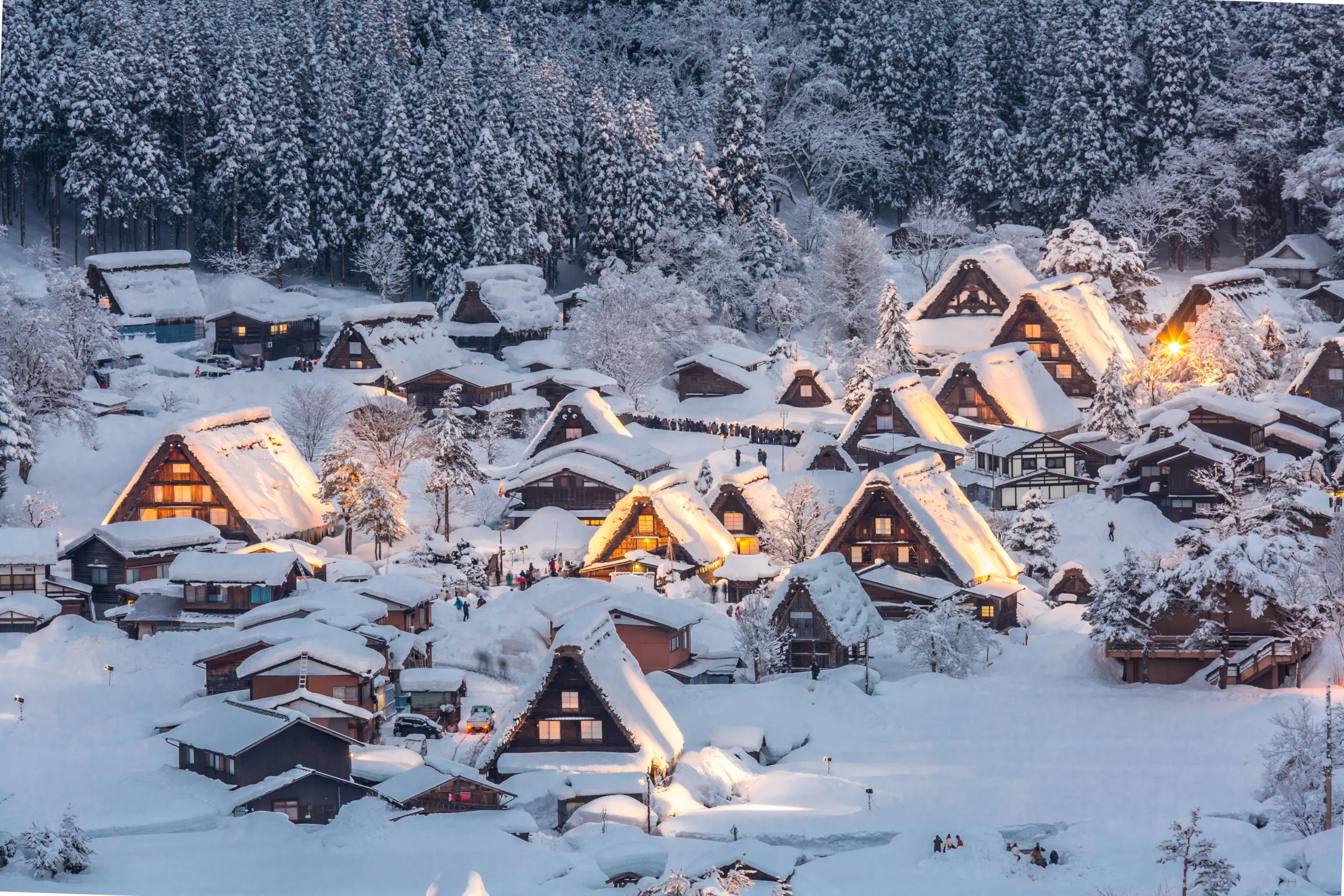

As a powerful winter storm approaches Japan, with forecasts predicting a “once-in-a-decade” level of heavy snowfall around the January 12th holiday weekend, many travelers are understandably concerned. While the images of blankets of fresh powder are beautiful, the reality of navigating Japan during such weather requires careful Japan winter snow travel preparation. This guide, written by our Japanese author Nobutoshi, provides practical, calm, and trustworthy advice for those planning a trip or already in the country, helping you stay safe and even find unique opportunities amidst the snow.
This article is for anyone whose travel plans for mid-January may be affected by the severe weather warnings. You will learn which regions are most impacted, how to adjust your transportation plans, what to pack, and how to stay safe while still enjoying the serene beauty of Japan in winter.
Contents
- Understanding the 2025 Heavy Snow Forecast
- Key Facts for Traveling in Heavy Snow
- Which Regions Are Most Affected?
- How to Get Around Safely: Transportation Guide
- Essential Packing for Japan’s Winter Snow
- Practical Safety Tips for Your Trip
- Where to Stay in Japan’s Snow Country
- What to Do When Heavy Snow Changes Your Plans
- Suggested Itinerary: A Day in a Snowbound Town
- Frequently Asked Questions
- A Final Word from the Author
Key Facts for Traveling in Heavy Snow
| Feature | Details |
| Best Time to Visit | This guide is specific to the heavy snow forecast for mid-January 2025. For general winter travel, late January to February is ideal for snow activities. |
| Time Needed | Allow at least 1-2 extra days in your itinerary for potential travel delays. |
| Nearest Station | Major hubs like Nagano, Niigata, Kanazawa, and Sendai stations will operate but may face delays. Check live status. |
| Cost Range | Budget for unexpected costs: extra accommodation night, alternative transport, or emergency supplies. |
| Payment | Credit cards are widely accepted, but carry extra cash, as smaller shops or transport might be cash-only, and ATMs could be inaccessible. |
| Crowd Level | Tourist spots may be less crowded, but transportation hubs could be congested with stranded passengers. |
| Accessibility | Heavy snow severely impacts accessibility. Wheelchair access, and even walking, can be extremely difficult. Check with your hotel directly. |
Understanding the 2025 Heavy Snow Forecast
Around January 12, 2025, Japan is expecting a significant cold wave, potentially bringing the heaviest snowfall in a decade to several regions . The Japan Meteorological Agency has issued early warnings, noting that snowfall could reach over 200% of the annual average in some areas, particularly along the Sea of Japan coast. This is not typical winter weather; it is a major weather event that requires caution.
The primary concern for travelers is the significant disruption to transportation, including trains and flights, and the risk of accidents. Understanding this allows you to make informed decisions rather than last-minute changes.
Which Regions Are Most Affected?
The forecast indicates the heaviest impact will be on regions facing the Sea of Japan. If your itinerary includes these areas, you should pay close attention.
•Hokuriku Region: Prefectures like Niigata, Toyama, Ishikawa, and Fukui are predicted to receive snowfall up to 244% of their average. These areas are known for their beautiful coastlines and historic cities like Kanazawa, but will likely face major transport disruptions.
•Tohoku Region: Prefectures such as Aomori, Akita, and Yamagata will also see significant snow, potentially over 160% of the average. While accustomed to snow, the intensity may challenge local infrastructure.
•Nagano & Gifu Mountain Areas: These mountainous regions, popular for skiing and onsen, are also on high alert. Access roads to mountain resorts could be temporarily closed.
Even areas that typically see less snow, like the plains of Kanto, Kansai, and even parts of Kyushu, may experience some snowfall, leading to unexpected delays as these areas are less equipped to handle it.
How to Get Around Safely: Transportation Guide
During heavy snow, your travel plans must be flexible. Here’s how to approach different modes of transport.
•Shinkansen (Bullet Train): This is generally the most reliable option. The Hokuriku Shinkansen and Tohoku Shinkansen are built for snow, but may run at reduced speeds or face temporary suspensions. Always check the official JR East or JR West websites for real-time status before heading to the station.
•Local Trains & Buses: These are highly susceptible to delays and cancellations. Bus services in mountainous areas are often the first to be suspended. Have a backup plan, which might mean staying an extra night.
•Driving (Rental Car): Strongly discouraged for visitors during a heavy snow warning. Roads can be treacherous, and even with winter tires or chains, the risk of getting stuck or into an accident is high . If you must drive, ensure you have a 4WD vehicle, winter tires, an emergency kit (blanket, food, water), and a full tank of gas.
•Flights: Airports in affected regions (like Niigata, Komatsu, or Aomori) may experience cancellations. Check with your airline frequently. If flying into a major hub like Narita or Haneda, be aware that connecting domestic flights may be affected.
Essential Packing for Japan’s Winter Snow
Proper clothing is the most critical part of your Japan winter snow travel preparation. Layering is key.
•Footwear: This is your most important item. Bring waterproof, insulated boots with deep, anti-slip rubber soles. Do not rely on sneakers or fashion boots. You can buy slip-on ice cleats (spikes) at convenience stores in snow-heavy areas.
•Outerwear: A waterproof and windproof insulated jacket is essential. Look for materials like Gore-Tex.
•Layers: Pack thermal underwear (base layer), fleece or wool sweaters (mid-layer), and warm pants. Avoid cotton, as it retains moisture and makes you cold.
•Accessories: A warm hat that covers your ears, a scarf, and waterproof gloves are non-negotiable. Hand warmers (kairo) are sold in every convenience store and are a small, effective luxury.
•Other: A portable battery charger for your phone is crucial, as cold weather can drain batteries quickly. A small backpack is better than a rolling suitcase for navigating snowy streets.
Practical Safety Tips for Your Trip
•Walk Like a Penguin: Take short, flat-footed steps to maintain your balance on icy surfaces. Keep your hands out of your pockets.
•Beware of Falling Snow: Snow and ice can slide from rooftops without warning. Be aware of your surroundings, especially when walking near buildings.
•Stay Informed: Bookmark the Japan Meteorological Agency website and the websites of your transportation providers. Your hotel front desk is also an excellent source of local information.
•Allow Extra Time: Everything takes longer in the snow. Give yourself double the usual time to get to a station or appointment.
Where to Stay in Japan’s Snow Country
When choosing accommodation, prioritize location and accessibility.
•Stay Near a Major Station: Choose a hotel within a short, flat walking distance of a main train station. This minimizes your exposure to the elements and makes it easier to manage luggage and catch transport.
•Inquire About Accessibility: If you have mobility concerns, call the hotel directly to ask about snow clearance and accessible pathways. Do not rely solely on website descriptions.
•Consider Onsen Hotels: A hotel with its own onsen (hot spring) is a wonderful refuge. Soaking in a hot bath after a cold day is a classic Japanese winter experience.
This article contains affiliate links. If you book through them, we may earn a small commission at no extra cost to you. We recommend brands we trust for their reliability.
For reliable hotel bookings in areas like Nagano or Kanazawa, consider using a platform with a wide range of options and clear cancellation policies.
(Affiliate CTA Button): Find Hotels in Kanazawa on Booking.com
(Affiliate CTA Button): Explore Ryokan in Nagano on Agoda
What to Do When Heavy Snow Changes Your Plans
If you find yourself snowbound, don’t despair. It can be an opportunity for a different kind of travel experience.
•Explore Indoor Attractions: Every city has museums, art galleries, covered shopping arcades (shotengai), and department stores with amazing food halls (depachika). Use this time to explore them.
•Enjoy a Local Cafe or Izakaya: Spend an afternoon in a cozy cafe watching the snow fall, or find a local izakaya for warm food and drinks.
•Embrace the Onsen: If your hotel has one, use it. If not, some towns have public onsen that are accessible.
•Photography: Heavy snow transforms landscapes, offering stunning photo opportunities. The quiet, monochrome world can be incredibly beautiful.
Suggested Mini-Itinerary: A Day in a Snowbound Town
If you’re stuck in a city like Kanazawa or Takayama, here’s a possible plan:
•Morning (10:00 AM): After a late start, walk carefully to a local museum (e.g., the 21st Century Museum of Contemporary Art in Kanazawa).
•Lunch (1:00 PM): Find a restaurant in a covered market (like Omicho Market in Kanazawa) for fresh seafood.
•Afternoon (3:00 PM): Visit a historic district, but stick to the main, cleared paths. The snow-covered roofs of the old teahouses in Higashi Chaya (Kanazawa) are magical.
•Late Afternoon (5:00 PM): Retreat to your hotel for a warm bath or onsen soak.
•Evening (7:00 PM): Dine at a restaurant close to your hotel. Ask the front desk for recommendations.
Frequently Asked Questions
Q: Is it safe to travel to Japan during a heavy snow warning?
A: It is safe if you are prepared and cautious. Avoid remote areas, stick to major cities, and be ready for delays. The most important part is your Japan winter snow travel preparation.
Q: Should I cancel my trip to the Hokuriku or Tohoku region?
A: Not necessarily. If you have a flexible schedule and are prepared for a slower pace of travel, it can still be a rewarding experience. However, if you have a tight schedule or are uncomfortable with uncertainty, consider shifting your itinerary to areas less affected, like major cities on the Pacific coast (Tokyo, Osaka).
Q: Are winter tires enough for driving?
A: For extreme conditions, winter tires are the minimum. However, some mountain passes may require chains. Rental car companies may not always have them available. We strongly advise against driving for most tourists in these conditions.
Q: Will shops and restaurants be open?
A: In major cities, most will remain open. However, smaller, family-run businesses, especially in rural areas, may close.
Q: What is the best way to check train status?
A: Use the official websites of the JR companies (e.g., JR East, JR West). They have English pages with real-time service status updates.
Q: Can I still enjoy skiing?
A: Ski resorts will be open, but access can be the main issue. Check the resort’s official website for information on road closures and shuttle bus operations before you go.
A Final Word from the Author
As someone who grew up with the heavy snow of Japan’s north, I can say that while it demands respect and preparation, it also offers a unique and profound beauty. The silence of a snow-covered landscape is something to be experienced. By being prepared, you can safely witness this side of Japan. Travel slowly, stay warm, and be open to the quiet magic of a world blanketed in white.
Sources
[sic].
[3]: # “Japan National Tourism Organization. Winter in Japan Guide in Japan | Guide. Retrieved January 8, 2026.”