

Current as of: 2025-12-14 JST
Conclusion
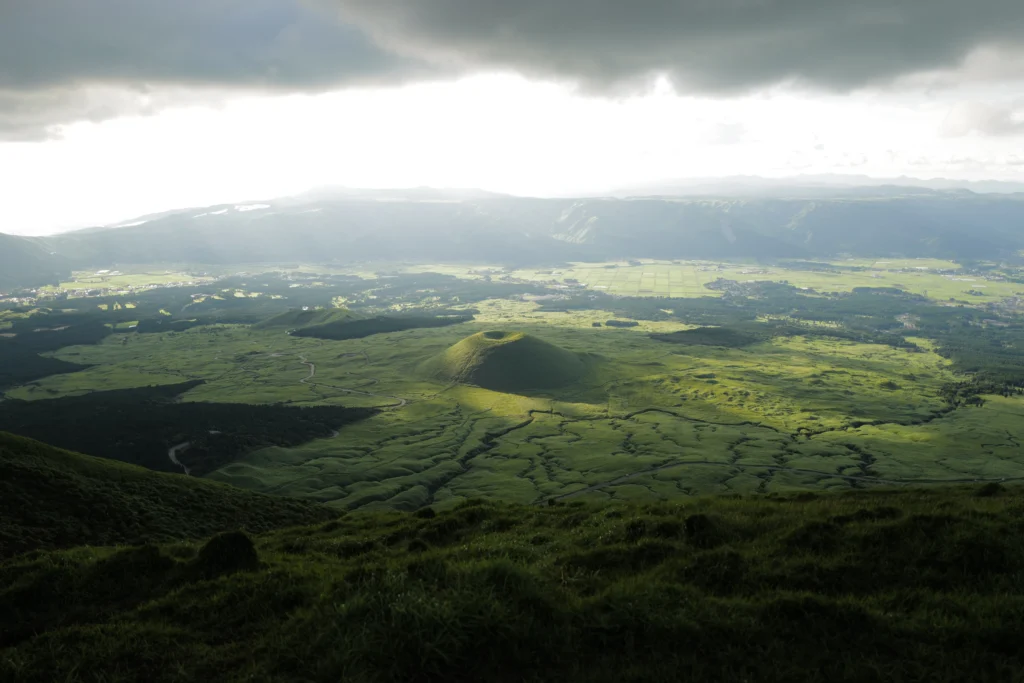
Kusasenri (草千里ヶ浜) is a hidden gem for travelers who crave wide-open spaces, unique natural beauty, and a sense of adventure without the crowds. It is ideal for nature enthusiasts, photographers, horse lovers, and anyone seeking an off-the-beaten-path experience in Japan. The vast grassy plateau dotted with grazing horses and framed by the dramatic silhouette of Mount Aso’s active crater creates a landscape that feels more like Mongolia or Iceland than Japan. For those planning to explore Kyushu’s volcanic wonders, Kusasenri deserves a prominent place on your itinerary.
Location Overview
•Name: Kusasenri (草千里ヶ浜, Kusasenrigahama) and Kusasenri Observatory (草千里展望所)
•Location: Aso, Kumamoto Prefecture, Kyushu
•Atmosphere: Unlike the manicured gardens and crowded temples of central Japan, Kusasenri is raw and wild. The plateau stretches across a vast expanse of emerald grassland, where horses graze freely and the air carries the faint scent of volcanic minerals. The experience is one of solitude and grandeur—a place where nature dominates and human presence feels secondary.
Access
Getting to Kusasenri requires a bit more planning than visiting a typical tourist site, but the journey is part of the adventure. The most practical approach combines train and bus travel.
| Transportation | Details |
| From Tokyo | Option 1 (Fastest): Fly from Tokyo (Haneda) to Kumamoto Airport (approximately 1 hour 15 minutes to 1 hour 30 minutes). Then proceed to Aso Station by bus or train. Option 2 (Train): Take the Shinkansen to Kumamoto Station (approximately 7-8 hours from Tokyo), then take a limited express train to Aso Station (approximately 70 minutes, 2,000-3,000 yen). 1 |
| From Kumamoto Station to Aso Station | Limited Express Train: Approximately 70 minutes, 2,000-3,000 yen one way. Covered by Japan Rail Pass and Kyushu Rail Pass. [1] Local Train: Approximately 100 minutes, 1,300 yen (requires one transfer at Higo-Ozu Station). Bus: Approximately 2 hours, 1,800 yen. 1 |
| From Aso Station to Kusasenri | Bus: Take the Aso Fire Crater Line bus from Aso Station. Journey time is approximately 30-35 minutes. Get off at “Kusasenri Aso Volcano Museum Mae” (草千里阿蘇火山博物館前). 2 Walking: From the bus stop, it is a short walk to the main plateau area. |
| By Car | From Kumamoto City: Approximately 80 minutes. From Kumamoto Airport: Approximately 50 minutes. 2 A rental car is recommended for flexibility in exploring the Aso region. |
Fees & Hours
Kusasenri is remarkably accessible in terms of cost, though some activities come with fees.
•Entrance Fee to Kusasenri Plateau: Free. The grassland and main viewing areas are open to the public at no charge.
•Operating Hours: Open 24 hours. The plateau is accessible day and night, though most facilities (shops, restaurants, parking attendants) operate during daytime hours.
•Parking Fee: ¥500 for a standard car (paid parking near the main facilities). Free parking is available further away near the observation platform on the upper road. 2
•Horse Riding: ¥6,000 to ¥14,000 for adults (13 years and older), ¥5,000 to ¥13,000 for children (3-12 years). Rides range from 4 to 15 minutes. Charter courses (15 minutes) are available for ¥60,000 per group. 3
•Aso Volcano Museum: ¥840 for adults, ¥420 for children. 4
•Aso Visitor Center: ¥1,100 for adults, ¥550 for children, ¥880 for seniors. 5
Practical Information for Foreign Travelers
| Aspect | Details |
| English Support | Basic English signage is available at major facilities. The Kumamoto Prefecture Tourism website has an English version. 2 However, English support at individual shops and the horse riding club is limited. It is recommended to have a translation app or printed information on hand. |
| Payment Methods | Cash is strongly recommended. While larger facilities may accept credit cards, most food stalls, souvenir shops, and the horse riding club operate on a cash-only basis. ATMs are available in Aso Station and nearby towns. 6 |
| Photography | Photography is not only permitted but encouraged. The landscape is a photographer’s dream, especially during sunrise and sunset. Drone use is not permitted without special permission. |
| Crowdedness | Kusasenri is far less crowded than major tourist sites in Japan. However, weekends and holidays can see increased visitor numbers. Weekday visits offer a more serene experience. Early morning visits (sunrise) are recommended for the best light and fewest crowds. |
| Etiquette & Safety | Do not approach or feed the horses without permission. Respect private property and stay on designated paths. The plateau can be windy and exposed; bring layers and wind-resistant clothing. Weather can change rapidly; check forecasts before your visit. |
| Seasonal Considerations | Spring (March-May): Mild weather, lush green grass, occasional wildflowers. Summer (June-August): Warm but can be humid; occasional afternoon thunderstorms. Autumn (September-November): Clear skies, comfortable temperatures, stunning sunsets. Winter (December-February): Cold, occasional frost and light snow; the grass becomes dormant and brown. Rime frost on the grass creates a magical frozen landscape. |
Value of the Stay & Experience
Kusasenri is a perfect fit for the “Hidden Japan Gems” collection because it represents a side of Japan that most international visitors never encounter. While Japan is famous for its temples, gardens, and urban energy, Kusasenri offers something entirely different: a vast, untamed landscape where nature is the main attraction.
The most compelling reason to visit is the sheer visual impact. Standing on the plateau with Mount Aso’s crater looming in the distance, surrounded by grazing horses and nothing but grass and sky, creates a sense of awe that photographs struggle to capture. The experience is deeply meditative and restorative.
Best times to visit:
•Sunrise (6:00-7:00 AM): The plateau is bathed in golden light, and the air is cool and crisp. This is the ideal time for photography and experiencing the landscape in solitude.
•Late afternoon (4:00-6:00 PM): The sun is lower, creating dramatic shadows and warm tones. Sunset views from the Kusasenri Observatory are particularly stunning.
•Spring and autumn: The weather is most pleasant, and the landscape is at its most photogenic.
Nearby experiences to combine with your visit:
•The Aso Volcano Museum offers insights into the geology and history of the active volcano.
•The Aso Visitor Center provides information about hiking trails and the broader Aso-Kuju National Park.
•Kurokawa Onsen, a traditional hot spring village, is about 40 minutes away by car and makes an excellent overnight destination.
🎯 BOOK YOUR ACCOMMODATION NOW
Don’t miss the perfect place to stay! Kusasenri and the surrounding Aso region offer a range of accommodations, from luxury ryokans with hot spring baths to budget-friendly hostels. To find the best deals and availability for your dates, click here to search accommodations on Agoda. Agoda offers competitive prices, free cancellation on many properties, and instant confirmation. Book early, especially if visiting during peak seasons (spring and autumn).
Cautions & Exceptions
•Weather Variability: The Aso region is at higher elevation and can experience sudden weather changes. Wind is common on the plateau. Bring a jacket and wind-resistant layer even on seemingly mild days.
•Horse Riding Restrictions: Horse riding may be restricted or unavailable during certain seasons (particularly December) or due to weather conditions. Always check availability before planning this activity.
•Limited Public Transportation: Buses to Kusasenri run on a limited schedule. Check timetables in advance to avoid being stranded.
•Volcanic Activity: Mount Aso is an active volcano. While eruptions are rare and the crater is generally safe to visit, occasional volcanic gas emissions can temporarily close access to the crater area. Check current conditions before your visit.
•Information Accuracy: Details such as bus schedules, parking fees, and horse riding availability can change. Always verify current information with the Aso Information Center (0967-34-1600) or the official Kumamoto tourism website before your visit.
Sources & References
[1] japan-guide.com (Kumamoto to Aso: How to get to and around Aso) –
[2] Kumamoto Prefecture Tourism Website (Kusasenrigahama) –
[3] Aso City Official Website (Experience Menu) –
[4] Kumamoto Prefecture Tourism Website (Aso Volcano Museum) –
[5] Aso Visitor Center Official Website –
[6] Google Maps (Kusasenrigahama) –
Certainty
Certainty: High
Reason: Information is sourced from official government tourism websites, verified through multiple references, and cross-checked with recent traveler reviews and current operational data.