

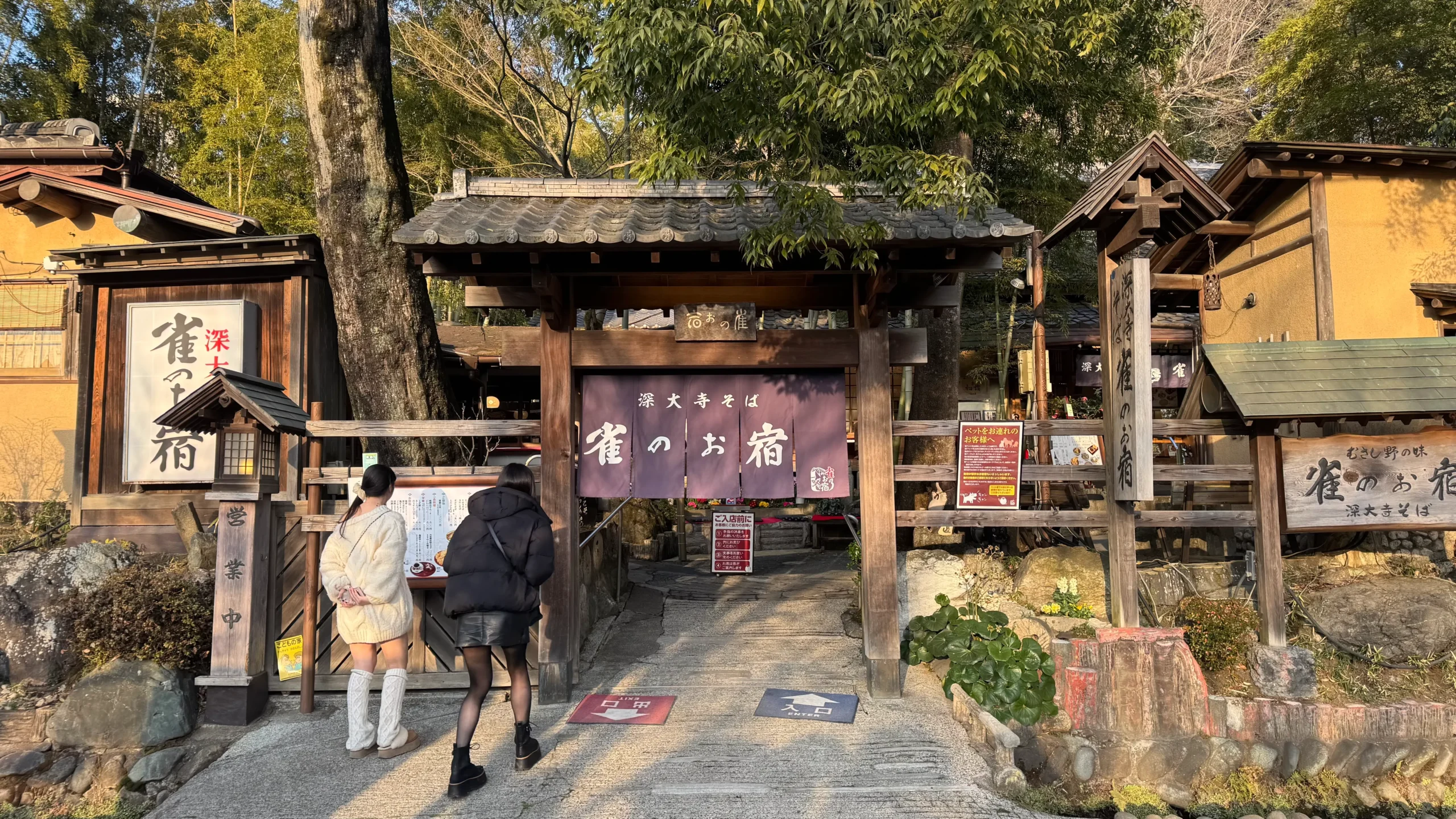

A tranquil escape for soba lovers and their furry friends, Suzume no Oyado offers a taste of tradition in the heart of Jindaiji, Tokyo.
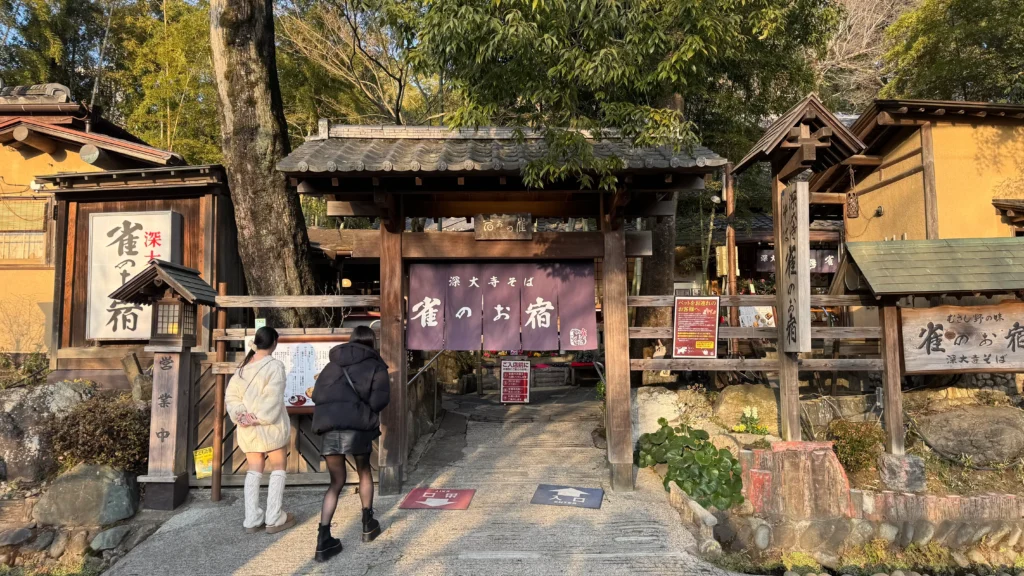
Nestled beside the historic Jindaiji Temple in Chofu, Tokyo, lies a charming soba restaurant that feels like a hidden retreat from the city's hustle.

Suzume no Oyado (雀のお宿), which translates to "The Sparrow's Inn," lives up to its name, offering a serene dining experience surrounded by bamboo groves and traditional Japanese architecture.

On a recent visit with my partner and our dog, we discovered why this spot is a beloved destination for both locals and visitors seeking authentic Jindaiji soba.
Table of Contents
Quick Facts
| Feature | Details |
| Best Time to Visit | Weekdays to avoid crowds; spring and autumn for pleasant weather. |
| Time Needed | 1 – 1.5 hours for a relaxed meal. |
| Nearest Station | Chofu Station (then a 15-min bus ride). |
| Price Range | ¥1,000 – ¥1,999 per person. |
| Payment | Cash only. |
| Crowd Level | Moderate to high, especially on weekends. |
| Accessibility | Wheelchair accessible; pet-friendly outdoor seating available. |
A Hideaway Steeped in Tradition
Jindaiji is renowned for its soba, with over 20 restaurants dotting the area. Suzume no Oyado stands out with its incredibly atmospheric setting. The entrance, marked by a classic purple noren curtain, leads you into a peaceful courtyard where a towering bamboo grove rustles in the wind. The restaurant consists of several traditional wooden buildings, creating a village-like atmosphere that transports you to another era.
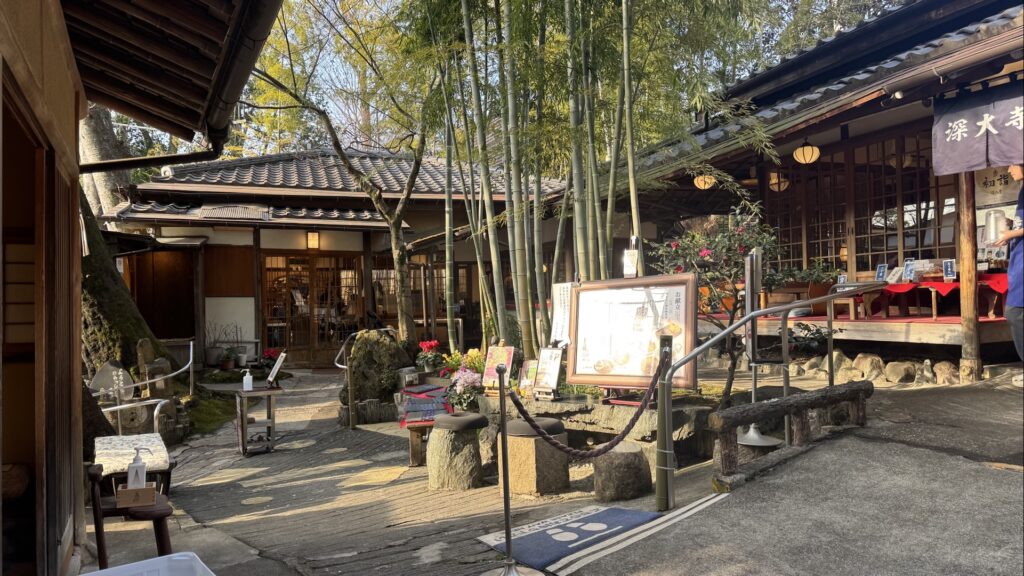
Seating options include traditional indoor zashiki (tatami mat) rooms and an engawa (veranda) with red felt cushions, but we opted for the pet-friendly outdoor terrace. This lovely space features rustic stone tables and tree-stump stools, allowing us to enjoy our meal in the fresh air with our dog comfortably by our side.
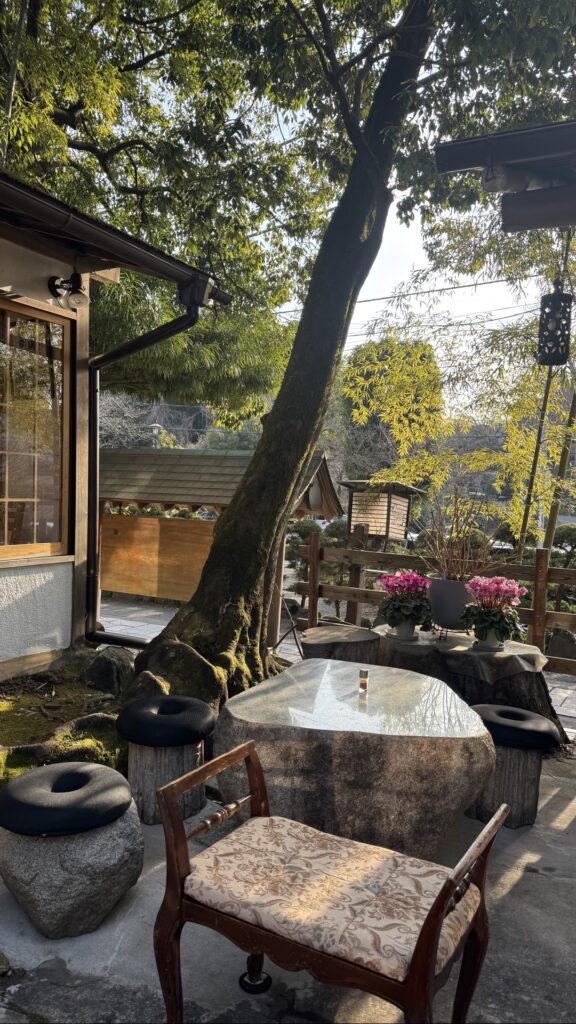
Our Lunch on the Pet-Friendly Terrace
The ordering process is simple: you decide what you want and pay at the register first, then find a seat. The staff was welcoming and efficiently guided us to the terrace. The restaurant uses special alkaline ionized water in its cooking, which is said to bring out the best flavors in the soba and dashi .
What We Ordered: A Feast of Soba, Tempura, and Dessert
We decided to try a variety of their signature dishes.
Kinoko Soba (Mushroom Soba)
This dish is a favorite among regulars, and it’s easy to see why. The cold soba noodles were smooth and firm, providing a perfect base for the generous topping of assorted simmered mushrooms, including maitake, shimeji, and eringi. The mushrooms were deeply flavorful, and the dish was garnished with fresh mitsuba (Japanese parsley) and grated daikon, adding a refreshing counterpoint. The slightly rich, bonito-flavored dipping sauce was served in a charming red lacquer pot.
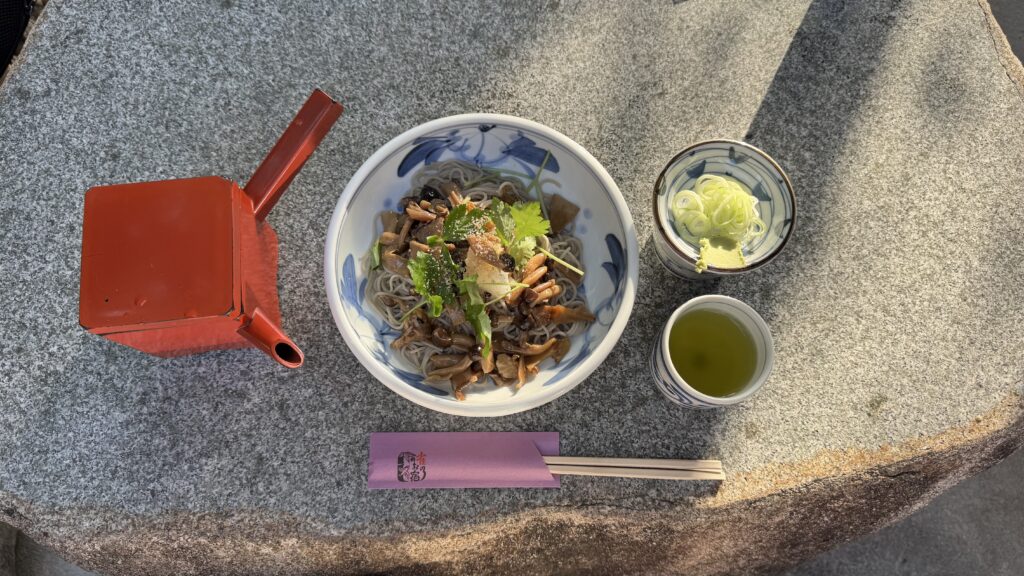
Ebi Tendon (Shrimp Tempura Rice Bowl)
The Ebi Tendon was a showstopper. It arrived in an elegant red lacquerware bowl, with two large, golden-fried shrimp tempura dramatically extending from under the lid. Lifting the lid revealed more treasures: a crispy kakiage (mixed vegetable tempura) and other seasonal vegetables over a bed of fluffy rice, all drizzled with a savory-sweet tare sauce. The tempura was perfectly cooked—light and crispy, not at all greasy.
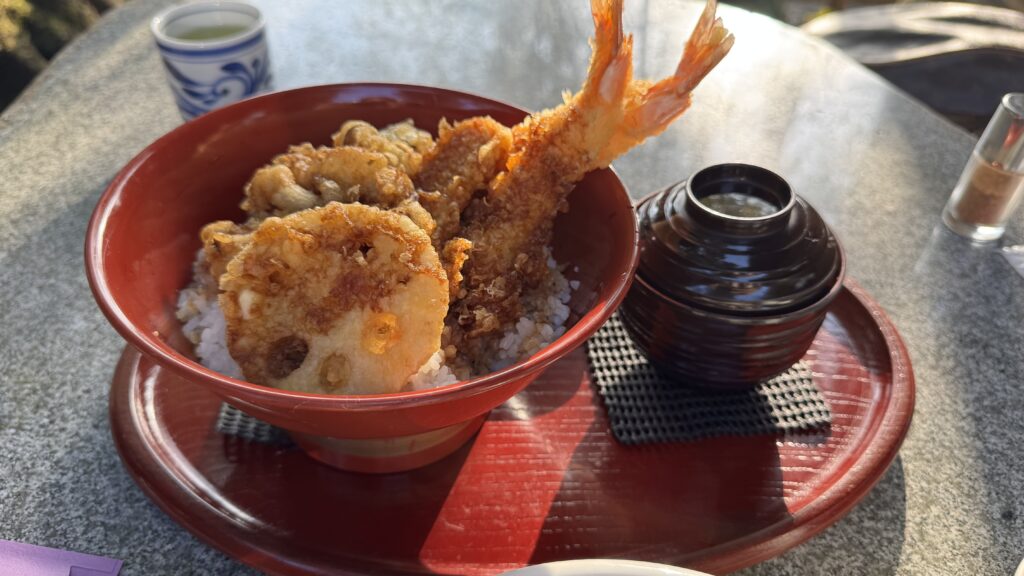
Kuzumochi (Arrowroot Starch Cake)
No meal at a traditional Japanese restaurant is complete without dessert. The famous Kuzumochi is a must-try. The silky, translucent, jelly-like cakes are made from arrowroot starch and have a subtle, clean taste. They were generously dusted with fragrant kinako (roasted soybean flour) and served with a rich kuromitsu (black sugar syrup). It was a simple yet incredibly satisfying end to our meal.
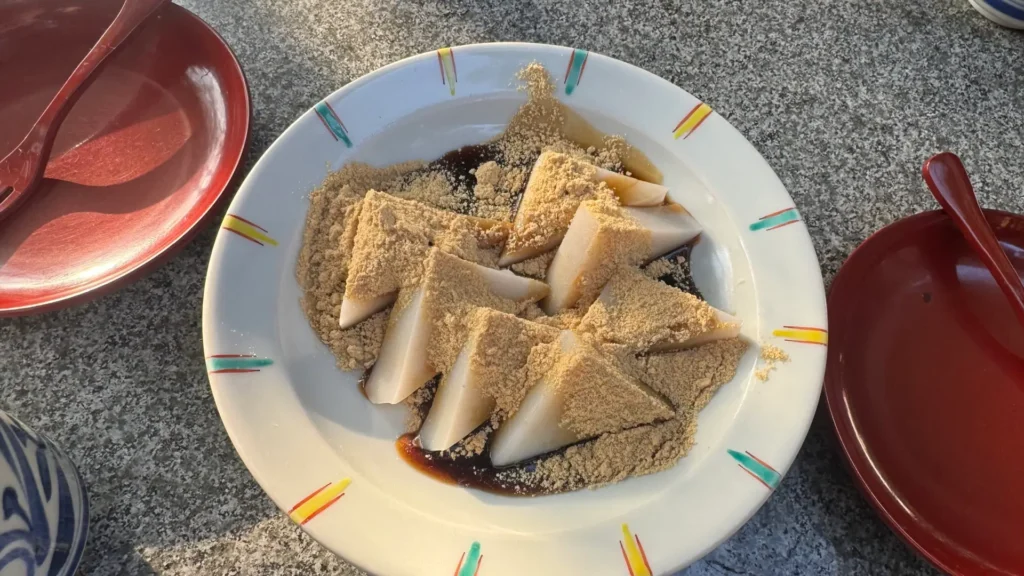
Best Time to Visit
Suzume no Oyado is a popular spot, especially on weekends and holidays when people flock to Jindaiji Temple. To enjoy a more peaceful experience, visiting on a weekday is recommended. The outdoor seating is particularly pleasant during the mild weather of spring and autumn.
How to Get There
Suzume no Oyado is located within the Jindaiji Temple complex.
1.By Train & Bus: Take the Keio Line to Chofu Station. From the station’s north exit, take a bus bound for Jindaiji (深大寺) (e.g., bus numbers 調34 or 吉14) for about 15 minutes. Get off at the Jindaiji bus stop.
2.On Foot: From the bus stop, it’s a short walk through the temple’s approach road (sando). Suzume no Oyado is located along this main path.
Practical Tips for Your Visit
•Cash is King:
The restaurant only accepts cash, so make sure to bring enough yen. Credit cards and electronic payments are not accepted.
•Pet Policy:
Dogs are welcome at the outdoor terrace seats only. These are limited, so be prepared for a potential wait on busy days.
•Order First:
Remember to place your order and pay at the register before taking a seat.
•Explore Jindaiji:
Allocate extra time to explore the beautiful Jindaiji Temple and the surrounding park and botanical gardens before or after your meal.
Where to Stay Nearby
While Jindaiji is an easy day trip from central Tokyo, staying in the Chofu or Kichijoji area can be a convenient option. There are several business and city hotels around Chofu Station.
FAQs
Q: Is Suzume no Oyado suitable for vegetarians?
A: The menu has some vegetarian-friendly options. The basic Mori Soba (plain cold soba) is vegetarian, but you should confirm if the dipping sauce (tsuyu) contains bonito flakes (fish). The Kinoko Soba may also be an option if the broth is vegetable-based, but it’s best to ask the staff.
Q: Can I make a reservation?
A: Yes, reservations are possible according to Tabelog . It is recommended to call ahead, especially if you are visiting with a larger group or require specific seating.
Q: Is there parking available?
A: The restaurant does not have its own parking lot. There are several paid public parking lots around the Jindaiji Temple area.
Q: What is Jindaiji Soba?
A: Jindaiji Soba is famous because the area, blessed with abundant spring water, was suitable for buckwheat cultivation during the Edo period. The tenant farmers offered the buckwheat to the temple, which made it into soba to serve guests, starting a long-standing tradition.
Q: Besides soba, what else is the restaurant known for?
A: The restaurant is also known for its homemade Kuzumochi and was one of the first in the area to serve high-quality, aged coffee that pairs well with soba .
Sources
[1] Guidoor Media. “A Quaint, Hidden Gem: Jindaiji Suzume no Oyado.”
[2] Tabelog. “Suzume no Oyado.”
[3] Chofu.com. “Suzume no Oyado Official.”
Suzume no Oyado offers more than just a meal; it’s a delightful cultural experience. The combination of delicious, traditional food and a beautifully preserved atmosphere makes it a must-visit when exploring the historic grounds of Jindaiji Temple.

- Yakushima West Drive 2026: Ohko Falls, Yokogawa Valley, Seibu Rindo and Inakahama
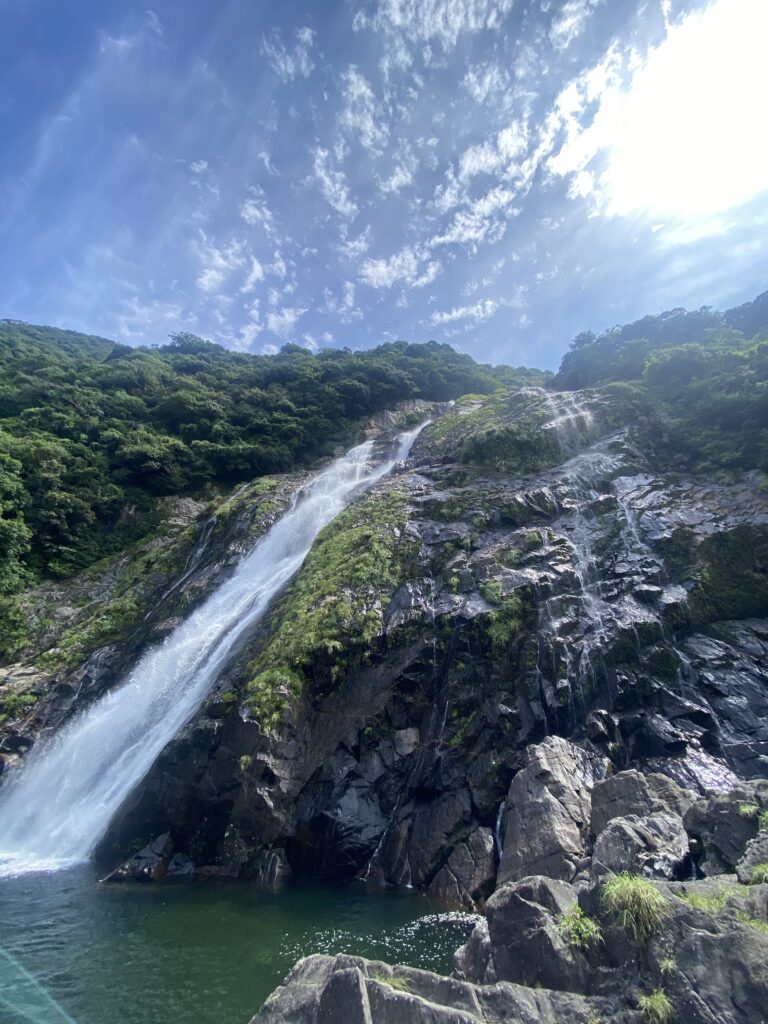 A 120 km west-coast loop that most Yakushima tourists skip — Ohko Falls, the Yokogawa swimming pools, the UNESCO Seibu Rindo wildlife corridor, and Nagata Inakahama beach. With 2026 driving practicalities and an honest hour-by-hour day plan.
 - Shonan at 5 AM in June 2026: Koyurugi Crossing, the Beach with Mt. Fuji, and the Coast Most Visitors Walk Past
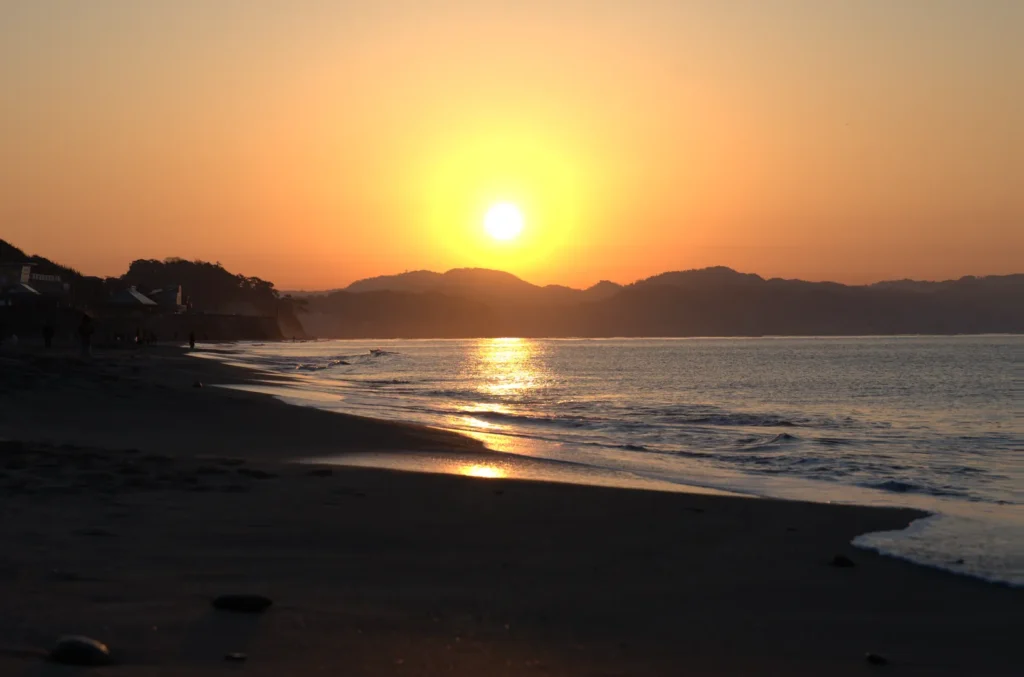 A pre-tsuyu, pre-crowd morning walk along the Shonan coast — Enoden trains, the small Koyurugi crossing, and Mt. Fuji from a beach almost no foreigner has heard of.
 - THE HOTEL YAKUSHIMA Ocean and Forest Review: A Quiet Architectural Stay on the North Shore
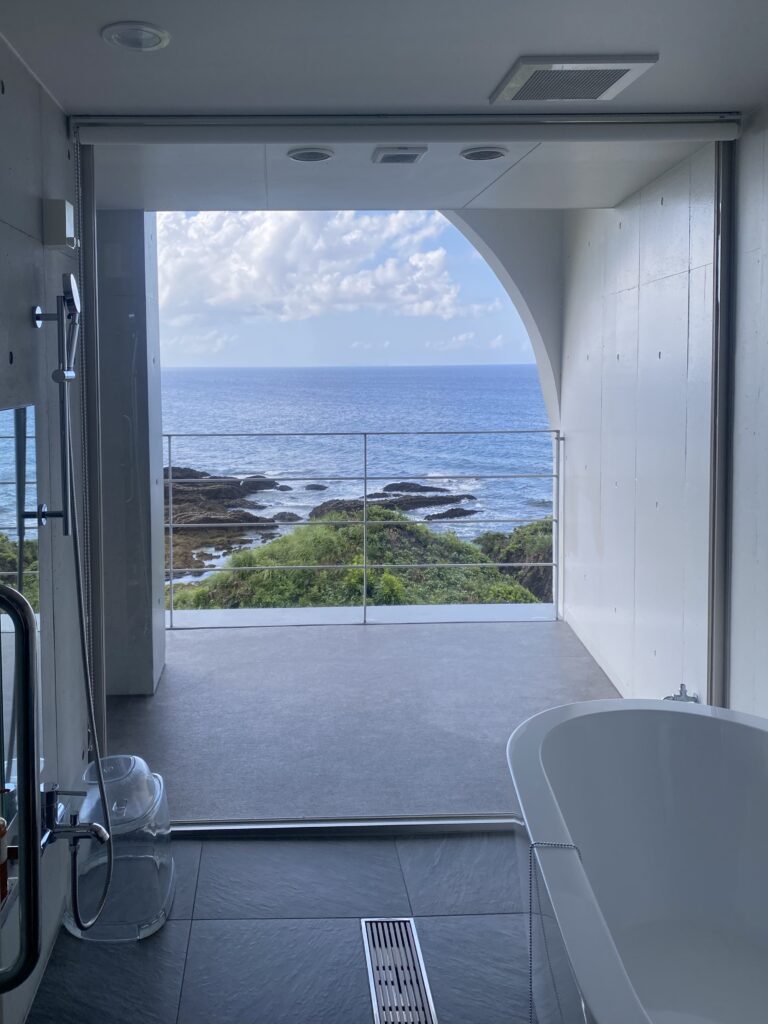 An architect-led 9-villa hotel on Yakushima north-west shore. Each room has an open-air bath that frames the Pacific through a concrete arch and a private balcony 25 meters above the rocks. What works, what does not, and who should book.
 - Shoji Ueda Museum 2026: The Concrete Building That Frames Mt. Daisen Like One of His Photographs
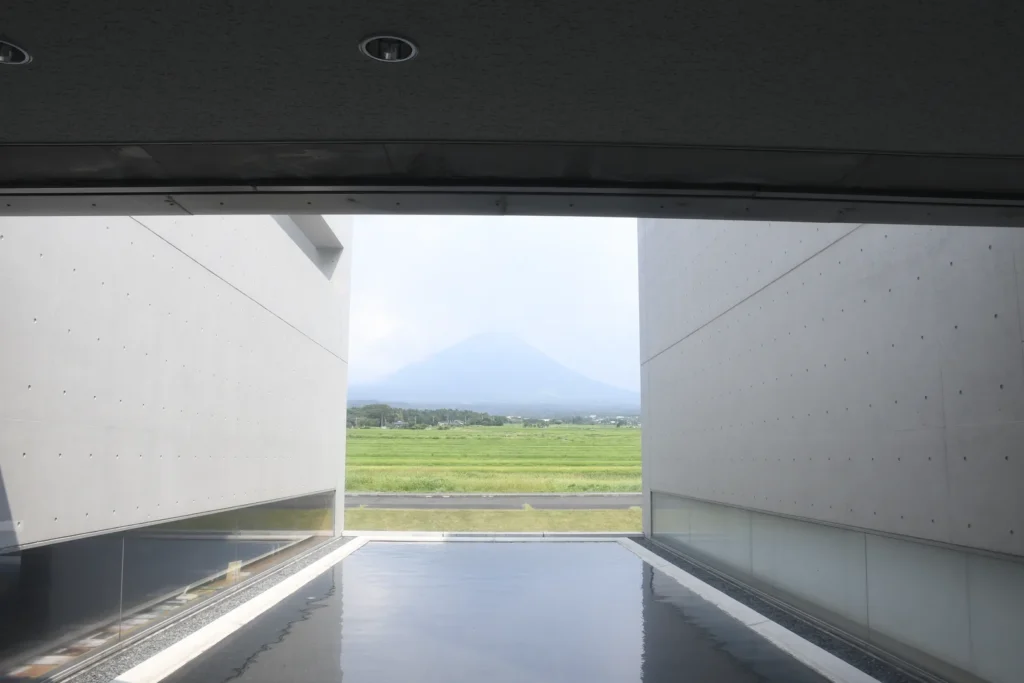 A pilgrimage to photographer Shoji Ueda hometown museum in Tottori. Shin Takamatsu architecture, four black cubes, and the reflecting pool that frames Mt. Daisen.
 - Minamiza 2026: Kyoto’s 400-Year-Old Kabuki Theatre, Walked by a Kyoto-Born Local
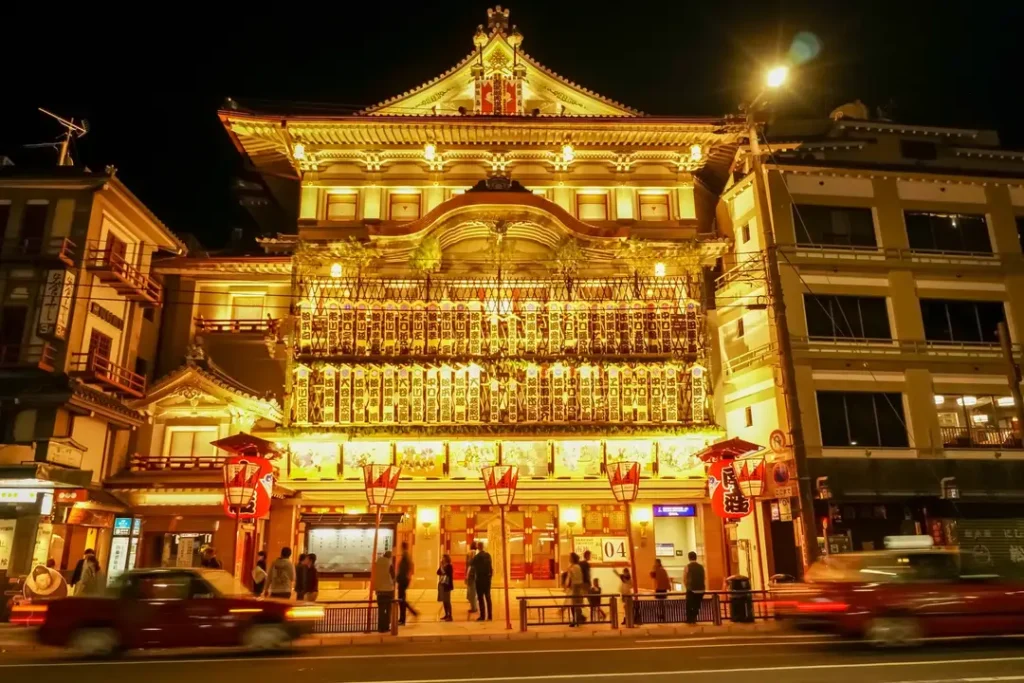 A Kyoto-born local walk through Minamiza, the Edo-period kabuki theatre on Shijo Bridge. 2026 schedule, ticket tiers, the English audio guide that opens it up.
2026 cherry blossom cherry blossoms day trip from tokyo flower festival fuji five lakes fujiyoshida Fukuoka fushimi hanami hiking japan japanese culture japanese food japan travel kamakura kanagawa kawagoe kawaguchiko Kumamoto kyoto Mount Fuji mt fuji Nagano Onsen Ramen ryokan sakura Shizuoka shrine spring spring in japan Tokyo travel travel guide Travel Guide 2026 when to visit japan winter winter travel Yamanashi
Join 1,000+ travelers discovering Japan's hidden side
Weekly dispatches from off-the-beaten-path Japan — spots and stories you won't find in guidebooks.
No spam. Unsubscribe anytime.
Welcome aboard!
You're in. See you in your inbox soon.
[…] March, the historic Jindaiji Temple in Chofu, Tokyo, comes alive with a vibrant sea of red for the Jindaiji Daruma Ichi 2026. As one of […]