

Welcome to Japan’s cherry blossom season! Hanami (flower viewing) is a beloved tradition, but it comes with unwritten rules rooted in a culture of sharing public spaces. While many parks are quite relaxed, knowing the core etiquette ensures you can enjoy the sakura without causing accidental offense.
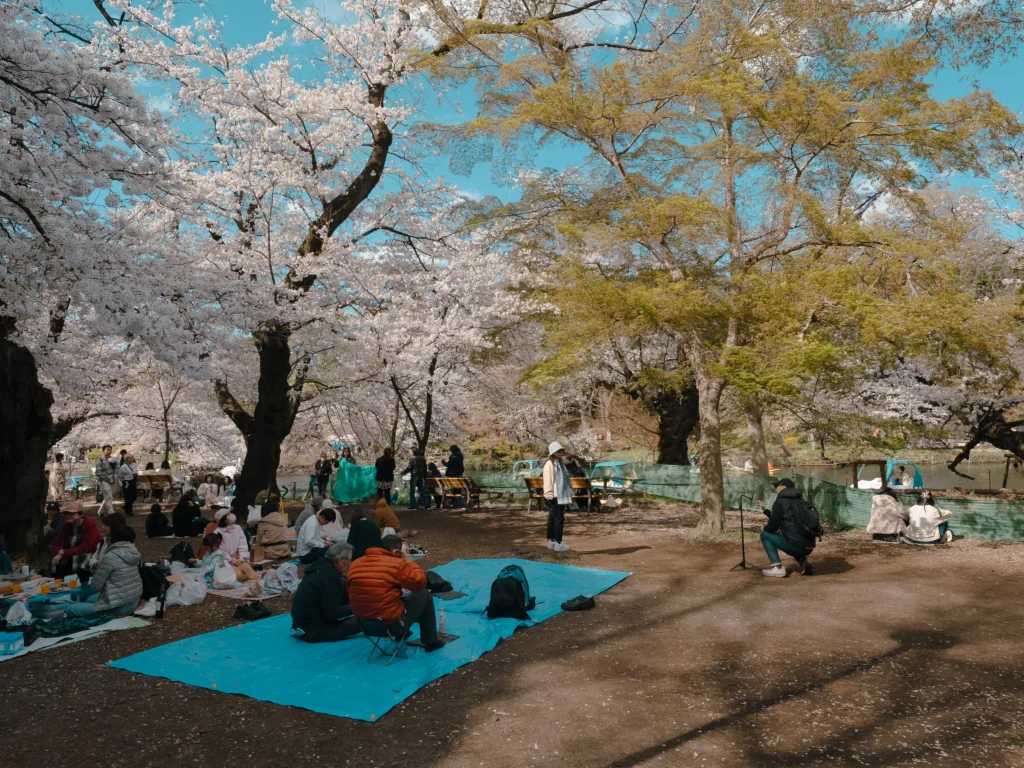
This guide is for first-time visitors who want to enjoy hanami respectfully. We’ll cover everything from securing a picnic spot to taking photos and handling trash. The most important rule is to always prioritize local signage and instructions from park staff.
Quick Do’s & Don’ts
| Do | Don’t |
| Check local rules first | Assume all parks have the same rules. |
| Take all your trash home | Leave any garbage behind, even next to a full bin. |
| Keep noise to a respectful level | Play loud music from speakers. |
| Ask before photographing people | Take close-up photos of strangers without permission. |
| Stay on designated paths | Touch the trees, branches, or walk on their roots. |
Understanding Hanami: Common Misconceptions in Japanese Parks
Is Hanami a Party or Quiet Appreciation?
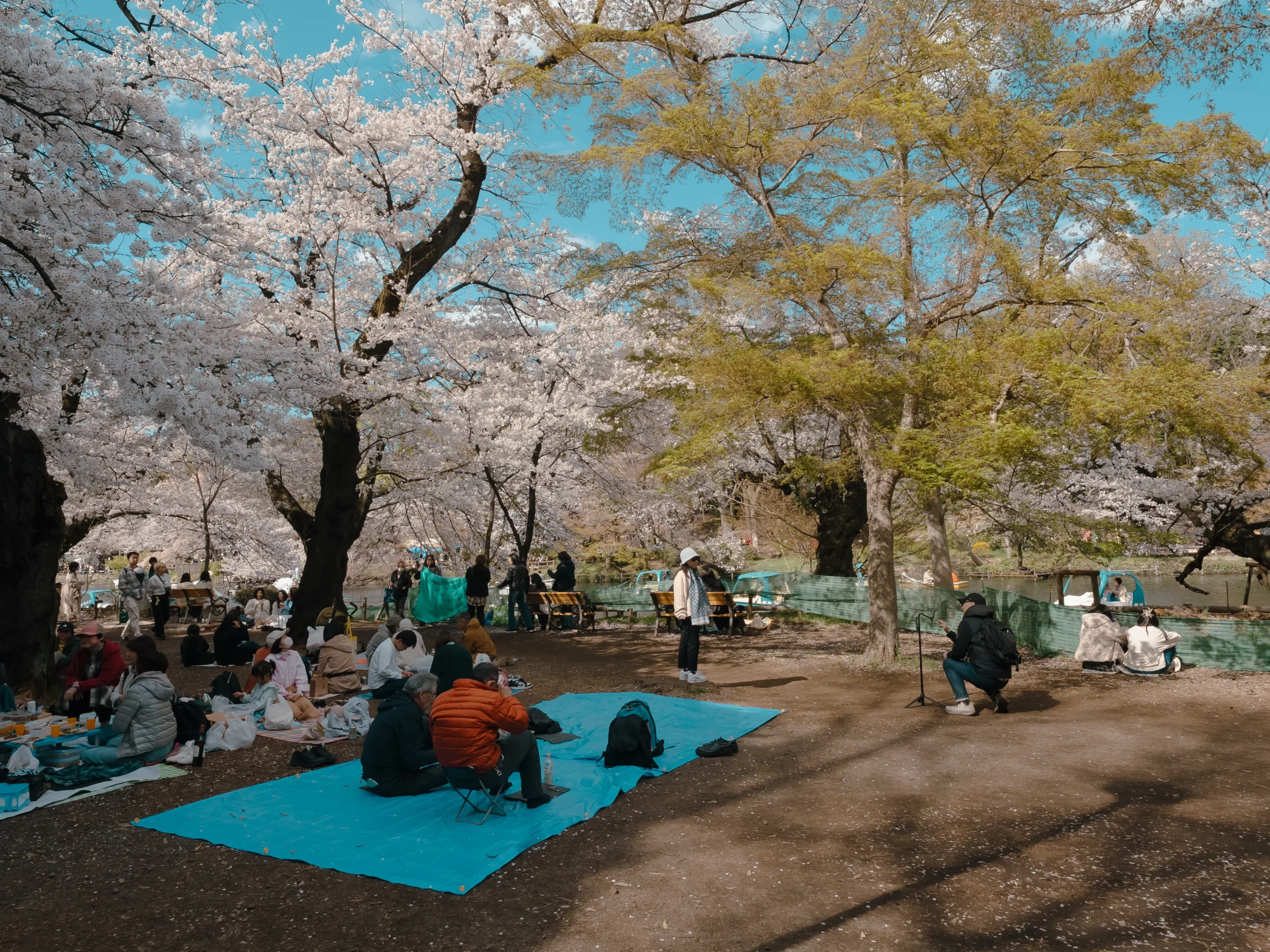
It can be both. Daytime hanami often involves lively picnics with food and drinks, while evening viewing (yozakura) tends to be quieter and more about appreciating the illuminated trees. The best approach is to observe the atmosphere around you and match its energy. If people are chatting and laughing, a friendly picnic is appropriate. If it’s a serene temple garden, quiet contemplation is the way to go.
What Gets You in Trouble at Hanami?
Most issues arise from a few key areas: leaving trash, excessive noise, blocking pathways, intrusive photography, and smoking outside designated areas. This guide will help you navigate these common pitfalls so you can relax and enjoy the blossoms.
Securing a Spot: The Most Common Hanami Challenge
Finding a good spot for your picnic blanket can be competitive, especially in popular locations. Following these guidelines will help you do it respectfully.
How to Know if Reserving a Spot is OK
Always follow this order of priority:
1.Official Signs & Park Rules: Look for posted signs at the park entrance. They are the ultimate authority.
2.Staff & Security Guards: If you’re unsure, ask a park official. They can clarify the rules for that specific day.
3.Surrounding Atmosphere: Observe what others are doing. If no one has left unattended sheets, you shouldn’t either.
Even where reserving a spot is allowed, never block pathways, entrances, or landscaped areas.
How Early is Too Early?
While some locals might lay down a tarp early in the morning, leaving it unattended for hours is risky. Many parks, like Tokyo’s Ueno Park, explicitly prohibit reserving spots without anyone present and may remove unattended sheets. For a stress-free experience, it’s safer to secure a spot when you arrive or only for a short period before your group gathers.
The Art of the Picnic Sheet
To avoid disapproval, choose a sheet (or leisure sheet as it’s called in Japan) that fits your group—not excessively large. Be careful not to place it directly on the cherry trees’ exposed roots, as the pressure can damage them. Use bags or other weights to secure the corners so it doesn’t blow away.
Alternatives to a Full-Blown Picnic
If securing a spot seems too difficult, consider these easier alternatives:
•Walking Hanami: Stroll through the park and enjoy the blossoms on the move.
•Cafe Take-out: Grab a coffee and a snack to enjoy on a park bench for a short time.
•Go Early: A quiet 30-minute visit in the early morning often requires no spot-saving at all and is perfect for photos.
Trash, Noise, and Smoking: The Defining Etiquette
How you handle these three things will define your hanami experience and the impression you leave.
Trash: Assume There Are No Bins
Japan has very few public trash cans. The fundamental rule is to take all of your garbage home with you. Come prepared with at least two bags: one for burnable trash (food scraps, paper) and one for recyclables (cans, plastic bottles, glass). Tie your bags securely to prevent trash from scattering in the wind.
Food & Drink
While eating and drinking are central to hanami, be mindful of strong-smelling foods that might bother neighbors. Spills can be difficult to clean, so bringing a pack of wet wipes is a smart move for quick clean-ups.
Noise: Loud Music is a Major No
Loud conversations and music from portable speakers are the quickest way to draw negative attention. Many parks outright ban the use of speakers. While cheerful conversation is fine, avoid shouting, singing, or rowdy behavior, especially at night.
Smoking: Be Extra Cautious
Smoking rules in Japan are stricter than in many other countries. In parks, smoking is almost always restricted to designated smoking areas. Never smoke while walking, as this is widely considered dangerous and rude. The best practice is to locate the smoking area before you settle down or simply wait until you’re back at your hotel.
Photography in Sacred Spaces: A Hanami Blind Spot
Many of the most beautiful cherry blossoms are found in the grounds of shrines and temples, where photography rules are stricter.
Identifying Photography Rules
Look for signs with a camera icon, often with a red circle and slash through it, indicating that photography is prohibited. This is common inside temple buildings, near sacred objects, or in private gardens. When in doubt, ask a staff member.
Respecting People’s Privacy
In Japan, there is a strong expectation of privacy. Avoid taking close-up photos of people’s faces without explicit permission. This is especially true for:
•Children
•People in traditional kimono
•Monks, priests, or shrine maidens (miko)
•Anyone in the act of praying
How to Take Photos Respectfully
•Don’t block traffic: If you stop to take a photo, move to the side of the path.
•Use a zoom lens: This allows you to capture details from a distance without being intrusive.
•Try creative angles: A low angle can capture the blossoms against the sky without including people in the shot.
•Avoid tripods in crowds: In busy areas, tripods are a tripping hazard and are often banned. Opt for a monopod or handheld shots.
If You’re Asked to Stop
If a staff member or another visitor asks you to stop taking photos, apologize, put your camera away, and move to a different area. Prioritize the peaceful experience of the place over getting the perfect shot.
Common Mistakes to Avoid (and What to Do Instead)
| Mistake (NG) | Better Alternative (OK) |
| Leaving a sheet unattended for hours. | Secure your spot upon arrival or for a short time only. |
| Leaving trash bags next to a full bin. | Take all your trash home with you. |
| Playing music from a speaker. | Use headphones or enjoy the natural sounds. |
| Smoking outside a designated area. | Find the official smoking area first. |
| Blocking a path to take photos. | Step to the side and wait for a clear moment. |
| Photographing people praying up close. | Focus on architecture or nature, keeping people out of the frame. |
Essential Hanami Checklist
•Two trash bags (for burnable and recyclable)
•Wet wipes and hand sanitizer
•A small picnic sheet (appropriate for your group size)
•Weights to hold down your sheet (e.g., water bottles)
•Warm layers (it gets cold in the evenings)
•A portable battery charger
•Cash (for any food stalls or temple offerings)
Join 1,000+ travelers discovering Japan's hidden side
Weekly dispatches from off-the-beaten-path Japan — spots and stories you won't find in guidebooks.
No spam. Unsubscribe anytime.
Welcome aboard!
You're in. See you in your inbox soon.