
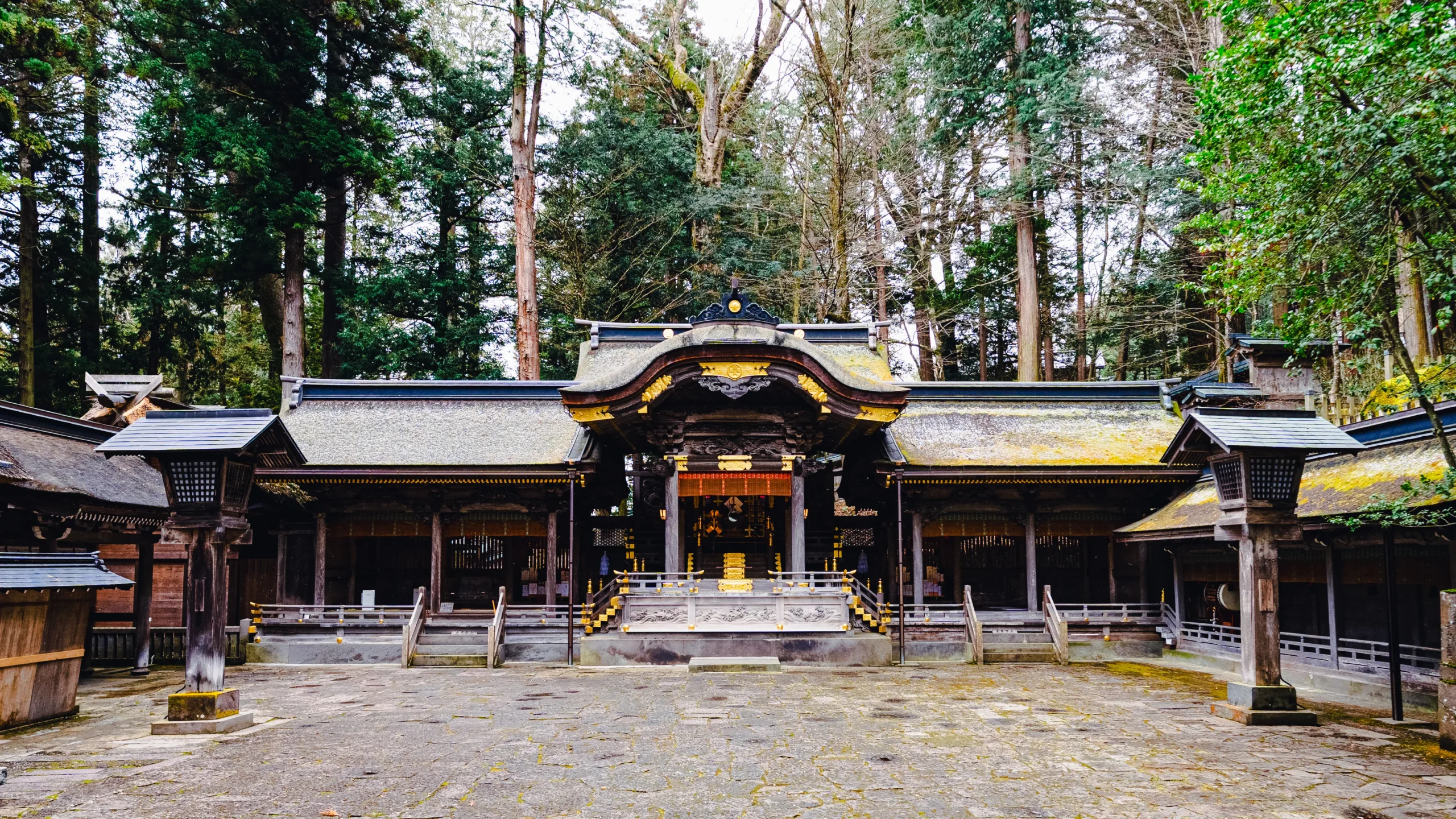

I came to Suwa Taisha on a clear autumn morning. The task was simple: visit all four shrines in a single day. This is called yonsha meguri—the four-shrine pilgrimage. It is not a difficult walk, but it is a deliberate one. Each shrine sits in a different location, separated by the geography of Lake Suwa and the surrounding mountains. By the end of the day, I understood why people have made this journey for centuries.
What Is Suwa Taisha?
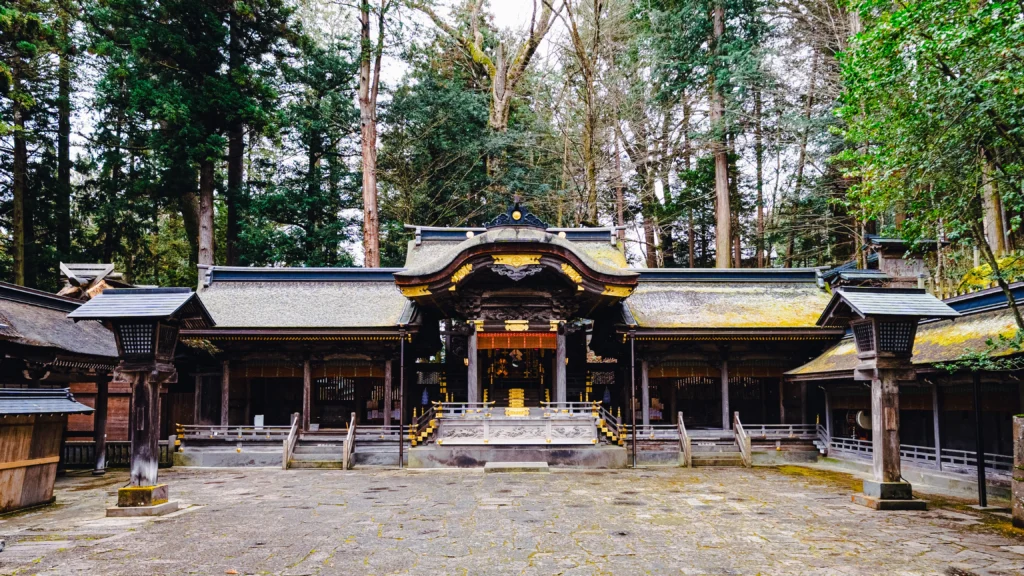
Suwa Taisha is not one shrine. It is four shrines, each with its own character, yet all dedicated to the same deities. The shrines are spread across the Suwa region in Nagano Prefecture. The upper shrines—Honmiya and Maemiya—sit on the south side of Lake Suwa. The lower shrines—Akimiya and Harumiya—sit on the north side. This unusual arrangement makes Suwa Taisha unique in Japan.
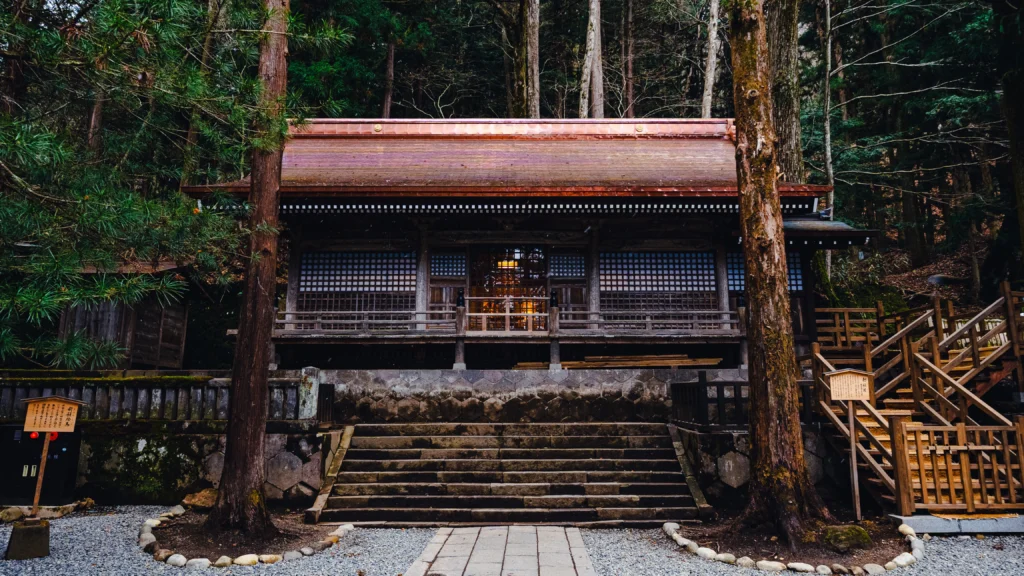
The shrine is the head shrine of 25,000 Suwa shrines across the country. It is ancient. The faith that centers on Suwa Taisha is said to have originated at Maemiya, the most remote of the four shrines. The deities worshipped here are Takeminakata-no-Kami and Yasaka-Tometome-no-Kami. They are gods of water, wind, and the land itself.
Suwa Taisha is also famous for the Onbashira Festival, held every six years. During this festival, massive logs are cut from the surrounding mountains and rolled down steep slopes in a ceremony that dates back centuries. The next festival will be in 2028. The logs are then used to rebuild the shrine buildings. This cycle of destruction and renewal has continued for over a thousand years.
Why Visit All Four Shrines?
This pilgrimage is for people who want to understand how a shrine complex functions across a landscape. It is not for those seeking a single destination. The experience is in the movement between shrines, in the different atmospheres of each place, in the way the landscape changes as you travel.
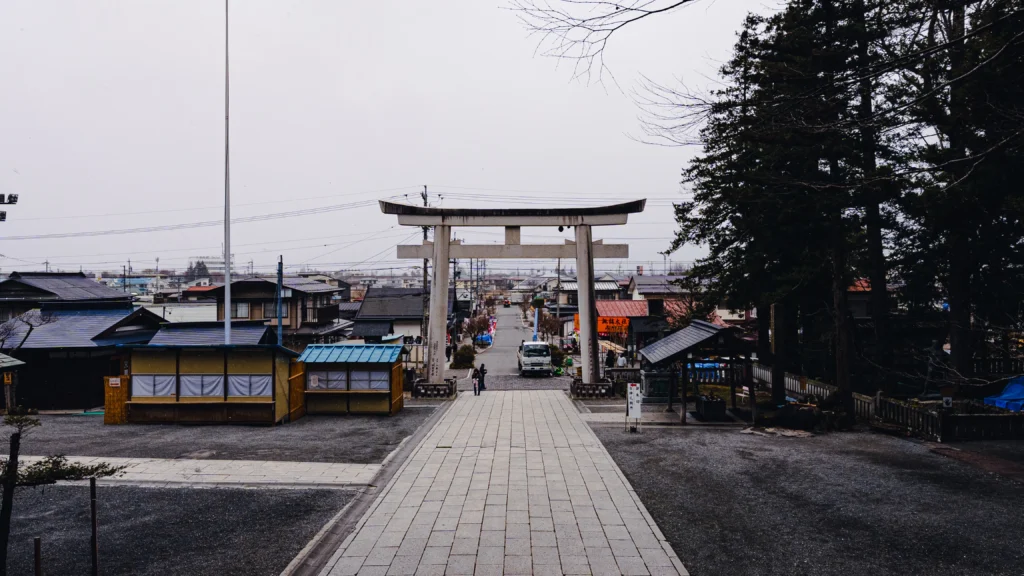
If you want a quick visit to a famous shrine, you can see one or two shrines in an afternoon. But the full experience—the one that reveals the depth of Suwa faith—requires visiting all four. This is why yonsha meguri exists.
If you dislike walking or prefer to stay in one location, this pilgrimage is not for you. The shrines are separated by distance. You will need transportation between them. You will be moving throughout the day.
How to Get There
Suwa Taisha is accessible from Tokyo and Nagoya by train or car. The journey itself is pleasant.
| Route | Train | Travel Time |
| Tokyo (Shinjuku) to Suwa | Limited Express Azusa | ~2 hours |
| Nagoya to Suwa | Limited Express Shinano | ~2 hours |
By car, Tokyo to Suwa IC takes about 2 hours 10 minutes via the Chuo Expressway. From Nagoya, Okaya IC takes about 2 hours.
Once in the Suwa area, you will need transportation between the four shrines. Some people rent cars. Others use local buses or taxis. I recommend renting a car if you are comfortable driving in Japan, as it gives you flexibility to visit nearby attractions and spend time at each shrine without rushing.
The Four-Shrine Route
Starting Point: Maemiya (Upper Shrine Front Shrine)
Maemiya is located in Chino City, on a hillside above the surrounding landscape. The approach is steep. You climb a long flight of stairs, then continue upward on a stone path. The walk takes about 15 minutes from the parking area.
Maemiya is the oldest of the four shrines. It is said to be the birthplace of Suwa faith. Unlike the other three shrines, Maemiya has an actual main hall—a honden. This is where the deity is believed to reside. The other three shrines worship in the direction of their sacred pillars, not toward a building.
What makes Maemiya special is that all four sacred pillars—the onbashira—are visible here. At the other three shrines, two of the pillars are in locations where visitors cannot approach. Here, you can see all four. These pillars are massive wooden logs, replaced every six years during the Onbashira Festival. They stand at the four corners of the sacred space, marking the boundary between the human world and the divine.
The water here is sacred. A clear stream called Mizume no Keiryu flows near the main hall. This water is used for purification. On the morning I visited, the water was cold and clear. I understood why people consider it holy.
The offering office is open from 9:00 AM to 4:30 PM. This is where you can purchase an oshuin—a shrine stamp. I recommend collecting all four stamps during your pilgrimage. Each shrine has a unique design. The stamps are stamped and written by hand by the shrine staff. They become a record of your journey.
Second Stop: Honmiya (Upper Shrine Main Shrine)
From Maemiya, you drive north to Honmiya in Suwa City. The drive takes about 20 minutes. Honmiya is busier than Maemiya. There is a shopping street leading to the shrine, with food stalls and souvenir shops. The atmosphere is more commercial, but not unpleasantly so.
Honmiya is famous for its unique architecture. The main worship hall—the heihaidensame—has two side halls, one on each side. This arrangement is called “Suwa-zukuri” and is found nowhere else in Japan. It is a distinctive design that reflects the unique nature of Suwa faith.
Honmiya has no main hall. The deity is believed to reside in the sacred pillars and in the mountain behind the shrine, called Moriya-san. This is why the pillars are so important. They are not just markers. They are the dwelling place of the god.
One detail I noticed: the hand-washing water here is warm. This is because it comes from a hot spring. In autumn, when the air is cool, the warm water is a small comfort. It is a practical detail that shows how the shrine is integrated with the natural environment.
The offering office is open from 8:30 AM to 5:00 PM. This is a good place to stop for lunch. The shopping street has many options, from traditional dango (sweet dumplings) to tamagonyaki (ball-shaped konjac).
Third Stop: Akimiya (Lower Shrine Autumn Shrine)
From Honmiya, you drive south across Lake Suwa to Akimiya in Shimosuwa Town. The drive takes about 30 minutes. Akimiya is the most visually impressive of the four shrines. The main hall is decorated with the largest bronze lion-dog statues in Japan. These komainu are massive and detailed. They are worth photographing.
There is also a large sacred rope—a daijinensawa—that hangs from the shrine. This rope is a National Important Cultural Property. It is replaced regularly and is a symbol of the shrine’s power and presence.
The kagura hall—the hall where sacred music and dance are performed—is also impressive. It is a large wooden structure with intricate carvings. This is where the shrine’s rituals take place.
Akimiya is dedicated to the same deities as the other shrines, but the atmosphere is different. It feels more formal, more ceremonial. The buildings are more ornate. The grounds are more manicured.
The offering office is open from 8:30 AM to 5:00 PM. This is a good place to collect your second stamp.
Fourth Stop: Harumiya (Lower Shrine Spring Shrine)
From Akimiya, Harumiya is a short drive—about 10 minutes. Harumiya is the smallest and most intimate of the four shrines. The approach is a straight path from the main gate, lined with trees. The atmosphere is quiet and contemplative.
Harumiya is the oldest building in the lower shrine area. The shimaba bridge—the bridge where people dismounted from horses in feudal times—is the landmark that marks the shrine’s entrance. This bridge is a reminder of Suwa’s history as a place of pilgrimage and power.
Like Maemiya, Harumiya is less crowded than the upper shrines. This is where you can sit and reflect on the day’s journey. The shrine is small enough that you can feel the presence of the sacred space without the distraction of crowds.
The offering office is open from 8:30 AM to 4:30 PM. This is your final stamp. By this point in the day, you will have visited four distinct places, each with its own character, yet all connected by a common faith.
Nearby Attractions Worth Adding
Shincho-kan Moriya Historical Museum is located near Maemiya. This museum houses documents from the Moriya family, who served as shrine officials for centuries. The building is designed by architect Terunobu Fujimori and is architecturally interesting in itself. The museum is small but contains valuable historical records.
Fujimori Architecture is scattered around the Maemiya area. There is a suspended tea house called the “Flying Mud Boat,” and two other tea houses—one very high and one very low—with minimalist designs. These are unusual structures that blend into the landscape. They are worth seeing if you have time.
Manjishi no Sekibutsu is a large stone Buddha statue near Harumiya. It has a humorous, gentle expression. In autumn, it is surrounded by rice fields, creating a beautiful composition.
Watanoyuu is a hot spring near Harumiya. According to legend, it was opened by Yasaka-Tometome-no-Kami herself. The spring is famous for a phenomenon called “water clarity test”—the water supposedly becomes cloudy if someone with a dirty heart enters it. This is one of the “seven mysteries of Shimosuwa.”
Costs & Fees
•Entry to Shrines: Free
•Oshuin (Shrine Stamps): ¥300 each (¥1,200 for all four)
•Oshuin Book: ¥1,000
•Amulets: ¥500-¥2,000
•Parking: Usually free or ¥500 per location
•Food: ¥500-¥1,500 per meal
Cash is recommended, though many shops now accept cards.
Best Time to Visit
The best time to visit Suwa Taisha is early morning, before 9:00 AM. The shrines are quieter, the air is clearer, and the experience is more meditative. Weekdays are less crowded than weekends.
Autumn (September-November) is the most popular season. The weather is mild, the leaves are changing, and the light is beautiful. Spring (March-May) is also pleasant. Winter can be cold, but the mountains are clear and the crowds are smaller. Summer is warm and green, but the shrines can be crowded.
If you are visiting during the Onbashira Festival (next in 2028), the experience will be completely different. The festival is massive and draws hundreds of thousands of people. It is a once-in-a-lifetime event, but it is not a quiet pilgrimage.
Things to Know Before You Go
•Wear Comfortable Shoes: Maemiya involves a steep climb. The other shrines are easier, but you will be walking throughout the day.
•Bring Water: The walk to Maemiya is uphill. Bring water, especially in summer.
•Plan for Transportation: Decide in advance how you will move between shrines. Renting a car is most convenient.
•Collect All Four Stamps: The oshuin are a beautiful record of your journey. Bring an oshuin book or purchase one at the first shrine.
•Early Morning is Best: Arrive at Maemiya before 9:00 AM for the quietest experience.
•Respect the Sacred Space: The shrines are active places of worship. Be respectful of other visitors and the sanctity of the space.
Where to Stay
The Suwa area has many accommodations. Upper Suwa Onsen (温泉) is a hot spring resort area near the upper shrines. There are numerous ryokans and hotels with onsen facilities. Shimosuwa also has accommodations near the lower shrines.
For a full experience, I recommend staying overnight and visiting the shrines across two days. This allows you to visit early in the morning when the shrines are quietest, and to explore the nearby attractions without rushing.
→ Search for hotels in Suwa on Agoda
Summary
The four-shrine pilgrimage at Suwa Taisha is a journey through Japanese religious geography. It is not a quick tourist activity. It is a deliberate practice that connects you to centuries of faith and tradition. By the end of the day, you will understand why people continue to make this pilgrimage.
Conclusion
Visiting all four shrines of Suwa Taisha requires time and intentionality, but it offers a deep understanding of how Japanese shrine complexes function across a landscape. The pilgrimage connects you to a living tradition that has continued for over a thousand years. If you have a day to spend in Nagano, this is a journey worth making.
Latest Articles
- Yakushima West Drive 2026: Ohko Falls, Yokogawa Valley, Seibu Rindo and Inakahama
- Shonan at 5 AM in June 2026: Koyurugi Crossing, the Beach with Mt. Fuji, and the Coast Most Visitors Walk Past
- THE HOTEL YAKUSHIMA Ocean and Forest Review: A Quiet Architectural Stay on the North Shore
- Shoji Ueda Museum 2026: The Concrete Building That Frames Mt. Daisen Like One of His Photographs
- Minamiza 2026: Kyoto’s 400-Year-Old Kabuki Theatre, Walked by a Kyoto-Born Local
Sources / References
•[1] Official Suwa Taisha Website
•[2] Suwa Tourism Website
•[3] Rakuten Travel Guide – Suwa Taisha
Notes & Exceptions
•The Onbashira Festival (next in 2028) changes the entire character of the pilgrimage. Plan accordingly if visiting during festival years.
•Some shrine offices have limited hours. Call ahead if you need specific services like prayers or blessings.
•Winter weather can make the Maemiya approach slippery. Wear appropriate footwear.
•The four shrines are spread across different municipalities. Each has its own local information center.
Certainty Level
High.
Join 1,000+ travelers discovering Japan's hidden side
Weekly dispatches from off-the-beaten-path Japan — spots and stories you won't find in guidebooks.
No spam. Unsubscribe anytime.
Welcome aboard!
You're in. See you in your inbox soon.