

Current date: 2025-12-23 (JST)
Kyoto is a city of breathtaking beauty, but its popularity often means crowded temples and streets packed with tourists. What if you could experience its ancient stone paths and sacred sites in near-total solitude? The secret, known to locals and savvy travelers, is to explore Kyoto during its quietest hours: the early morning and late at night.
This guide explains why you should set your alarm for 5 AM or stay out until midnight. We’ll cover the best spots to visit, the pros and cons of off-hour exploration, and provide a detailed guide on how to get around when public transport is limited. This is how you find the soul of Kyoto, hidden in plain sight.
What are the Benefits of Exploring Kyoto at Off-Hours?
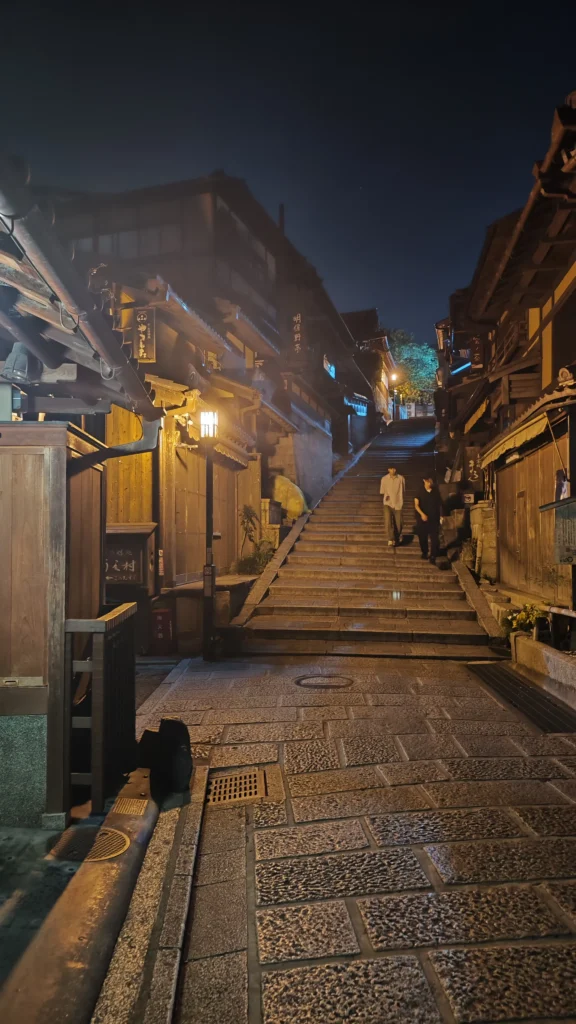
Exploring Kyoto between 11 PM and 7 AM transforms the experience from a crowded tourist outing into a personal, atmospheric journey. The primary benefit is solitude. Famous spots like the Arashiyama Bamboo Grove or the streets of Gion, which are shoulder-to-shoulder during the day, become your private domain. This allows for unparalleled photography opportunities without a single person in your shot. The quiet also lets you hear the subtle sounds of the city—the rustle of leaves, the creak of old wooden buildings—creating a deeply immersive and almost magical atmosphere.
Best Places for an Early Morning Walk in Kyoto
Early morning is for witnessing the city awaken. The light is soft, the air is crisp, and the silence is profound. Here are the top spots to visit as the sun rises.
| Location | Best Time | Why It’s Great in the Morning | Google Maps Link |
| Fushimi Inari Shrine | 6:00 – 7:30 AM | The thousands of red torii gates are empty, creating a surreal, tunnel-like effect. The morning light filtering through the gates is perfect for photos. | Map |
| Kiyomizu-dera Temple | 6:00 – 7:00 AM | The temple opens at 6 AM. You can enjoy the iconic wooden stage and panoramic city views without the crowds that arrive by 9 AM. | Map |
| Arashiyama Bamboo Grove | 5:30 – 7:00 AM | The towering bamboo stalks create an otherworldly atmosphere in the misty morning air. You can walk the entire path without seeing another soul. | Map |
Best Places for a Late-Night Stroll in Kyoto
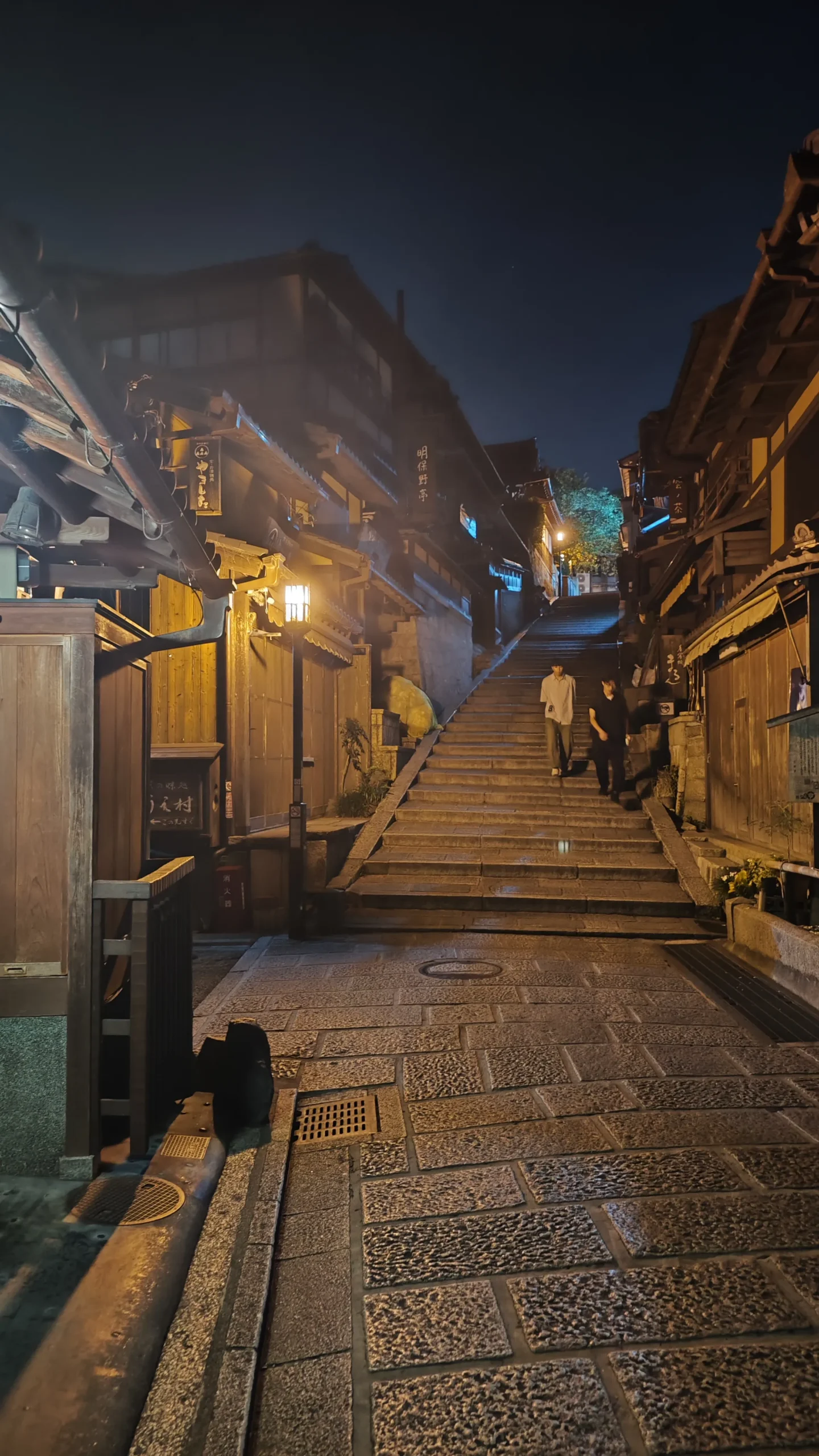
Late night in Kyoto is about atmosphere. The streets, lit by traditional lanterns, feel like a step back in time. While temples are closed, the historic districts are always open.
| Location | Best Time | Why It’s Great at Night | Google Maps Link |
| Ninenzaka & Sannenzaka | 11:00 PM – 2:00 AM | These preserved stone stairways in Higashiyama are deserted. The warm glow of the lanterns on the dark, wooden buildings is incredibly atmospheric. | Map |
| Gion District | 10:00 PM – 1:00 AM | While the chances of spotting a geisha are lower, the empty, narrow alleyways and traditional machiya houses feel mysterious and authentic. | Map |
| Pontocho Alley | 11:00 PM onwards | After the last restaurants close, this narrow alley becomes a quiet, lantern-lit corridor, perfect for a peaceful walk along the Kamo River. | Map |
How to Get Around During Off-Hours
Public transportation in Kyoto largely stops between midnight and 5:30 AM. This is a critical factor in planning your off-hours exploration. Here’s a breakdown of your options.
| Transport | Availability | Cost (Approx.) | Pros | Cons |
| Taxi | 24/7 | ¥2,000 – ¥5,000+ | Direct, always available | Expensive, potential language barrier |
| Walking | 24/7 | Free | Immersive, flexible | Limited range, tiring |
| Bicycle | Varies | ¥1,000 – ¥2,000 / day | Flexible, good range | Night safety, limited 24h rentals |
| Public Bus | ~6 AM – 11 PM | ¥230 (flat fare) | Cheap, wide coverage | Not available for late night/early morning |
| Subway/Train | ~5:30 AM – 11:30 PM | Varies by distance | Fast, reliable | Limited network, stops at midnight |
Key Takeaway: For true off-hours freedom (11 PM to 5:30 AM), your primary options are walking or taking a taxi. The most effective strategy is to choose a hotel within walking distance of your target exploration area.
Neighborhood Guide for Off-Hours Exploration
Choosing the right neighborhood to stay in is the most important decision for successful early morning or late-night adventures. Here’s a guide to the best areas.
•Higashiyama & Gion: Best for Late-Night Atmosphere. This is the heart of historic Kyoto. Staying here means you can simply walk out your door and be on the lantern-lit streets of Ninenzaka, Sannenzaka, and Gion. It is the most convenient choice for photographers and those seeking a traditional atmosphere. Over 490 properties are available in this area.
•Shimogyo (Kyoto Station Area): Best for Early Morning Departures. With over 200 hotels, this area is a transportation hub. If you plan to take the first train or bus to a location like Fushimi Inari or Arashiyama, staying here is extremely practical. It offers less historic charm but maximum convenience.
•Nakagyo & Kawaramachi: Best All-Rounder. As the downtown core of Kyoto with over 800 properties, this area offers a balance. It’s within a long walk or a short, relatively inexpensive taxi ride to Higashiyama. You also have more late-night dining options and 24-hour convenience stores.
•Fushimi: Best for Fushimi Inari. If your primary goal is to see the thousands of torii gates at sunrise, staying in one of the 100+ hotels in Fushimi is the most direct approach. This area is quieter and more residential.
Where to Stay: Hotel Recommendations by Neighborhood
Based on the neighborhood strategy, here are two highly-rated hotels that are well-suited for off-hours exploration.
1.Daiwa Roynet Hotel Kyoto Premiere (Shimogyo)
•Rating: 9.1/10 (Exceptional) from over 3,900 reviews.
•Why it’s great: Located just 300 meters from Kyoto Station, this hotel is the perfect base for catching the first train or bus. Its modern, clean facilities provide a reliable and comfortable stay. It offers exceptional value for its prime location.
•Price: From around ¥7,500 per night.
2.A hotel in Gion or Higashiyama (Example: Gion Shirakawa)
•This is an assumption, but… a smaller, well-regarded hotel or ryokan directly in the historic district would be ideal for late-night walks. While I don’t have a specific recommendation with thousands of reviews like a large chain, the key is location. Look for properties with high ratings (8.5+) situated directly in Gion or Higashiyama.
•Why it’s great: The ability to walk back to your room in minutes after a midnight stroll through deserted, ancient streets is an experience in itself. No need for taxis or worrying about the last train.
→ Search for hotels in Kyoto on Agoda (over 2,400 options)
Summary
To truly connect with Kyoto’s ancient past, you must escape the crowds. By exploring in the quiet hours of the early morning or late night, you trade the hustle and bustle for a world of serene beauty and quiet contemplation. It requires a little extra planning, but the reward—having some of the world’s most beautiful historic sites all to yourself—is an unforgettable experience.
Conclusion
Exploring Kyoto at dawn or midnight is a strategy that rewards travelers with a more authentic and personal connection to the city. The key is to choose one or two key areas, stay in a hotel that provides easy access, and plan your transportation in advance. The next step is to decide: are you a morning person or a night owl? Either way, you’re about to see a side of Kyoto that most visitors miss.
Sources / References
[1] Kyoto City Official Travel Guide
[2] Inside Kyoto – Public Transport Guide
[3] Hidden Japan Gems Instagram
Notes & Exceptions
•Information is current as of December 2025. Always check public transport schedules, as they can change.
•When exploring late at night, be respectful of residents. Keep noise to an absolute minimum as you are walking through residential neighborhoods.
Certainty Level
High