

Current date: 2025-12-19 (JST)
Fukuoka has soba restaurants. Most sit in town, convenient to reach. But there is a different kind of soba experience, one that requires planning and a drive into the countryside. Soba Bunjiro is located in Wakasugi, a mountainous area of Shinokoku town, about 30 minutes from central Fukuoka. I made the trip on a warm summer afternoon, having called ahead to reserve a table.
Overview
Eating soba at a specialty restaurant in the mountains is a different experience from a quick bowl in the city. The focus is on the noodle itself, the broth, and the quality of the ingredients. At Soba Bunjiro, the soba is made with ten-wari, or 100% buckwheat flour, which means no wheat flour is mixed in. This affects the taste, the texture, and the aroma. The restaurant also serves tempura alongside the soba, a classic pairing. The setting—a relocated restaurant in a quiet, natural area—shapes the meal as much as the food itself.
What This Experience Is Really Like
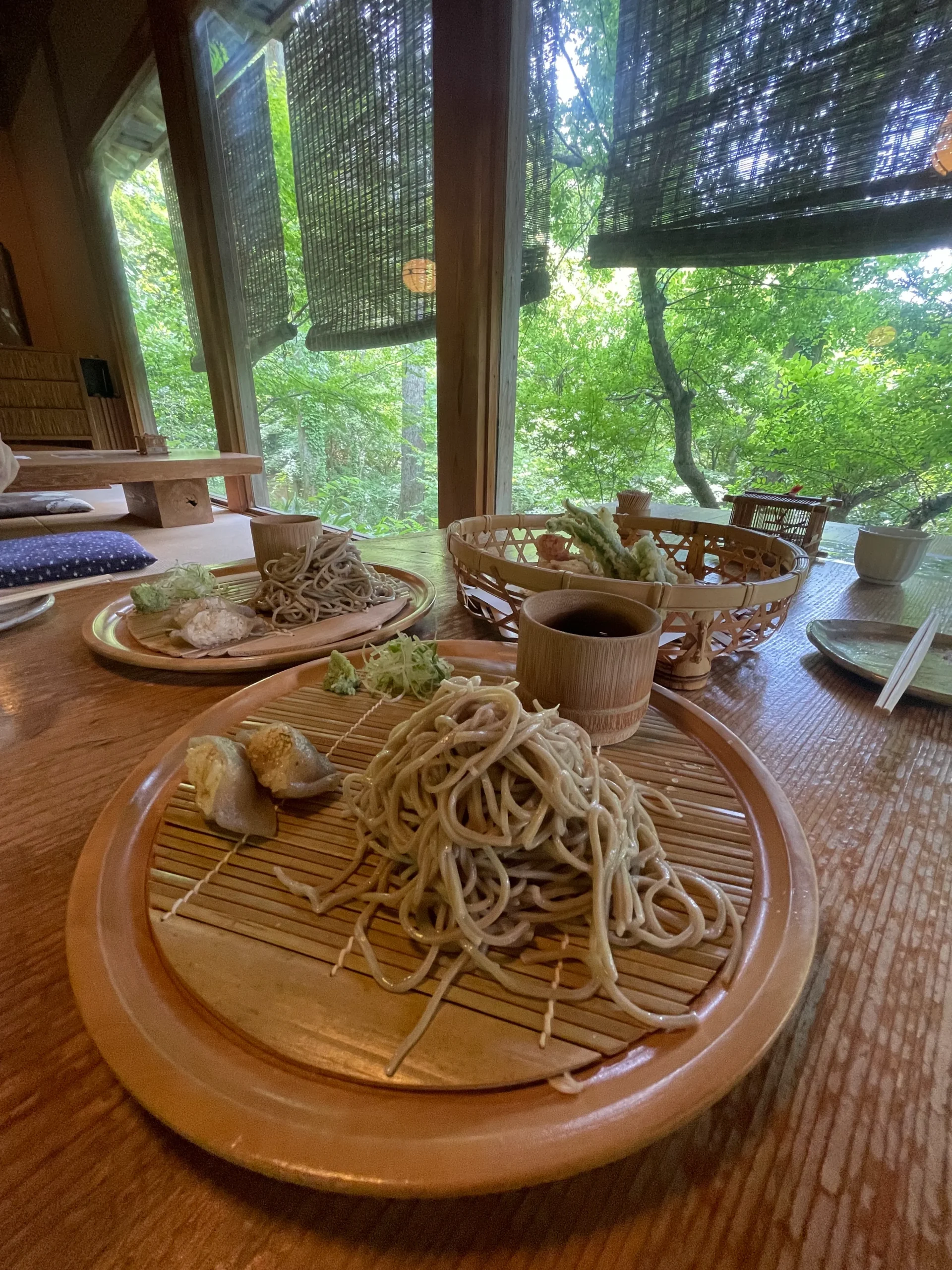
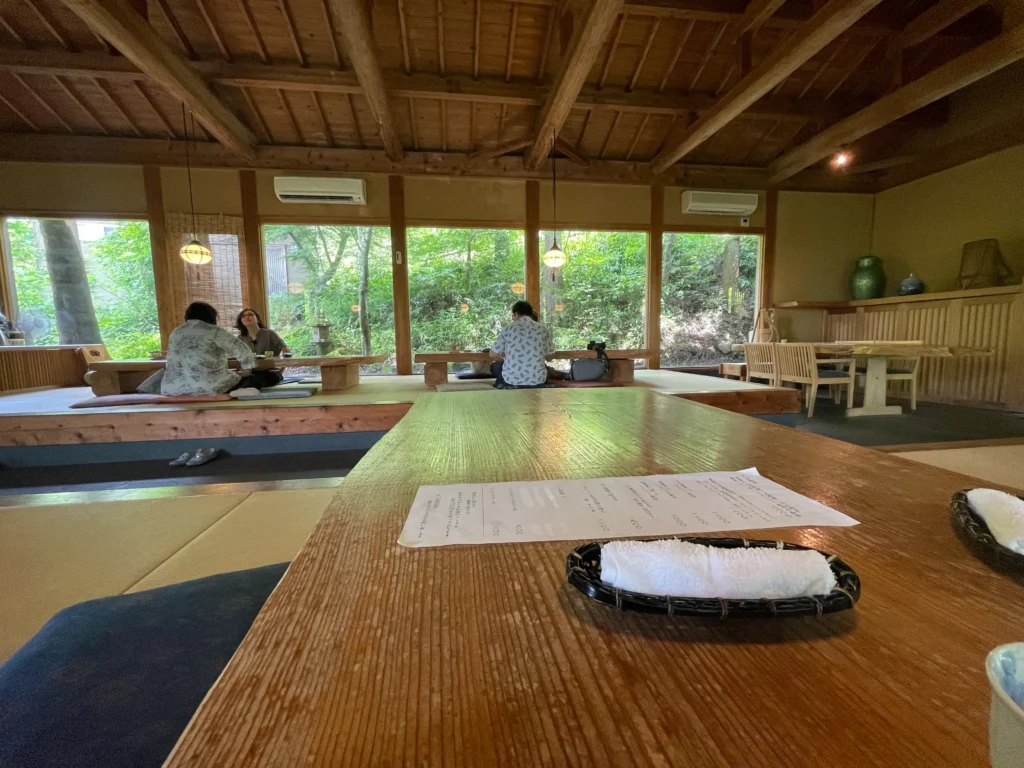
The drive to the restaurant took me through increasingly narrow roads, past rice fields and small houses. The landscape opened up. The restaurant building itself is modern but designed to blend with its surroundings. Inside, the ceiling is high, with large wooden beams. The space feels generous, not cramped. There were other diners, but the atmosphere was calm, almost hushed.
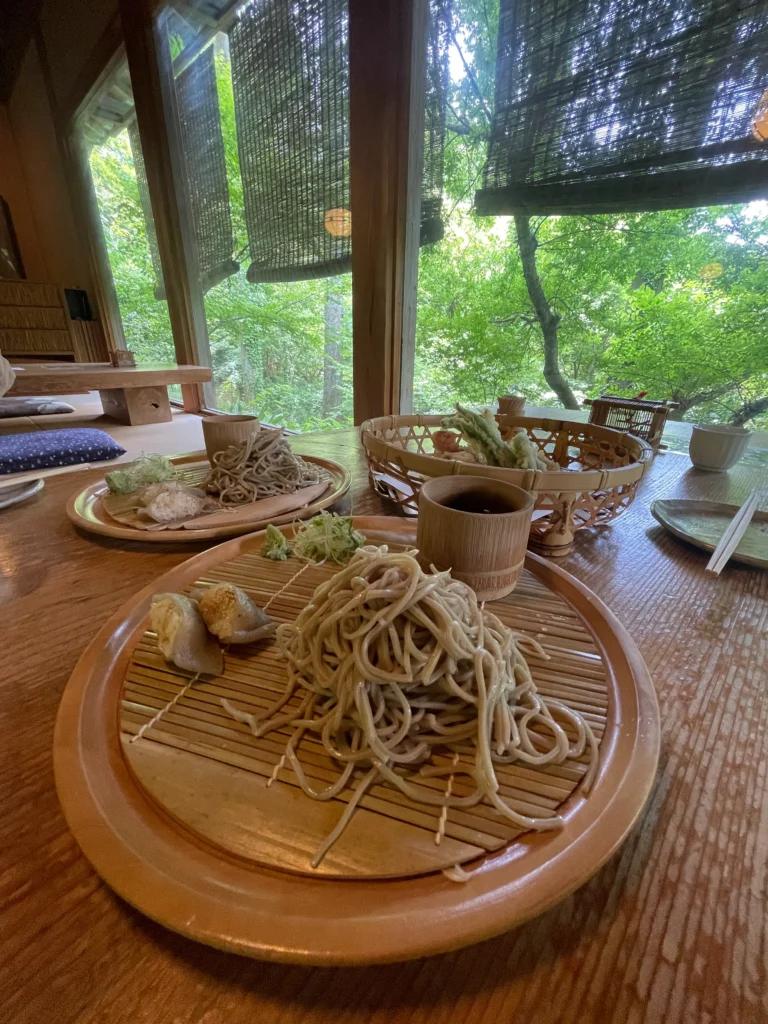
I ordered the zaru soba (chilled soba served on a bamboo mat) and a tempura platter. The soba arrived first. The noodles were pale, almost white, with a visible texture. The first thing I noticed was the smell. It was strong, distinctly nutty, with an earthiness that I had not experienced in soba before. The aroma filled my awareness before I even tasted it. I dipped a small bundle into the dipping sauce and ate. The texture was slightly rough, not smooth like wheat-based soba. The buckwheat flavor was direct, unapologetic. It tasted like the grain itself, not a refined interpretation of it.
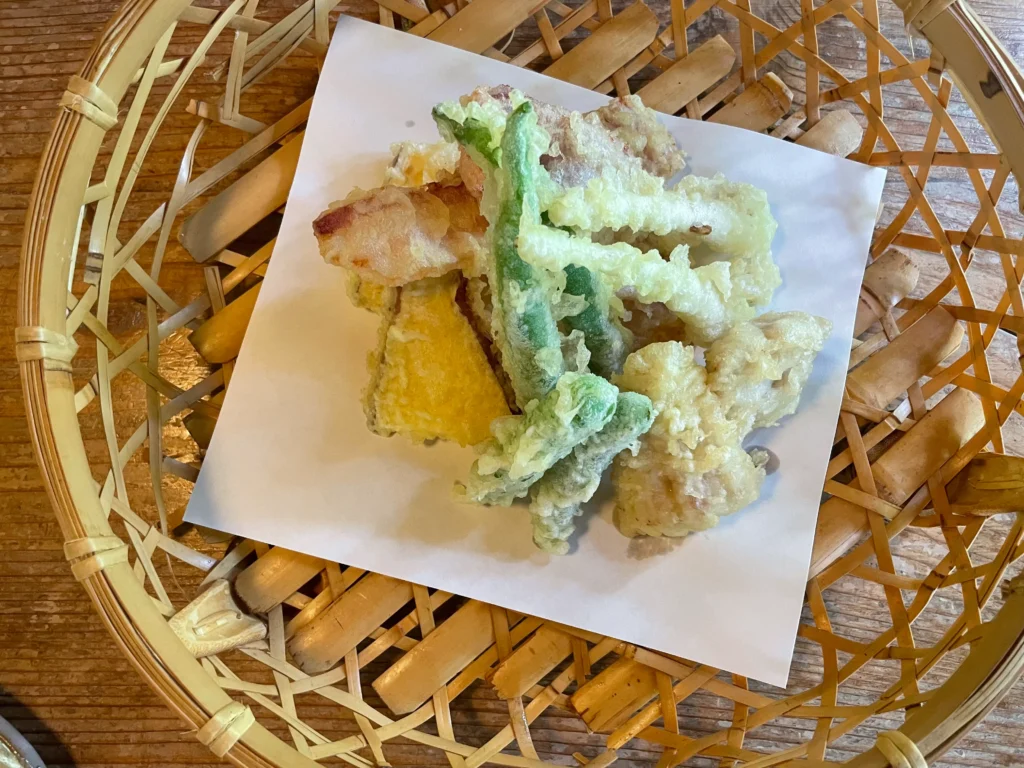
The tempura platter arrived on a separate plate. There were several pieces: a shrimp, a slice of eggplant, a piece of mushroom, and others. The batter was thin, almost translucent in places. It was crispy, but not heavy. When I bit into each piece, the interior was still warm, and the flavor of the ingredient came through clearly. The eggplant tasted like eggplant. The shrimp tasted like shrimp. The batter was there to enhance, not to dominate.
Who This Experience Is For (and Who It’s Not)
This is for someone who appreciates the taste of buckwheat and is curious about how it differs from wheat-based soba. It suits a person who enjoys quiet, contemplative meals and doesn’t mind traveling to reach a restaurant. The setting appeals to those who want to eat in a natural environment, away from the city’s noise.
It may not be for everyone. If you prefer the convenience of a quick soba lunch near a train station, this requires planning and a car. If you dislike strong flavors, the intensity of ten-wari soba might be surprising. If you want a large, varied menu with many options, this restaurant is focused and limited. The location is also remote; if you get lost, there are no nearby alternatives.
Practical Details
| Aspect | Details |
| Time | 1 to 1.5 hours, including the drive. |
| Cost | Approximately ¥2,000–¥3,000 per person. |
| Reservation | Required. The restaurant is popular and small. Call ahead. |
| Payment | Cash only. No credit cards or digital payments. |
| Location | Wakasugi, Shinokoku town, about 30 minutes from central Fukuoka by car. |
| Parking | Available on-site. |
| Seasonal | Open year-round, but the chilled soba is especially refreshing in summer. |
Etiquette & Cultural Notes
The main etiquette point is to eat the soba while it is still cold and firm. Zaru soba is meant to be eaten quickly, not left sitting. The dipping sauce is meant for dipping, not for pouring over the noodles. A small amount of wasabi and a pinch of nori (seaweed) are typically added to the sauce.
A common mistake for foreign visitors is to treat the tempura as a side dish. It is a distinct course, meant to be eaten after the soba or alongside it, not mixed together. The tempura is also meant to be eaten warm, so it should be consumed soon after it arrives.
Best Time to Do This
Summer is ideal for the chilled soba experience. The drive is pleasant on a clear day. The restaurant is less crowded on weekdays, especially in the afternoon. Avoid peak lunch hours (12:00–1:00 PM) and dinner hours (6:00–7:00 PM) if you prefer a quieter atmosphere. The mountain setting means the temperature is cooler than in the city, even on a warm day.
Common Misunderstandings
“All soba tastes the same.” Ten-wari soba has a distinct flavor and aroma that wheat-based soba does not. The buckwheat is more pronounced, more earthy. It is not better or worse, just different.
“Tempura is fried junk food.” When made well, tempura is a delicate preparation. The batter should be light, the oil fresh, and the ingredients high-quality. The goal is to enhance the ingredient, not to mask it.
“I can just show up without a reservation.” This restaurant is small and popular. Without a reservation, you may not get a table, especially on weekends or during peak hours.
Related Experiences Nearby
The area around Shinokoku offers a few quiet activities:
Wakasugi Onsen. A small hot spring bath house in the same area. A good way to relax after eating.
Walking in the surrounding hills. The landscape is rural and peaceful. A short walk can be pleasant before or after the meal.
Visiting the Shinokoku area. The town itself is quiet, with small shrines and local shops. It is a glimpse into rural Fukuoka.
Where to Stay
Staying in central Fukuoka and making a day trip is practical. If you prefer to stay closer, there are a few small inns and hotels in the Shinokoku area, though options are limited. Agoda offers a range of accommodations in Fukuoka, from budget to luxury, making it easy to find a place that suits your needs and budget. Browse Fukuoka accommodations on Agoda to find options for your stay.
Summary
Soba Bunjiro provides a focused, quiet experience centered on the buckwheat noodle. The ten-wari soba has a strong aroma and distinct flavor that reflects the ingredient itself. The tempura is light and lets the quality of the ingredients shine. The setting—a mountain restaurant with high ceilings and natural surroundings—reinforces the sense of eating something made with care and intention. It is a meal that rewards attention.
Conclusion
My afternoon at Soba Bunjiro was a reminder that food tastes different in different places, prepared by different hands. The intensity of the buckwheat, the delicacy of the tempura, and the quiet of the mountain setting combined into an experience that felt complete. I left with a deeper appreciation for how much a single ingredient—buckwheat—can express when treated with skill and respect.
Sources / References
•[1] Soba Bunjiro – Tabelog: https://tabelog.com/fukuoka/A4003/A400303/40063974/
Notes & Exceptions
The restaurant relocated in April 2023 to its current location in Wakasugi. Reviews from before that date refer to a different building and may not reflect the current experience. The restaurant is closed on certain days; check the website or call ahead to confirm hours. This is an assumption, but the best way to enjoy the restaurant is to arrive with an open mind about the intensity of ten-wari soba and to eat the soba while it is still cold.
Certainty Level
High. This article combines the user’s direct experience with details cross-referenced from public reviews and restaurant information to ensure accuracy and a realistic tone.