

Current date: 2025-12-19 (JST)
Fukuoka’s food culture runs deep. Beyond the ramen stalls and yatai carts, there are quieter, more focused traditions. One of these centers on gyutan—beef tongue—treated not as a side dish, but as a complete experience. I walked into Tenjin Tanka on a warm summer evening, curious to see what that meant.
Overview
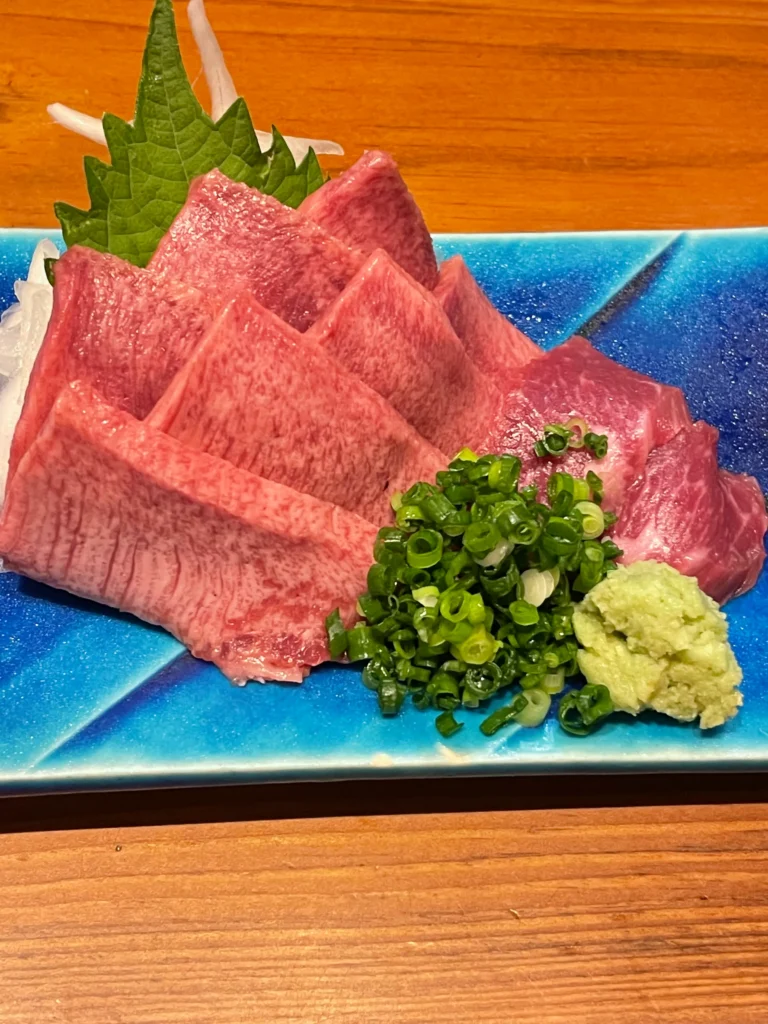
A gyutan specialty restaurant is fundamentally different from a standard yakiniku place. The focus is narrow: one part of the animal, prepared multiple ways. At Tenjin Tanka, that part is tan-moto, the soft root of the tongue. It appears as skewers, in a hot pot, and as a breaded cutlet. The chefs handle the core work. You taste, observe, and eat.
What This Experience Is Really Like
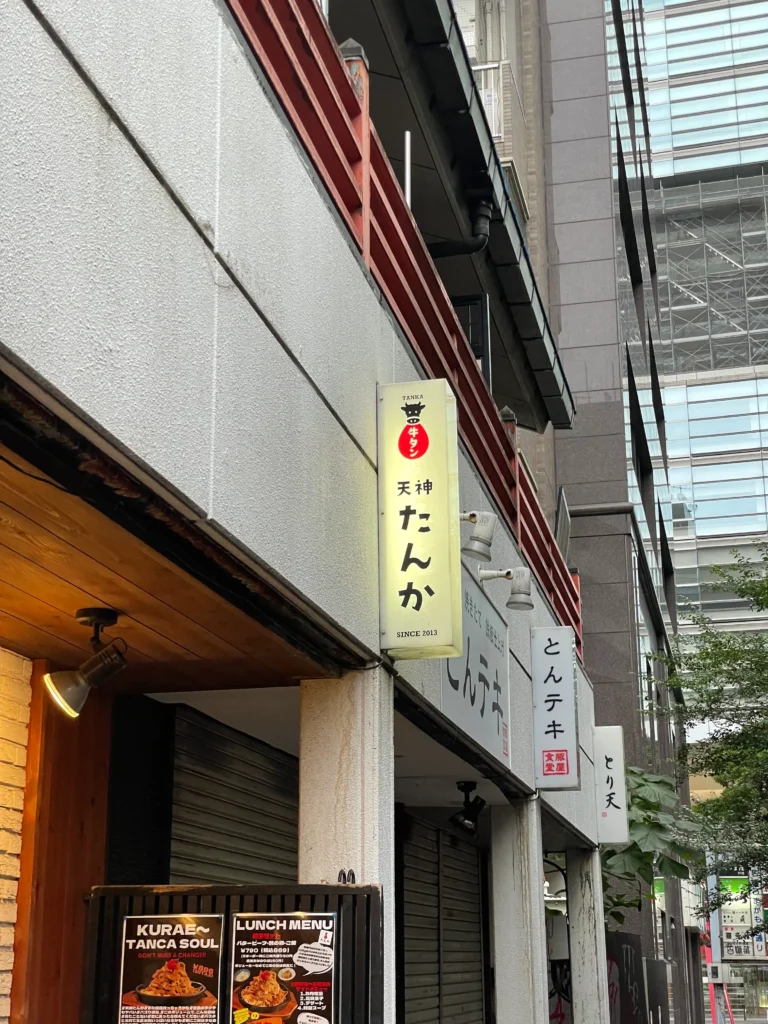
I arrived around 8 PM without a reservation. The restaurant sits in Suikyo Tenmangu Yokocho, a narrow alley that feels removed from Tenjin’s main streets. The summer air was still warm. Inside, the ground floor was full—conversation, the smell of grilled meat, the sound of dishes clinking. It was busy, but not frantic.
After a short wait, I was seated. The dinner rush energy was present, but over the next two hours, it gradually settled. The place became quieter, calmer. I ordered three dishes to understand the range.
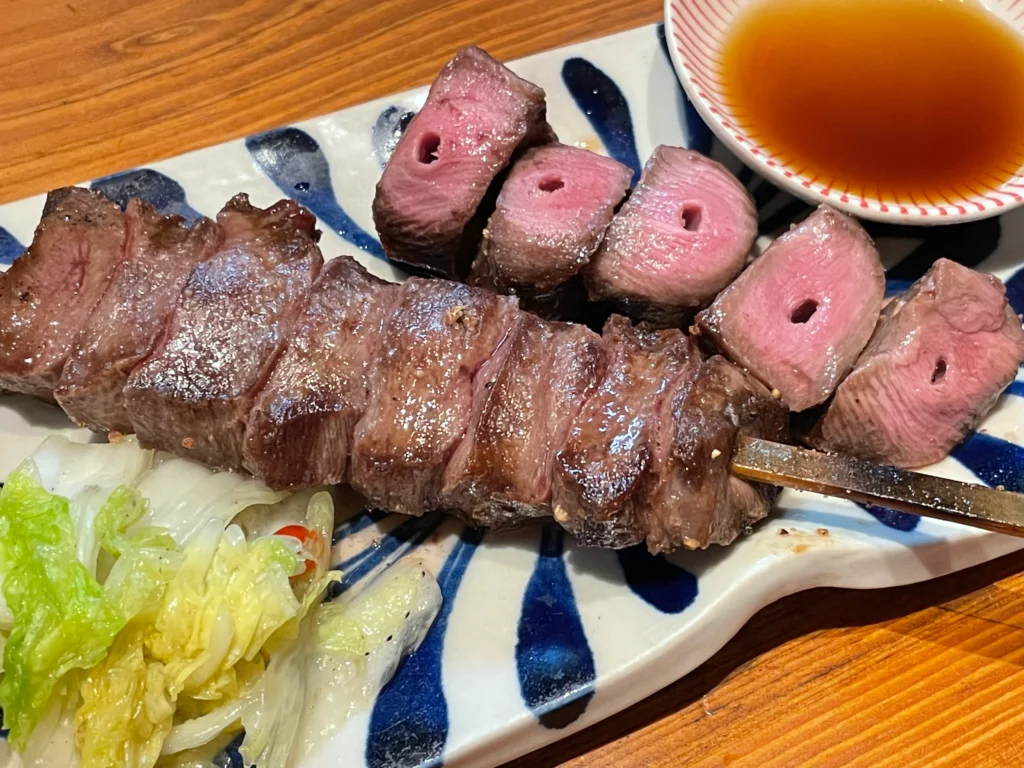
The beef tongue skewer arrived first. I didn’t cook it myself. It was a thick block of meat on a stick, seared on the outside. The first bite was firm on the surface, then rare and tender inside. The seasoning was salt—simple, letting the meat speak. It tasted rich, almost buttery.
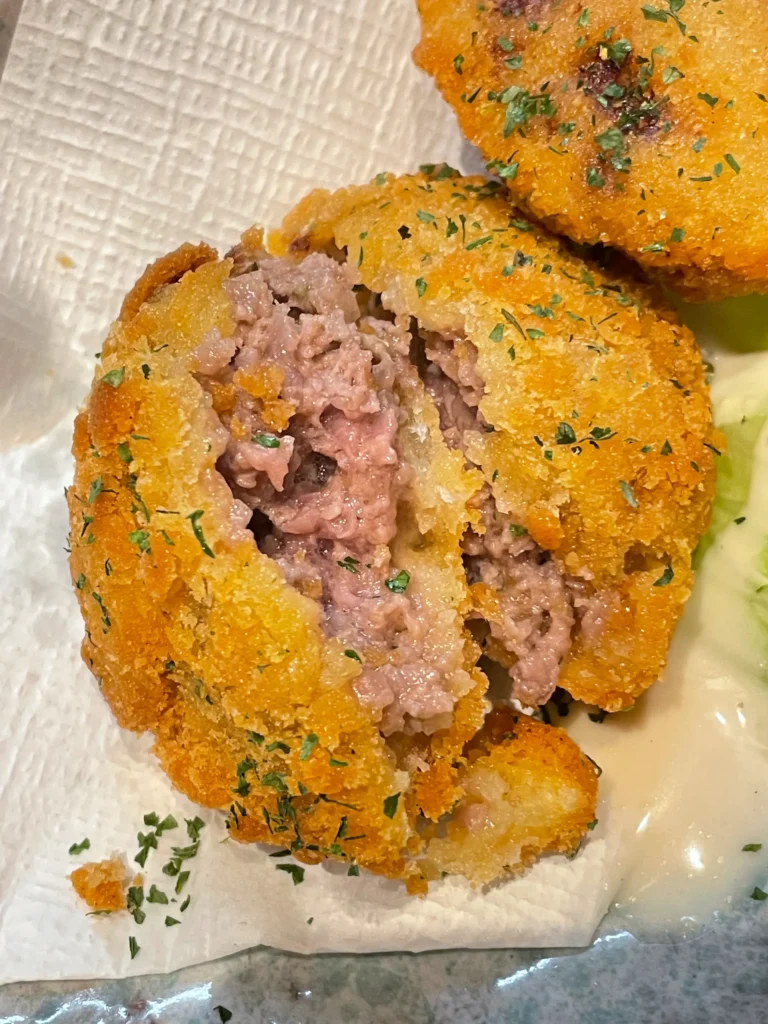
Next came the menchi-katsu, a breaded patty fried golden. It was hot. Cutting into it released steam. Inside was soft, juicy, the meat ground fine. It felt like a completely different dish from the skewer, though made from the same animal.
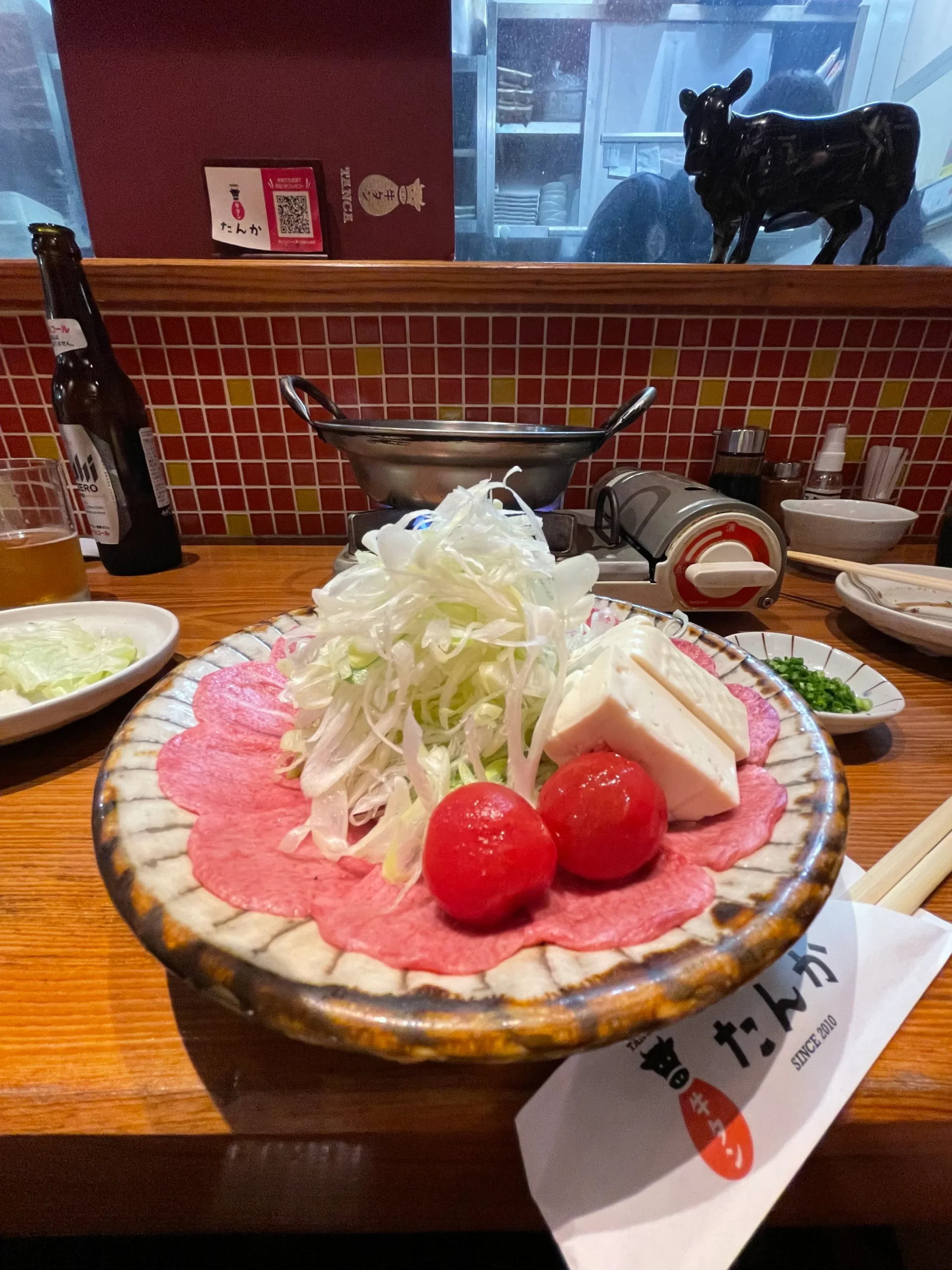
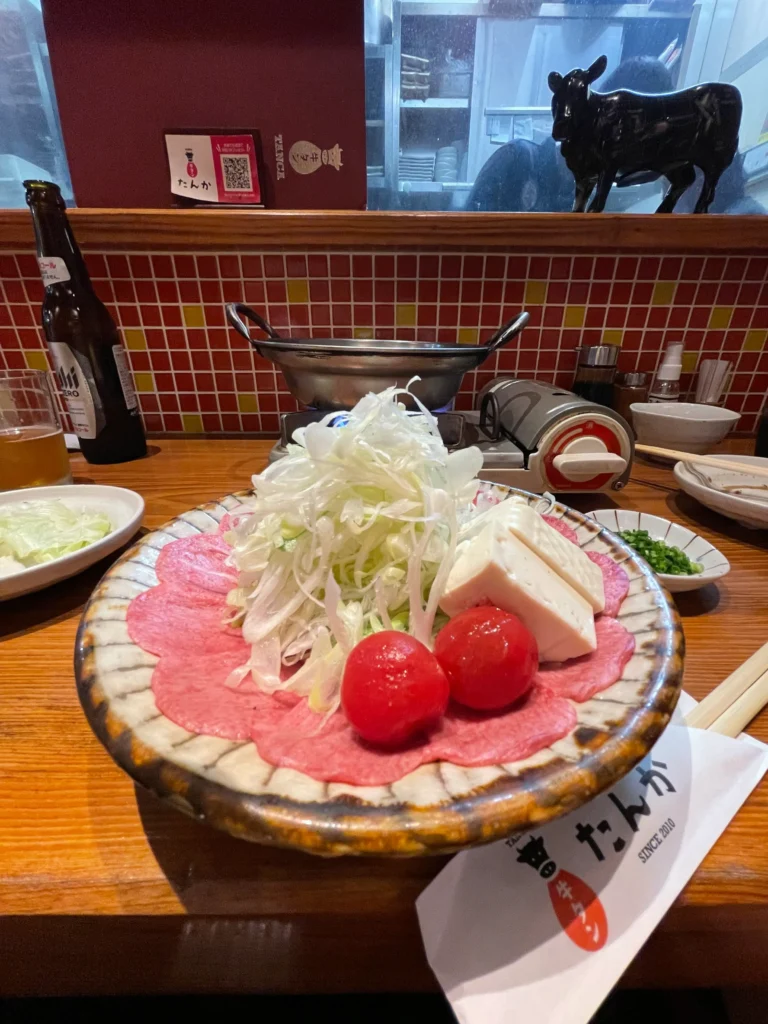
Throughout, the tongue hot pot sat on the table. Clear broth, simmering. Thin slices of tongue were provided. A few seconds in the hot liquid was enough to cook them rare and tender. At the end, I added udon noodles to the remaining broth, which had absorbed the meat’s flavor. It was a quiet, satisfying way to finish.
Who This Experience Is For (and Who It’s Not)
This is for someone who genuinely enjoys beef and wants to see how one cut can be versatile. It suits a patient diner who appreciates skilled work. The atmosphere is calm and refined, good for a quiet dinner with one other person or for eating alone at the counter.
It may not be for everyone. If you want a loud, high-energy yakiniku night where you do the grilling, this isn’t it. The pace is measured. Vegetarians will find nothing. If you want variety—many different meats, many sides—you might feel limited. The cost is also real. Premium tongue is not cheap.
Practical Details
| Aspect | Details |
| Time | 1.5 to 2.5 hours for a full dinner. |
| Cost | ¥5,000–¥10,000 per person. I spent about ¥20,000 for two, including drinks. |
| Reservation | Recommended for groups or weekends. I walked in on a summer evening and it was busy, but I got a seat. |
| Payment | Credit cards (Visa, Master, JCB, AMEX, Diners) and PayPay accepted. No cash-only restriction. |
| Seasonal | The menu is stable year-round. Hot pot dishes feel better in cooler months, but the experience is consistent. |
Etiquette & Cultural Notes
The key etiquette point is to trust the chef’s preparation. The grilled items arrive cooked to what the chef considers optimal. Asking for it cooked further would be unusual. The reason: they’re aiming for a specific texture, especially the rare preparations, that overcooking destroys.
A common mistake for foreign visitors is treating this like a typical barbecue restaurant. It’s more specialized. Portions are modest, designed for savoring, not filling up. Ordering happens in waves, not all at once.
Best Time to Do This
For a quieter experience, go after 8:30 PM on a weekday, when the initial rush has passed. Weekends are likely busy all evening. The restaurant is in a covered alley, so weather doesn’t affect getting there. The indoor setting makes it an all-season destination.
Common Misunderstandings
“It’s just like any other yakiniku place.” Not quite. Here, the chefs prepare the meat for you, serving it at what they judge to be the right doneness. It’s less about the activity of grilling and more about tasting the finished dish.
“Beef tongue is always tough and chewy.” Some cuts are. But tan-moto and the preparation methods here—especially shabu-shabu and rare grilling—result in surprisingly tender meat.
“You have to order a big course menu.” Courses exist, but ordering à la carte is common. The dishes are rich. It’s often better to order a few items, assess how you feel, then order more if needed.
Related Experiences Nearby
After eating, the area offers a few low-key ways to spend more time:
Tenjin Central Park. Just across the street. A quiet place for a short walk after a rich meal.
Suikyo Tenmangu Shrine. The alley is named after this small, historic shrine. It’s calm at night.
Small bars in Tenjin and Nakasu. The surrounding neighborhoods have many independent bars for a post-dinner drink.
Where to Stay
Staying in the Tenjin area is convenient. The restaurant is a short walk from most hotels in the district. No specific hotel enhances the dining experience itself. Any accommodation nearby works.
Summary
Tenjin Tanka offers a focused, almost educational experience in gyutan. It’s a calm, professional space set apart from the city’s noise, where the ingredient is treated with clear respect. The meal is a sequence of textures: the firm chew of a thick-cut skewer, the delicate melt of shabu-shabu, the comforting crunch of a fried cutlet. It’s a meal to be savored, not rushed.
Conclusion
My evening at Tenjin Tanka was quiet and observant. It showed how a single, often-overlooked ingredient can be transformed through skill and care. I left with a deeper appreciation for the craft in Japanese cuisine and for the subtle, rich flavors that come from a simple cut of meat treated well.
Sources / References
•[1] Tenjin Tanka – Tabelog: https://tabelog.com/fukuoka/A4001/A400103/40034593/
Notes & Exceptions
The lunch menu differs from dinner and is more limited. The atmosphere varies by floor. Online reviews mention that the second floor can be noisy with larger parties. My experience was on the ground floor, which felt more intimate. This is an assumption, but the best way to enjoy the restaurant is likely to order a variety of preparations to compare textures and flavors.
Certainty Level
High. This article combines the user’s direct experience with details cross-referenced from dozens of public reviews to ensure accuracy and a realistic tone.
Join 1,000+ travelers discovering Japan's hidden side
Weekly dispatches from off-the-beaten-path Japan — spots and stories you won't find in guidebooks.
No spam. Unsubscribe anytime.
Welcome aboard!
You're in. See you in your inbox soon.