

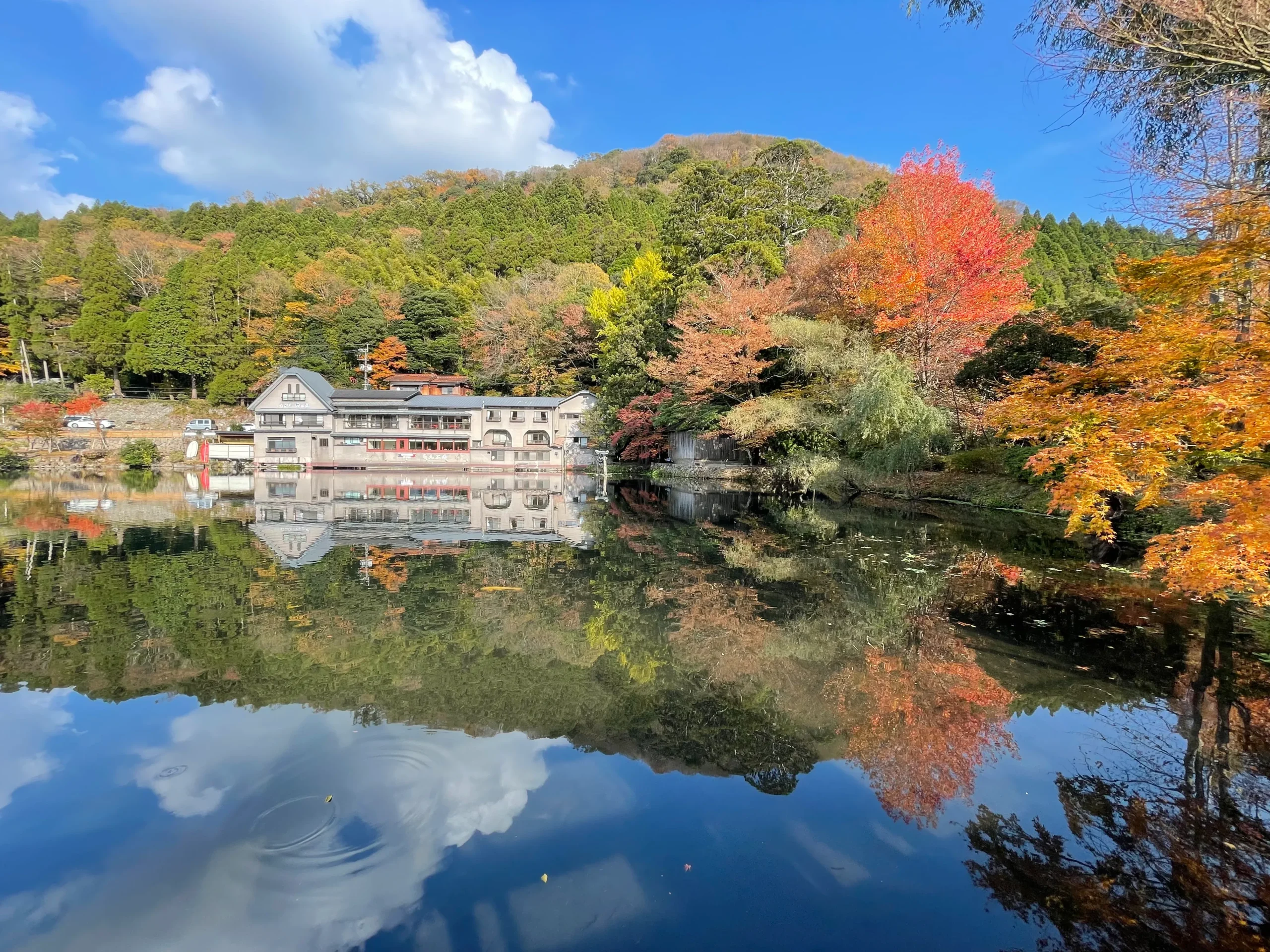

I came to Yufuin on a quiet afternoon in autumn. The town sits at the foot of Mt. Yufu, a mountain that dominates the landscape in a way that makes you understand why people have lived here for centuries. I had no particular plan. I wanted to walk, to see what the town looked like on foot, and to understand why so many people make the journey here.
What Is Yufuin?
Yufuin is a small onsen town in Oita Prefecture. It is not famous in the way that Beppu or Hakone are famous. It has a different character. The town has about 11,000 residents, but it feels smaller than that when you walk through it. The streets are lined with cafes, small shops, and galleries. The air smells like hot spring water. In the distance, Mt. Yufu rises like a guardian.
The town grew around hot springs. People have been coming here to bathe in the mineral water for generations. What makes Yufuin different from other onsen towns is that it has become a place for walking. The streets are designed for pedestrians. The pace is slow. There is time to stop, to look, to sit.
Klook.comWhy Walking in Yufuin Is Different
This town is for people who enjoy moving slowly. If you want to rush through attractions and check boxes, Yufuin is not the right place. The experience is in the walking itself, not in reaching a destination. You will pass small museums, galleries, cafes, and shops. You will see Mt. Yufu from different angles. You will notice how the light changes as you walk.
If you are looking for crowded tourist attractions or high-energy entertainment, you will be disappointed. Yufuin is quiet, even during peak season. This is intentional. The town has chosen to remain small.
How to Get There
Yufuin is accessible by train, which is the most practical way to arrive. The journey itself is part of the experience.
| Route | Train | Travel Time | Frequency |
| Fukuoka (Hakata) to Yufuin | Yufuin no Mori (Limited Express) | 2 hours 15 minutes | 2 daily |
| Beppu to Yufuin | Local train | 30-40 minutes | Multiple daily |
The Yufuin no Mori is a special train designed for the journey. The interior is warm wood and modern design. There are booth seats available for groups. The train passes through mountain scenery. After Amagase Station, you can see Jion-no-taki Falls on the right side. By the time you arrive at Yufuin Station, you are already relaxed.
From Yufuin Station, the town is immediately walkable. Most attractions are within a 30-minute walk. The station itself has a footbath with hot spring water, where you can soak your feet while waiting for a train.
The Walking Routes
Yuno-Tsubo Street (湯の坪街道)
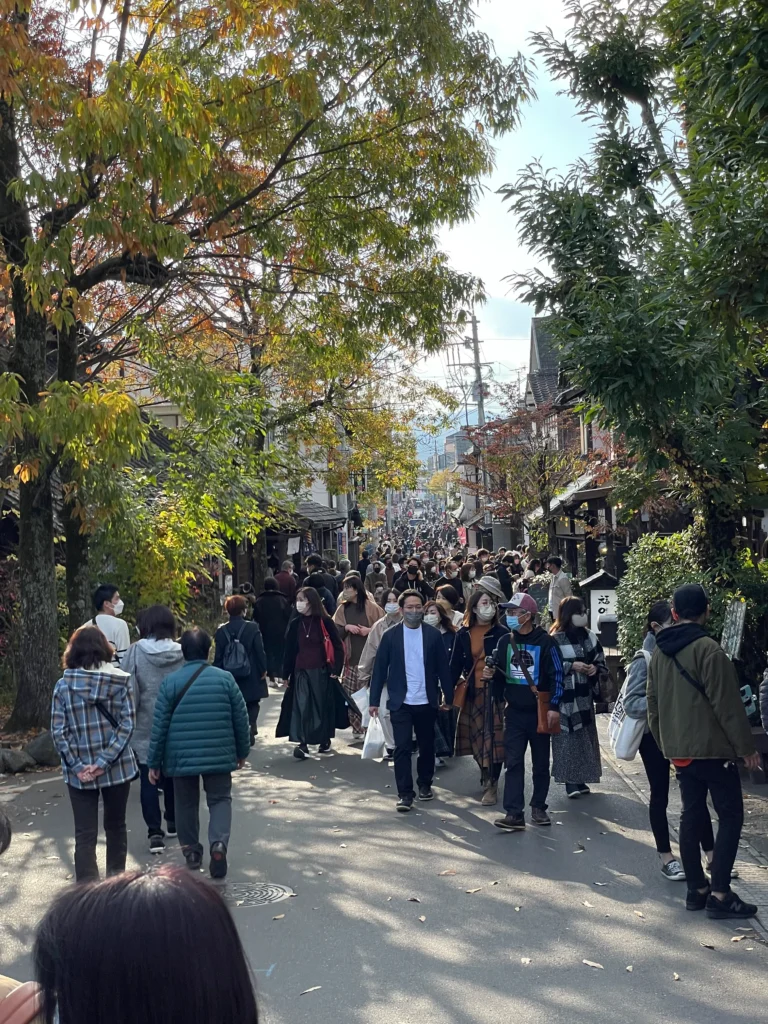
This is the main street of Yufuin. It is a five-minute walk from the station. The street is lined with shops, cafes, and food stalls. Unlike many tourist streets, it does not feel artificial. The shops are individually owned. The food is local. I saw people buying fresh dango, grilled squid, and local sweets. The street has a gentle energy—people moving slowly, stopping to look at things, sitting at outdoor tables.
The street is about 300 meters long. You can walk it in ten minutes if you do not stop. But stopping is the point. I spent an hour here, walking slowly, looking at shop windows, sitting at a small cafe.
Lake Kinrin (金鱗湖)
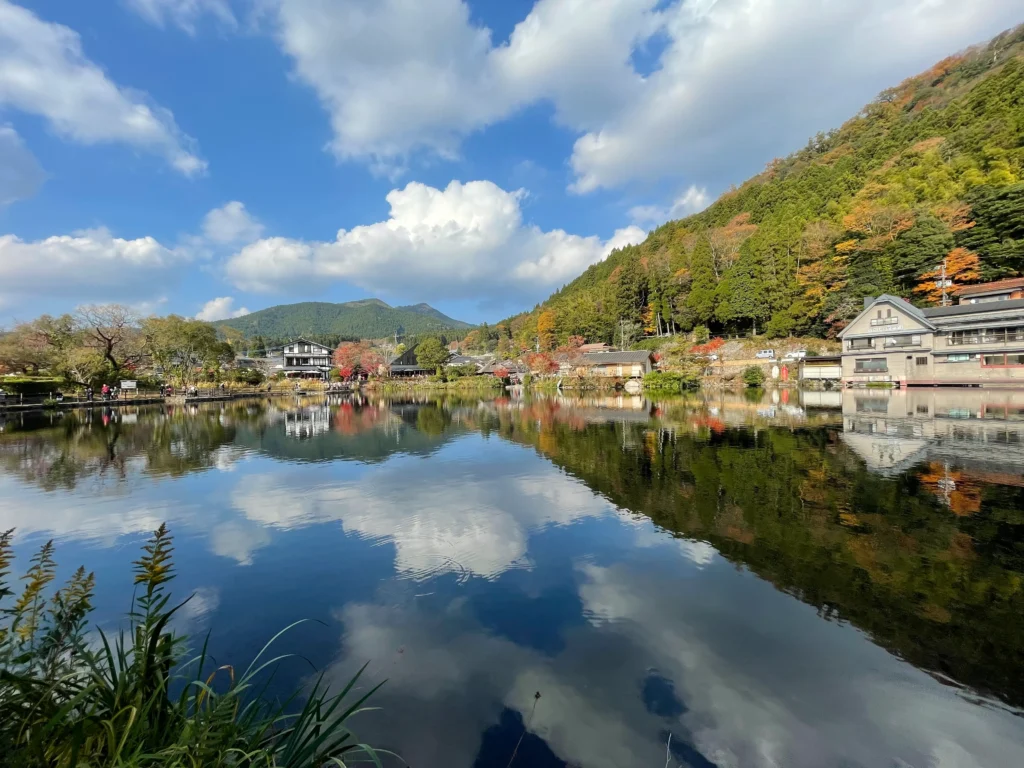
This is the most famous spot in Yufuin. The walk from the station takes about 30 minutes. The path is flat and easy. As you walk, the town gradually gives way to fields and open space. Mt. Yufu grows larger as you approach the lake.
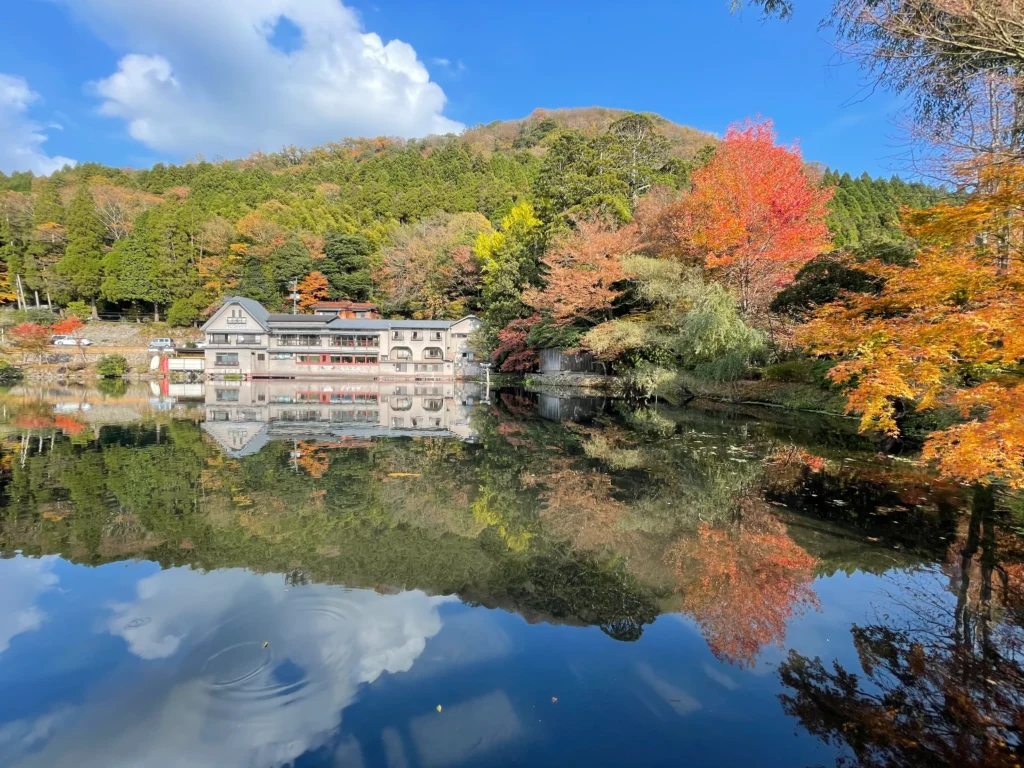
The lake itself is small—perhaps 400 meters across. What makes it special is the torii gate that rises from the water. The gate marks a small shrine on the opposite shore. The lake is famous for its morning mist in winter, when the water is warmer than the air. I did not see the mist on my visit, but I understood why people come back to photograph it.
The walking path around the lake is well-maintained. There are benches for sitting. The water is still and reflects the surrounding mountains. I walked the entire perimeter, which took about 30 minutes. The path is quiet. I saw only a few other people.
Mt. Yufu Trails
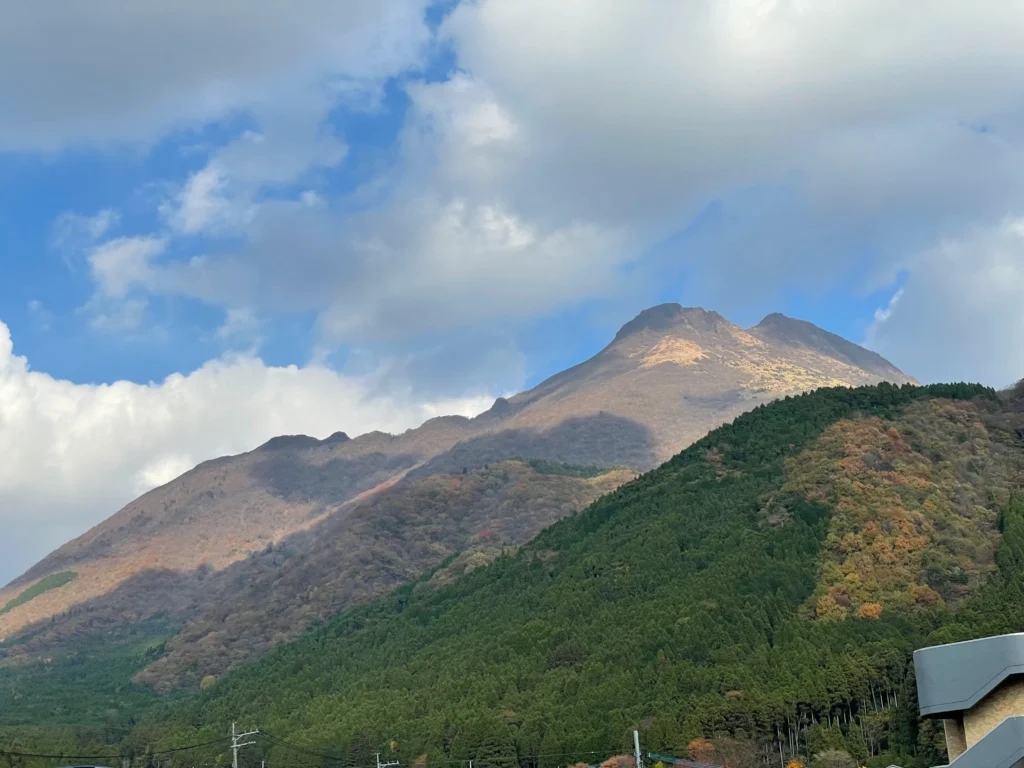
Mt. Yufu is 1,583 meters high. There are several trails to the summit, ranging from beginner to experienced. The mountain is a sacred place. On clear days, the view from the summit includes Beppu Bay and the Kuju Mountain Range.
I did not climb to the summit on this visit, but I walked one of the lower trails. The path is well-marked and maintained. There are rest areas and observation points. The forest is thick and green. Even on a short walk, you feel the presence of the mountain.
The Experience of Wandering
What struck me most about Yufuin was the permission to do nothing. In many tourist towns, there is pressure to see everything, to take photos, to move on. In Yufuin, the pace is different. I sat at a cafe for two hours with a single coffee. No one rushed me. I walked the same street twice and noticed different things each time. I sat by the lake and watched the light change.
This is not a town that gives you a checklist of things to do. It is a town that invites you to slow down and notice what is in front of you.
Costs & Fees
•Train (Hakata to Yufuin): ¥8,600 (reserved seat)
•Yuno-Tsubo Street: Free to walk; food and shops vary (¥500-¥2,000 per item)
•Lake Kinrin: Free to walk around
•Mt. Yufu Trails: Free
•Cafes: ¥800-¥1,500 per drink
•Small Museums: ¥500-¥1,000 per museum
Cash is useful, though many cafes and shops accept cards.
Best Time to Visit
Yufuin is pleasant year-round, but each season has a different character.
•Spring (March-May): Mild weather, flowers beginning to bloom. The town is less crowded than summer.
•Summer (June-August): Warm and green. The town is busier with tourists. Early mornings are quieter.
•Autumn (September-November): Cooler weather, changing leaves on Mt. Yufu. This is considered the best season. The town is moderately busy.
•Winter (December-February): Cold mornings with mist over Lake Kinrin. The town is quiet. This is the best time to see the famous morning mist at the lake.
The best time to visit is early morning, before 9:00 AM, when the town is quietest. Yuno-Tsubo Street is most crowded between 11:00 AM and 3:00 PM.
Things to Know Before You Go
•Bring Comfortable Shoes: You will be walking. The streets are mostly flat, but comfortable shoes are essential.
•The Town Closes Early: Many cafes and shops close by 6:00 PM. Plan accordingly.
•Parking Is Available: If you drive, there are parking lots near the station. However, the train is recommended.
•Cash Is Useful: While many places accept cards, some smaller shops prefer cash.
•The Mountain Dominates: Mt. Yufu is visible from almost everywhere. This is intentional. The town is designed around the mountain.
•Accessibility: The town is walkable, but there are some hills. Most areas are accessible for people with mobility limitations, though some trails are more challenging.
Nearby Places Worth Adding
Beppu is 30-40 minutes away by train. It is a larger onsen town with more attractions. The “Hell Tours” (jigoku meguri) are famous—geothermal areas with colored hot springs. Beppu is worth a day trip if you want more activity.
Kurokawa Onsen is a smaller, more traditional onsen village about 45 minutes away by car. It is quieter than Yufuin and has a different character.
Takachiho Gorge is about 90 minutes away by car. It is a dramatic river gorge with hiking trails. This is worth a full day trip if you want to combine Yufuin with hiking.
Where to Stay
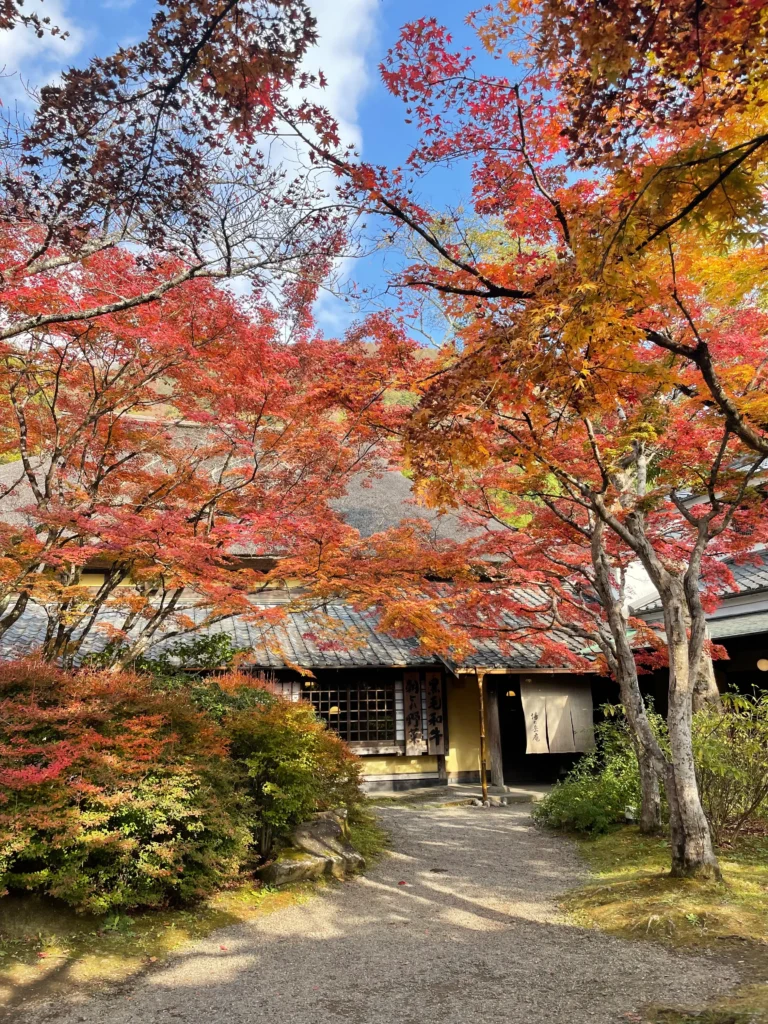
Yufuin has many ryokans and hotels. For the full experience, staying overnight is recommended. This allows you to experience the town at different times of day and to use the onsen facilities.
Ryokan Recommendations
•Yufuin Yawaraginosato Yadoya: A traditional ryokan with a calm atmosphere. Includes dinner and breakfast. Mid-range pricing.
•Yufuin Lamp no Yado: A smaller, more intimate ryokan. Known for personalized service.
•Onsen Hinoharu Ryokan: A solid mid-range choice with central location. Includes breakfast and dinner.
Hotel Options
Many hotels are available, ranging from luxury resorts to budget business hotels. For a day trip, staying in a nearby city like Beppu or Fukuoka is also practical.
→ Search for hotels in Yufuin on Agoda
Summary
Walking through Yufuin is an exercise in slowing down. The town offers no major attractions that demand your time. Instead, it offers the experience of moving through a place that values quiet and beauty. The mountain is always there, a constant presence. The streets are designed for walking. The cafes invite you to sit.
This is not a town you visit to accomplish something. It is a town you visit to be somewhere.
Conclusion
Yufuin is a destination for people who want to walk slowly and notice details. The town is small, walkable, and designed around the rhythm of daily life rather than tourism. The train journey from Fukuoka is scenic and relaxing. The onsen water is warm. The mountain is beautiful. If you have time to move at your own pace, Yufuin is worth the visit.
Sources / References
•[1] Visit Oita Official Tourism Website – Yufuin
•[2] JR Kyushu Railway Company – Yufuin no Mori Train
Notes & Exceptions
•Train schedules may change seasonally. Check JR Kyushu website for current timetables.
•Some shops and cafes may have limited hours during off-season.
•Mt. Yufu trails may be closed during winter due to snow or weather conditions.
•Lake Kinrin morning mist is most visible in winter (December-February) on calm, cold mornings.
Certainty Level
High.
Join 1,000+ travelers discovering Japan's hidden side
Weekly dispatches from off-the-beaten-path Japan — spots and stories you won't find in guidebooks.
No spam. Unsubscribe anytime.
Welcome aboard!
You're in. See you in your inbox soon.
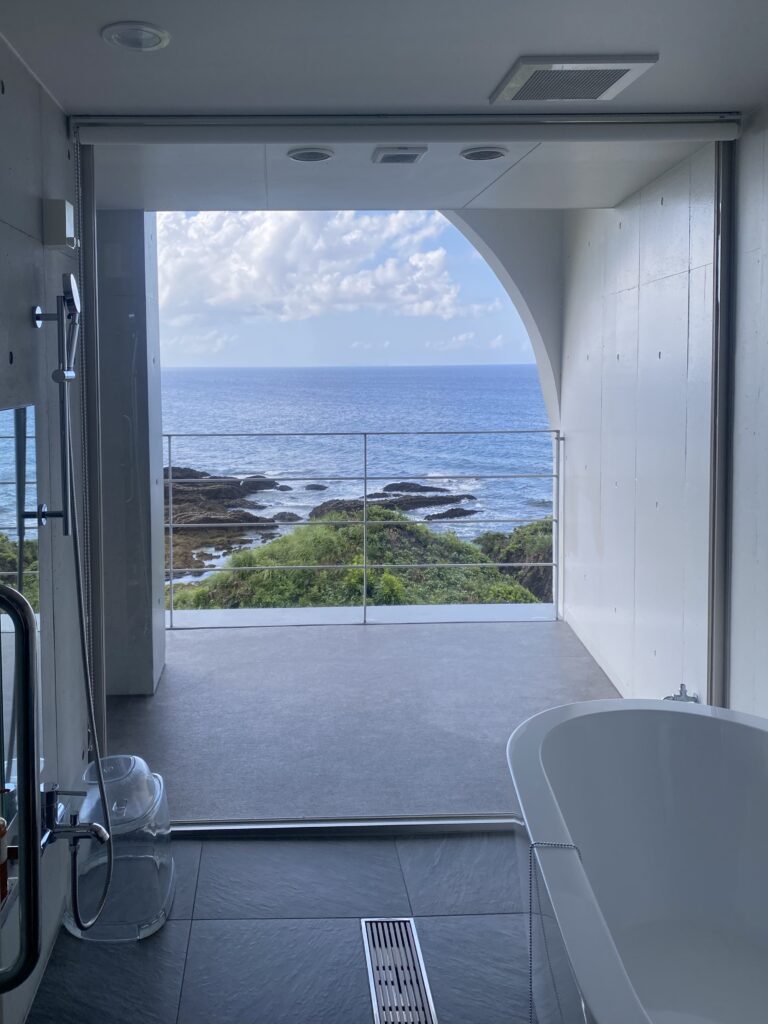
[…] is a pioneering glamping facility nestled in the quiet hills of Yufuin, a famous hot spring town in Oita Prefecture […]