

Current date: 2026-01-01 (JST)
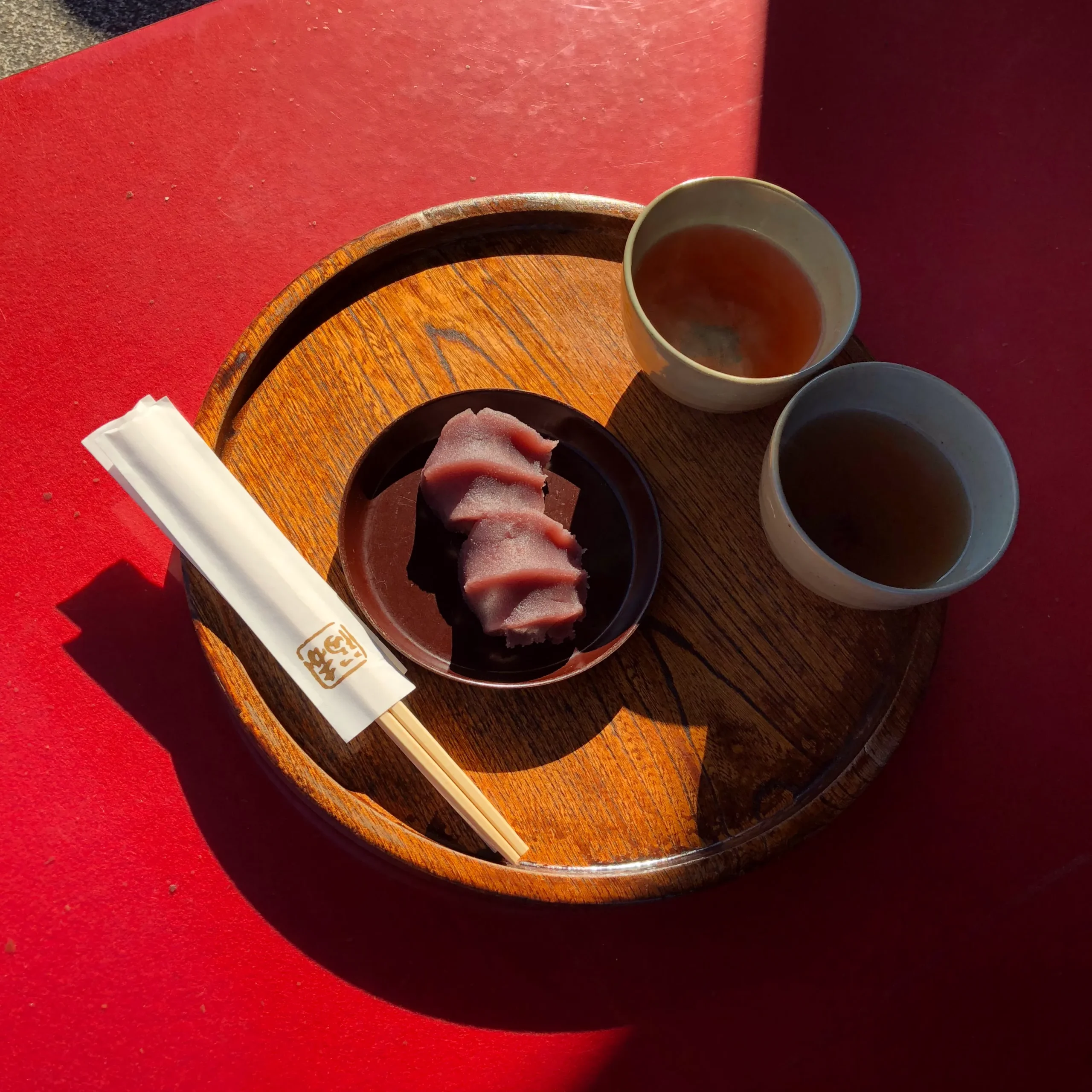
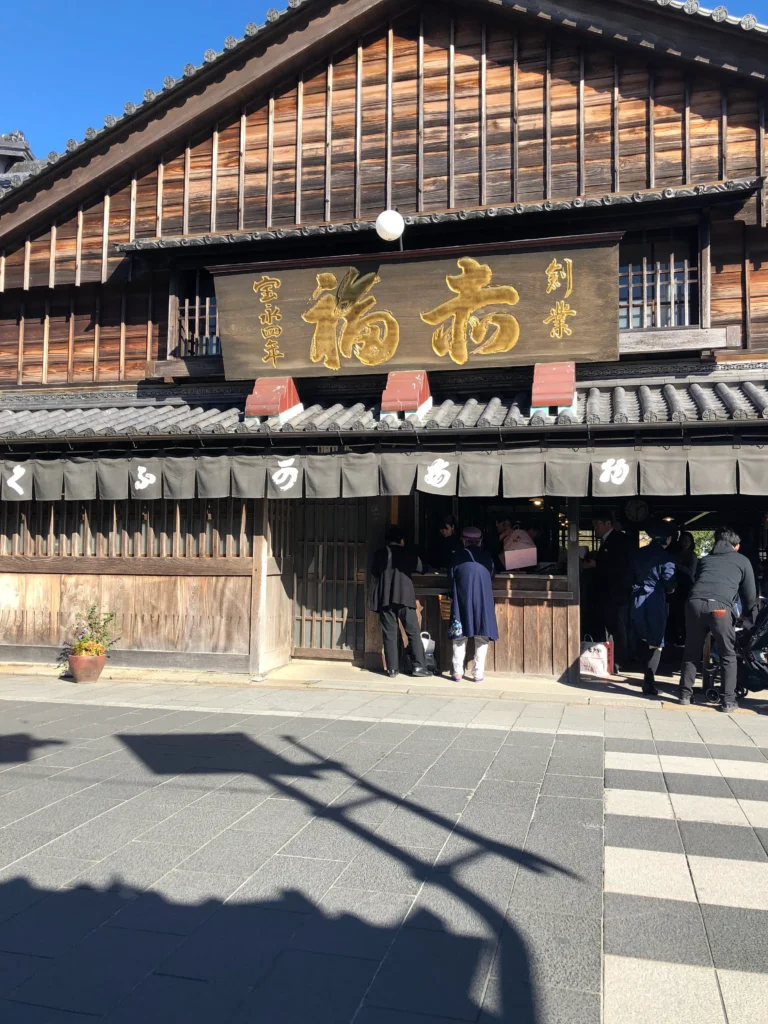
Akafuku is a 300-year-old confection maker in Ise, with its flagship store on Oharai Street near Ise Grand Shrine. The mochi is simple: a base of white mochi with smooth red bean paste on top. The design is intentional. The three ridges on the anko represent the flow of the Isuzu River. The white mochi represents the pebbles at the river bottom. In December, I visited the flagship store to eat Akafuku mochi and understand why this confection has remained unchanged for three centuries.
What Makes Akafuku Mochi Different?
Akafuku mochi reverses the typical structure of mochi confections.
Most mochi wraps filling inside. Akafuku places the anko on top of the mochi.
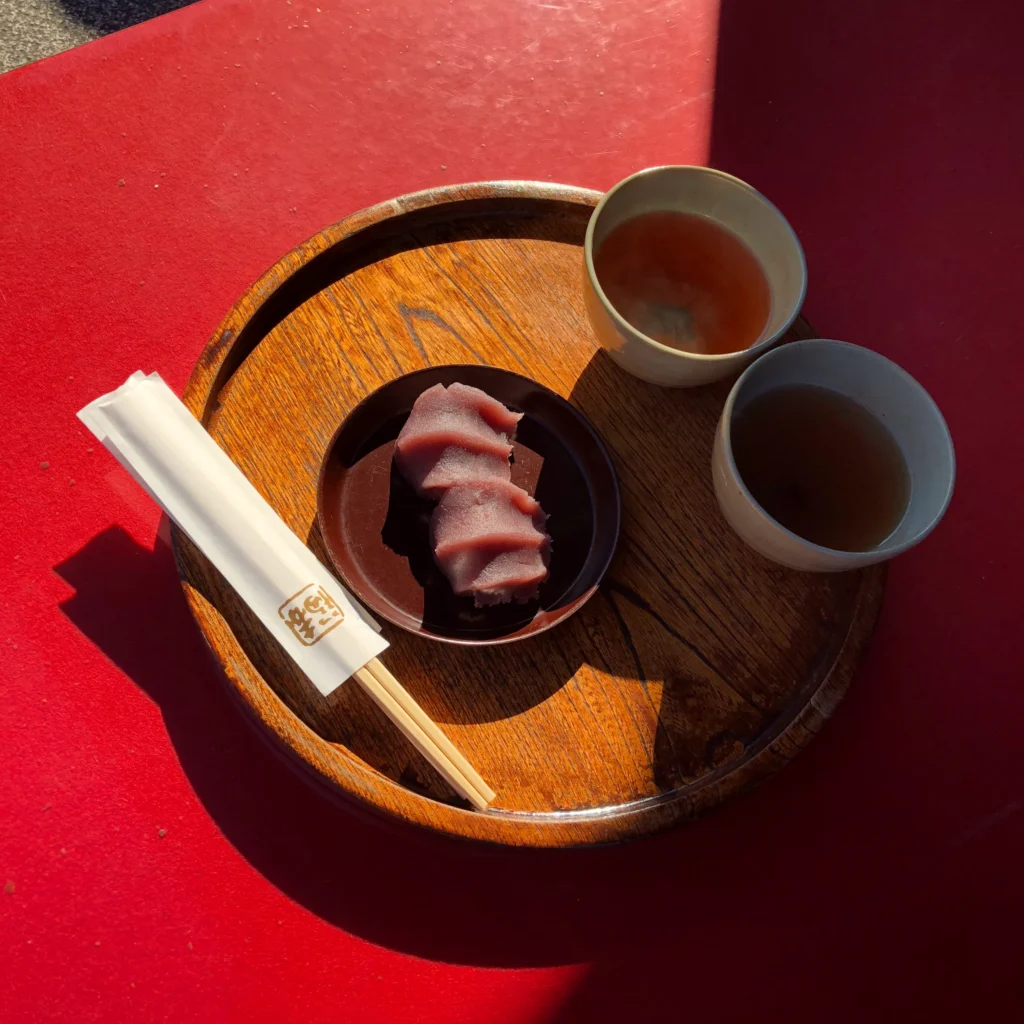
This is not accidental. The anko sits on the mochi like a cap, smooth and visible. You taste the anko first, then the mochi. The white mochi is the foundation. The anko is the accent. This arrangement allows the two elements to remain distinct. They do not blend into each other; they exist as separate textures and flavors.
The Experience: Texture and Restraint
The mochi arrived warm on a small plate. The white mochi was soft and pale. The anko on top was dark and glossy. I picked it up and bit into it. The anko was smooth, almost creamy, with a subtle sweetness. It did not assault the palate. The sweetness was restrained, suggesting itself gently. Beneath the anko, the mochi was tender and yielded easily to the teeth. It was not sticky; it was smooth. The texture of the mochi was as important as its flavor. The two elements—the smooth anko above, the tender mochi below—created a balance. The anko did not overwhelm the mochi. The mochi did not disappear beneath the anko. They were partners, not competitors.
Who Should Eat Akafuku Mochi?
This is for someone who appreciates simplicity and balance. It is for a visitor to Ise who wants to understand why this mochi has endured for three centuries. If you like red bean, if you appreciate mochi, if you value restraint in sweetness, this is worth trying.
However, it is not for everyone. If you prefer bold, pronounced sweetness, the restraint here will feel insufficient. If you dislike red bean, the anko will be unpleasant. If you are not interested in traditional confections, there is no reason to seek this out.
Practical Information for Your Visit
| Aspect | Details |
| Time Required | 10–15 minutes. |
| Cost | ¥200–¥400 per mochi, depending on quantity. |
| Reservations | Not necessary. Walk-ins are welcome. |
| Hours | 9:00–17:00 (may vary during busy periods). |
| Location | Oharai Street, near Ise Grand Shrine. |
| Parking | Available at Uji Urata parking lot. |
| Freshness | Mochi is made fresh daily. Best eaten the day of purchase. |
The Significance of the Design
The three ridges on the anko are not decoration. They represent the Isuzu River, which flows through the Ise Grand Shrine grounds. The white mochi represents the pebbles at the river bottom. This design connects the confection to the place. Eating Akafuku mochi at the flagship store, near the shrine and the river, gives the design meaning. It is not just a shape; it is a map of the location.
A Practical Takeaway
If you visit Ise, eat Akafuku mochi at the flagship store. Pay attention to the structure: anko on top, mochi below. This arrangement is the entire point. The two elements remain distinct, each contributing its own texture and flavor. The balance between them is what has kept this confection alive for three centuries. Notice how the anko does not overwhelm the mochi. Notice how the mochi supports the anko. This balance is what makes Akafuku mochi worth the pilgrimage.
Join 1,000+ travelers discovering Japan's hidden side
Weekly dispatches from off-the-beaten-path Japan — spots and stories you won't find in guidebooks.
No spam. Unsubscribe anytime.
Welcome aboard!
You're in. See you in your inbox soon.