

Money & cash · 2026 edition
When Do Banks Close in Japan? The Year-Round ATM Survival Guide
Japanese bank branches keep banking-business hours that surprise foreign visitors — weekdays only, 9 to 3 in many cases, locked tight on national holidays, and shut for almost a week at New Year. The actual cash supply for travellers does not run through bank branches at all. It runs through three convenience-store ATM networks that work every hour of every day, and a fourth network at every Japan Post counter. Below is the year-round map of when each option works, when each one fails, and the decision tree to use when you are standing in front of a closed lobby with cash to find.
The 30-second summary
For 99% of cash needs as a traveller, ignore the banks entirely. Seven Bank ATMs in 7-Eleven stores work 24/7, accept every major foreign card, and have an English-language menu. Family Mart’s Japan Post Bank ATMs and Lawson Bank’s ATMs are the backups. The only time banks matter is currency exchange — and even that is now better handled at airport counters or via your home card.
Quick Facts
| Bank branch hours | Weekdays only. Most branches: 9:00–15:00. Closed Saturdays, Sundays, and all national holidays. |
|---|---|
| New Year closure (legal) | December 31 to January 3 by law. In practice closures run from about December 29 to January 4 because of weekend overlap. |
| Best ATM for foreign cards | Seven Bank (in 7-Eleven, Ito-Yokado supermarkets, and standalone kiosks). 24/7, English menu, accepts Visa / Mastercard / Amex / Discover / Diners / JCB / UnionPay. |
| Foreign-card ATM fee | ¥110–220 per withdrawal at Seven Bank or Japan Post; your home bank may add its own fee. |
| Daily withdrawal cap | ¥100,000–¥300,000 typical, depending on your home card and the ATM operator. |
| Cards your home bank may not warn you about | Some debit cards from outside Japan are blocked at Japanese ATMs by default. Check before flying or carry two cards from different networks. |
Where can I actually get cash right now?
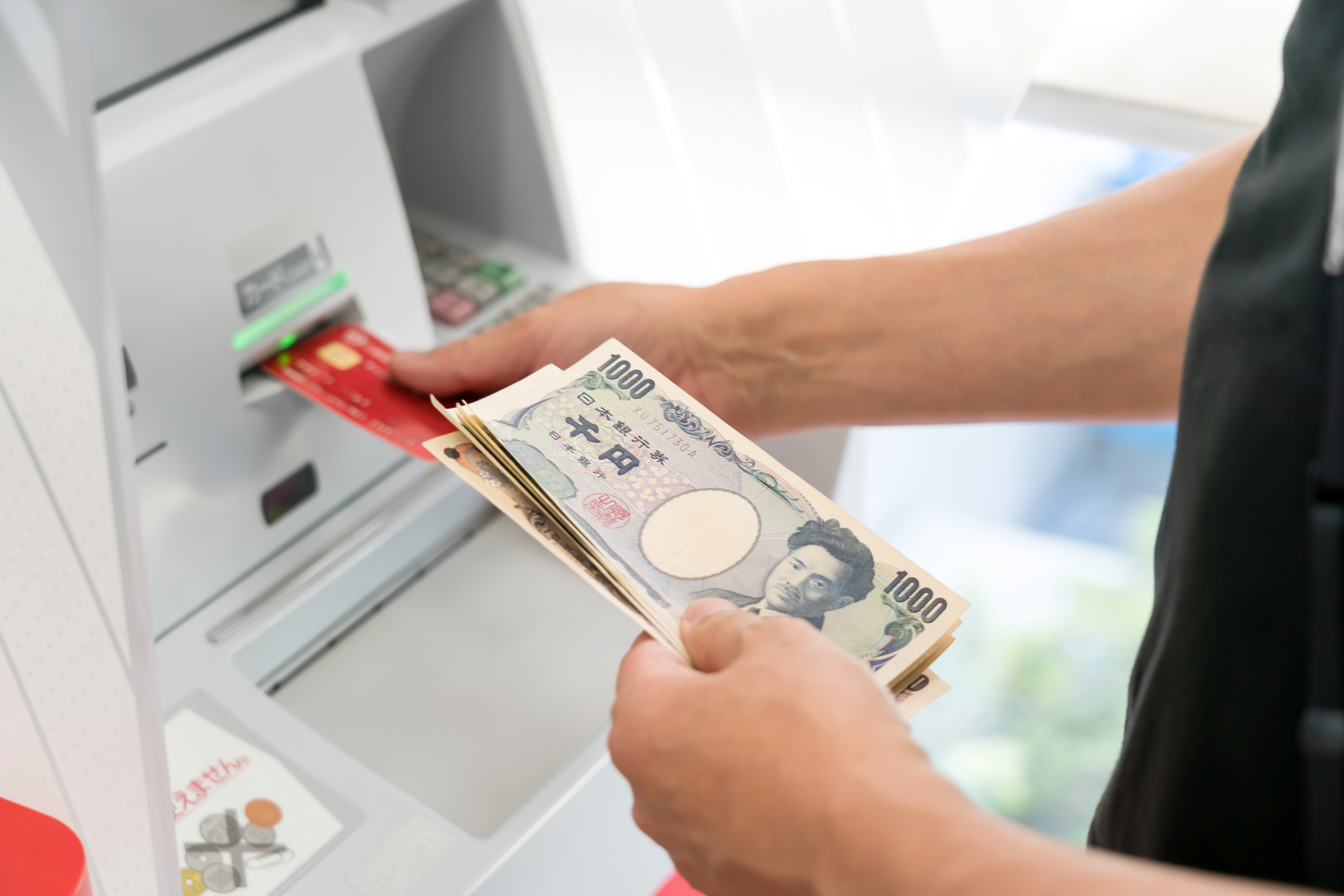
Japan is gradually moving away from cash, but it is not there yet. Outside of major-city department stores and chain restaurants, you should expect to need physical yen for: small temples, neighbourhood ramen shops, taxi drivers in rural prefectures, vending machines (most accept IC card now, but not all), Sunday morning markets, and any establishment with a hand-painted price board. The decision tree below covers the five most common situations a traveller actually faces.
Decision tool · Updated April 2026
When and where do you need yen?
Pick the line that matches your situation. The right ATM updates as you select.
The three konbini ATM networks ranked
Japan’s convenience-store ATM landscape consolidated around three operators in the last decade. All three accept foreign cards. The differences are in coverage, language support, and reliability with specific card networks.
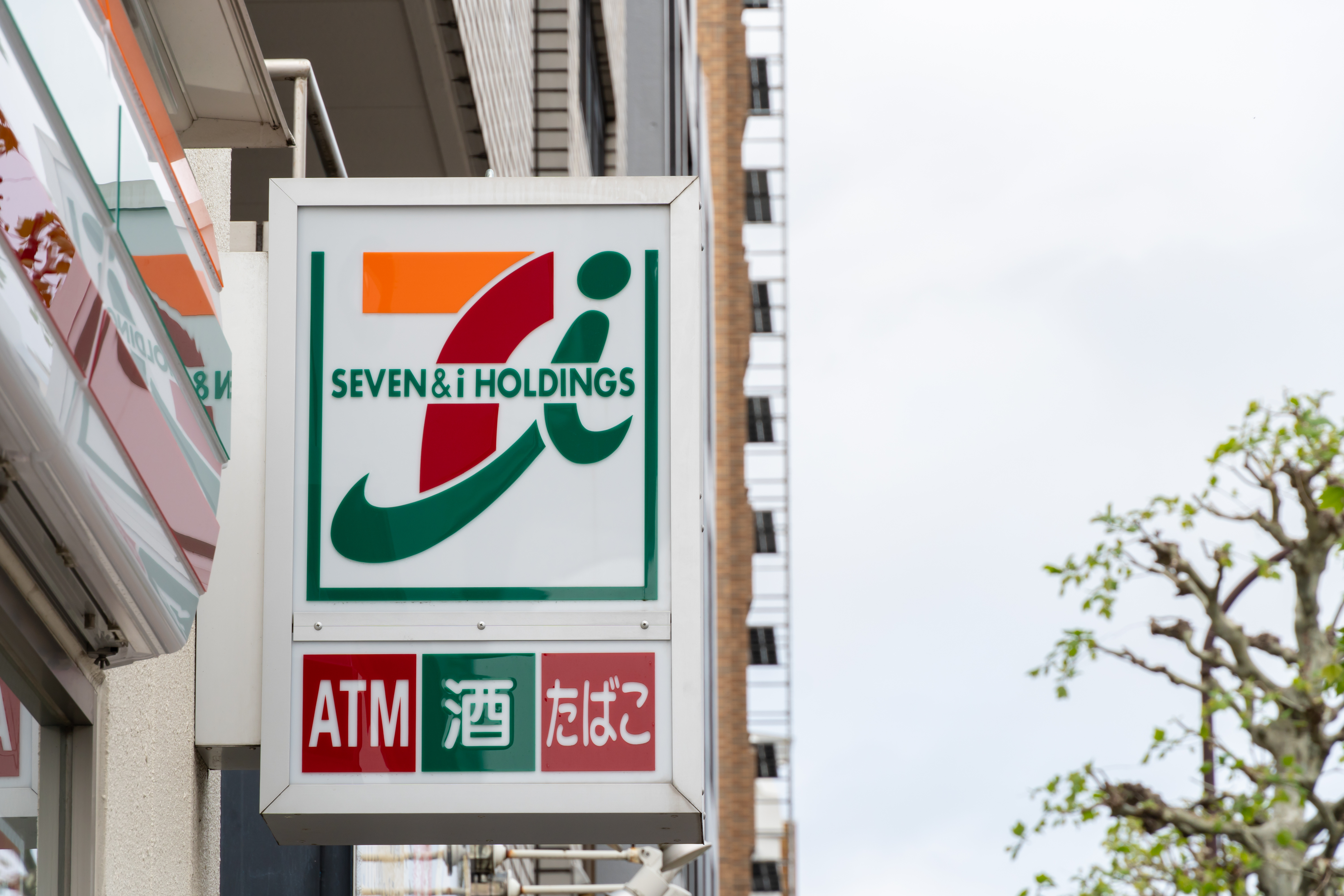
Seven Bank
The default. 26,000+ ATMs in 7-Eleven, Ito-Yokado, and standalone kiosks (including airports and JR stations).
- 24/7 operation, English menu, 12 languages total
- Accepts Visa, MC, Amex, Discover, Diners, JCB, UnionPay
- ¥110–220 fee per withdrawal
- Most reliable for non-Japanese cards
Japan Post Bank
Found at every Family Mart, every Japan Post office, and at airport branches. Strong rural coverage where 7-Eleven thins out.
- 24/7 at Family Mart (post-office branches keep banker’s hours)
- English menu, accepts foreign cards
- ¥110–220 fee
- Single best option for travel into Tohoku, San’in coast, Shikoku interior
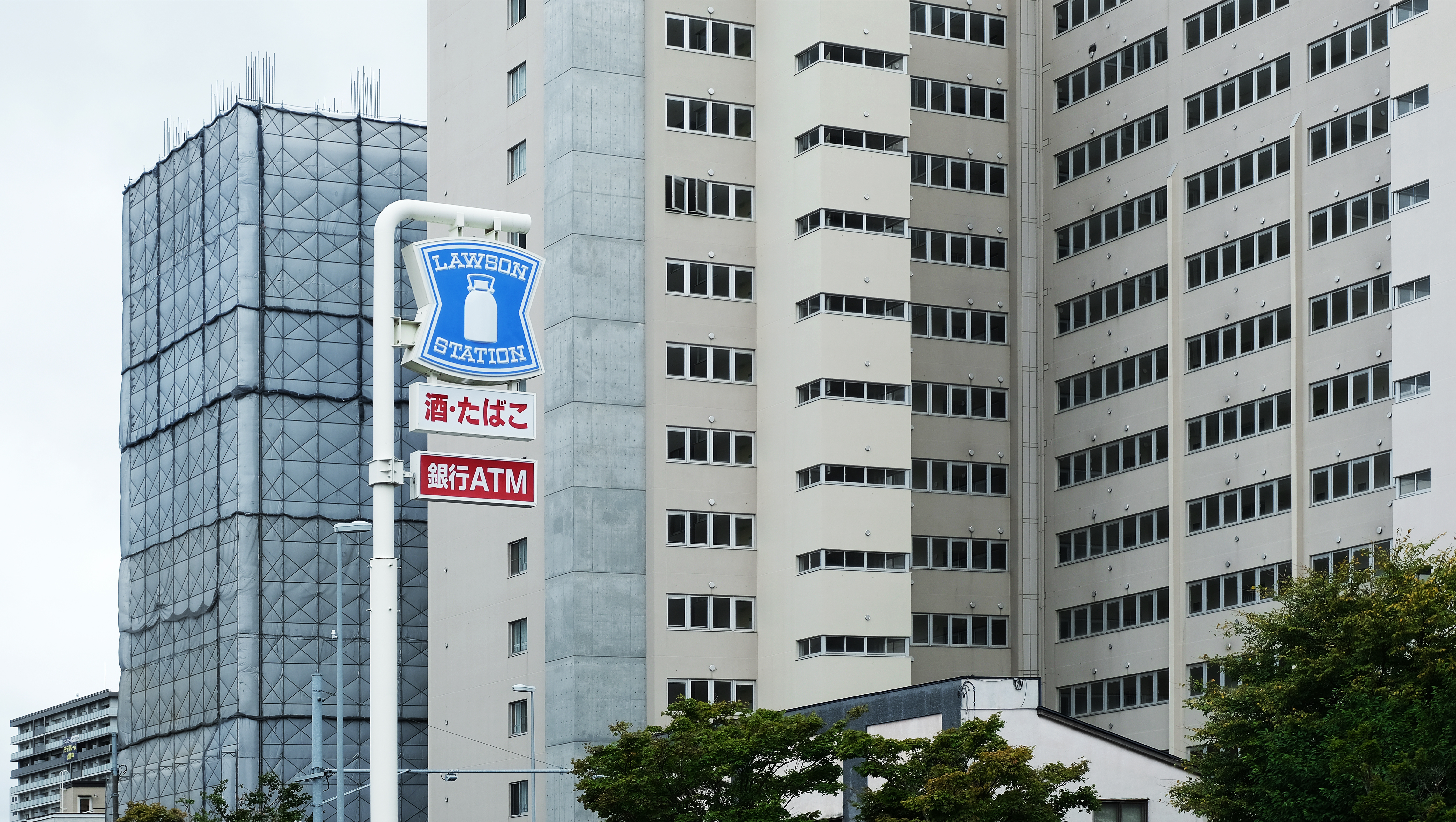
Lawson Bank
About 13,000 ATMs across the Lawson convenience-store chain. Functional but slightly behind Seven Bank on foreign-card variety.
- 24/7 operation, English menu
- Accepts Visa, MC, JCB, UnionPay reliably; Amex acceptance is patchier
- ¥110–220 fee
- Useful when 7-Eleven and Family Mart aren’t visible
| Network | Locations | Hours | Foreign cards | Fee per withdrawal |
|---|---|---|---|---|
| Seven Bank | 7-Eleven, Ito-Yokado, kiosks (26,000+) | 24/7 | All major networks including UnionPay | ¥110–220 |
| Japan Post Bank | Family Mart, post offices (30,000+) | 24/7 at Family Mart, weekday hours at post offices | All major networks | ¥110–220 |
| Lawson Bank | Lawson stores (13,000+) | 24/7 | Visa / MC / JCB / UnionPay; Amex spotty | ¥110–220 |
| Bank-branded ATMs (MUFG, SMBC, Mizuho) | Bank branches and select stations | Weekday business hours; some weekend access; many close for New Year | Limited foreign card support | Variable, often ¥220+ |
The New Year shutdown: what actually closes
The single bank-related question that brings travellers to articles like this one. Japanese banks are legally required to close their branch counters from December 31 to January 3, and in practice the closure runs from around December 29 to January 4 because of weekend overlap. The post office banking counters often close for an even longer span. None of this affects the konbini ATMs, which remain open continuously through the holiday.
| Service | Status during Dec 29 — Jan 4 |
|---|---|
| Bank branch counters (MUFG, SMBC, Mizuho) | Closed entirely. No counter service, no currency exchange, no wire transfers. |
| Post office banking counters | Closed. Some stamp/parcel services may run reduced hours at major post offices. |
| Bank-branded ATMs (in branch lobbies) | Often closed or significantly reduced hours. |
| Seven Bank, Lawson Bank, Japan Post Bank konbini ATMs | Open 24/7 through the entire holiday. |
| Airport currency exchange counters | Most stay open, with some reduced hours on January 1. Narita and Haneda kiosks are the safest bet. |
| Online banking (account balance, mobile transfers within Japan) | Available. Inbound international wires queue and process after January 4. |
Two practical notes that catch first-time visitors. First: small restaurants and family-run shops genuinely close for the New Year holiday, often for the full week. Stock cash on December 29 or 30 if you’ll be in a less touristy neighbourhood — the issue is not that the ATM has closed, it’s that the dinner spot you wanted is dark. Second: airport currency exchange counters operate on slightly different schedules than the rest of the holiday landscape. If you fly in on January 1, exchange at the airport rather than waiting to hit a downtown counter on January 2.
Currency exchange: where it actually makes sense
For travellers in 2026, the order of options for getting yen is:
- Withdraw from a konbini ATM with your home debit/credit card. Best rate net of fees for amounts under ¥100,000. Visa/Mastercard interbank rates plus a small ATM fee beat almost any cash exchange.
- Airport exchange counters at Narita, Haneda, Kansai. Open long hours, reasonable rates, no commissions advertised. Good for first-day landing cash if you don’t want to ATM.
- Licensed exchangers downtown (World Currency Shop, Travelex, Daikokuya). Comparable rates, often slightly better for large amounts. Mostly cash-to-cash.
- Bank branches on weekdays. Slowest, requires passport, similar rates. Only worth it if you’re already there for another service.
- Hotel front-desk exchange. Worst rates — reserve for emergencies.
Pre-trip checklist
Before you fly
- Tell your home bank you’ll be using your debit card in Japan (some banks block international ATMs without notice)
- Confirm your card’s daily international withdrawal limit and any per-transaction cap
- Bring at least two cards on different networks (Visa + Mastercard, or one debit + one credit) in case one is rejected
- Note your card’s PIN — Japanese ATMs require numeric PINs, no exceptions
- If you’re travelling between December 28 and January 4, withdraw ¥30,000–50,000 before December 30 as a safety margin
On arrival
- First withdrawal: do it at a Seven Bank ATM in the airport or major station to confirm your card works
- Carry ¥5,000–10,000 in ¥1,000 notes for taxis, vending, small restaurants
- Save Google Maps shortcuts for “7-Eleven” near each hotel you’ll stay at
- Know your hotel’s address and phone in Japanese for taxi situations — cash-only fares are easier with the address handy
FAQ
What time do Japanese banks open?
Most bank branches operate 9:00 to 15:00 on weekdays only. Some major-city branches in Tokyo or Osaka have extended hours (until 17:00 or 18:00 at flagship locations), but you cannot count on it. ATMs in bank lobbies sometimes operate beyond branch hours but typically still close by 21:00 and on weekends. Konbini ATMs are the only round-the-clock option.
Can I exchange money on a Sunday or holiday?
Yes — at airport currency-exchange counters and at downtown licensed exchangers (World Currency Shop and similar) which keep weekend hours. Bank branches are closed. The exception is the New Year holiday window, when downtown exchangers may also reduce hours; airport counters remain the most reliable.
Why was my foreign debit card rejected at the ATM?
Three usual causes. (1) Your home bank blocks international ATM withdrawals by default — phone them and request the block lifted. (2) The card lacks a numeric PIN, only a signature — ATMs in Japan require a 4-digit PIN. (3) The ATM doesn’t accept your specific card network. Try a Seven Bank ATM next, which has the broadest acceptance.
What’s the highest amount I can withdraw at once?
Konbini ATMs typically cap a single withdrawal at ¥100,000. Daily limits depend on your home card — many international debit cards allow ¥100,000–300,000 across a day, in two separate transactions. For amounts above that, use a bank branch on a weekday with passport, or use airport currency-exchange counters for cash exchange.
Are bank fees in Japan really only ¥110-220 for foreigners?
That’s the ATM operator’s fee. Your home bank may add a foreign-transaction fee on top — typically 1–3% of the withdrawal amount. The total cost is usually still cheaper than airport currency exchange counters or hotel front-desk exchanges. Travel-friendly debit cards (Wise, Revolut, Schwab) often refund or reduce these fees and are worth a check before flying.
Join 1,000+ travelers discovering Japan's hidden side
Weekly dispatches from off-the-beaten-path Japan — spots and stories you won't find in guidebooks.
No spam. Unsubscribe anytime.
Welcome aboard!
You're in. See you in your inbox soon.